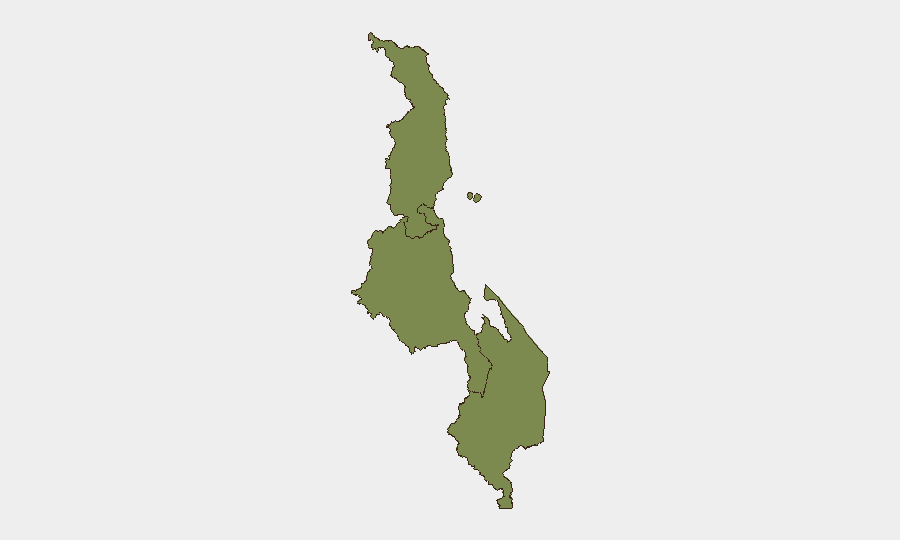
Situation Summary
Malawi remains a low-threat environment globally (ranked #166 with composite score 4.0) with no verified security incidents or civil unrest reported in the last 24–48 hours. The Central Region continues to drive the majority of recorded risk (score 31.9), substantially above the Southern and Northern regions, though current acute triggers are absent from recent reporting. The security posture remains stable, though organizations with personnel in high-risk zones—particularly the Central Region—should maintain standard duty-of-care protocols.
Key Developments
- Salima District – Malawi Armed Forces College (MAFCO), June 30, 2026: Six Malawi Defence Force units conducted the 2026 annual military drill competition at MAFCO, a routine scheduled training event with no reported security incident or disruption.
- South Africa – Anti-immigration protests, June 30, 2026: Large-scale anti-migrant demonstrations occurred in Johannesburg, Durban, and other cities under heavy police deployment; Malawi's government has advised nationals in South Africa to exercise heightened vigilance due to xenophobic tensions. This is external to Malawi but directly relevant to Malawian diaspora safety.
- South Africa – Foreign national repatriation, late June/early July 2026: Over 25,000 foreign nationals, including Malawians, have been repatriated in recent weeks as anti-migrant sentiment persists; Malawi is organizing voluntary flights and buses for returning citizens. This movement reflects external pressure but does not indicate domestic instability inside Malawi.
- No domestic civil unrest, crime spikes, infrastructure failures, or political instability events have been verified in Malawi for June 30–July 1, 2026. Open web search, social media monitoring (X, Telegram), and news aggregation across multiple languages returned no corroborated reports of riots, large protests, significant attacks, or regime-stability incidents.
Highest-Risk Areas
The Central Region dominates Malawi's internal risk profile (31.9 vs. 8.5 for Southern and 3.5 for Northern), a disparity requiring explanation given the absence of acute current incidents. This elevated score likely reflects cumulative factors—historical patterns of localized crime, limited law-enforcement capacity in remote districts, or persistent socioeconomic drivers—rather than active unrest. Organizations with operations or personnel in Central Region districts (Salima, Mzimba, Kasungu, Lilongwe) should apply heightened situational awareness and asset-protection measures. Southern and Northern regions carry substantially lower composite risk and are suitable for standard risk management.
How GeoBit Would Assist
A security team managing Malawi operations would employ Intel Sweep and multi-language OSINT to detect emerging civil unrest, crime clusters, or political instability in real time; AOI Monitoring & Early Warning to maintain persistent watch on the Central Region and flag routine incidents before escalation; and Network & Actor Analysis to map organized crime, trafficking, or militia activity that may not surface in public reporting. GIS & Spatial Analysis combined with conflict and crime search capabilities would support risk-informed routing and site-selection decisions, particularly for travel in Central Region zones.
7-Day Outlook
No acute security drivers are visible in Malawi's near-term forecast. Routine monitoring should continue with heightened attention to the Central Region's persistent risk profile. Organizations should also monitor developments in South Africa's anti-immigration environment for any cascading impact on repatriated Malawians or cross-border economic activity.
Highest-Risk Areas — Ranked
| # | State / Region | Risk |
|---|---|---|
| 1 | Central Region, Malawi | 31.9 |
| 2 | Southern Region, Malawi | 8.5 |
| 3 | Northern Region, Malawi | 3.5 |
Sources
Previous Daily Briefs
A new Malawi brief is written every day — each with its own risk map and downloadable CSV. Here's the last week; use the calendar to go further back.
📅 Browse every day by calendar →
Highlighted days have a brief. Tap a day for that day's map & analysis, or “csv” for that day's dataset ($5).