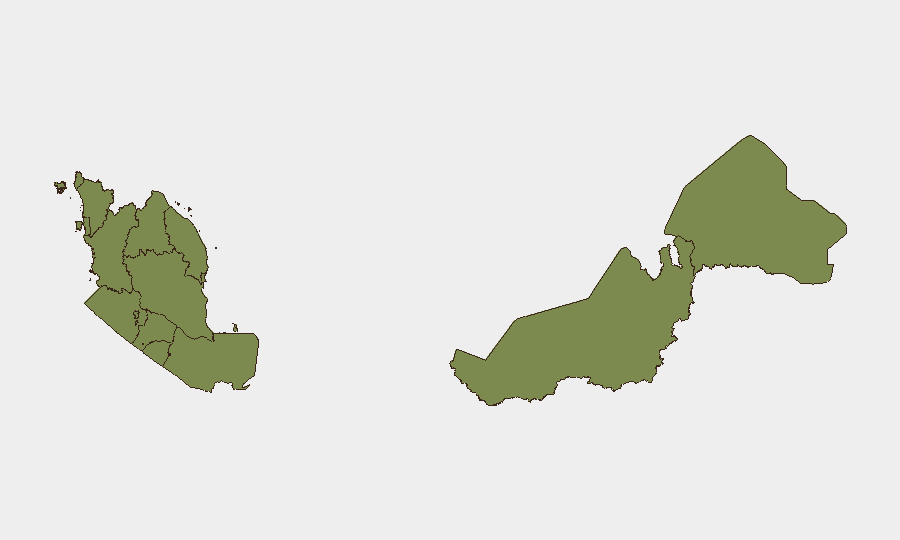
Situation Summary
Malaysia remains a moderate-risk jurisdiction (global rank #76, composite score 10) with a concentrated threat footprint in Kuala Lumpur and specific states, but faces an acute near-term escalation in cyber and physical security incidents. The past 48 hours have registered multiple high-visibility events—bomb threats at educational institutions, a confirmed cyberattack on university infrastructure, and official warnings of sustained ransomware activity—signaling both tactical opportunism and strategic targeting of critical sectors. The threat environment is trending upward in visibility and operational tempo, with education and digital infrastructure emerging as primary vectors.
Key Developments
- Subang Jaya, Selangor – 16 June 2026: Taylor's University Lakeside Campus evacuated following a second bomb threat in 48 hours; police and bomb-disposal units cleared the site and declared it safe. Classes and campus activities remain temporarily disrupted.
- Semenyih, Selangor – 16 June 2026: University of Nottingham Malaysia confirmed a cyberattack against its IT systems; the intrusion has been contained and affected systems secured, but online services remain partially unavailable and students/alumni have been notified of potential exposure.
- Kuala Lumpur – 16 June 2026: Malaysian cybersecurity officials and sector partners (CYDES) issued formal warnings of sustained ransomware campaigns targeting critical and commercial infrastructure nationwide, identifying data theft and system encryption as persistent threats to operational continuity.
- Nationwide – 15–16 June 2026: Malaysian education and cyber authorities circulated sector-wide advisories referencing breaches of widely deployed education platforms and urging schools and universities to strengthen identity controls, phishing defences, and incident-response protocols.
- Nationwide – 15–16 June 2026: Government authorities and security practitioners reiterated mandatory cyber-incident reporting timelines (24–72 hours) for significant breaches and stressed the centrality of insider threats and privileged-account misuse in the current incident cluster.
Highest-Risk Areas
Kuala Lumpur dominates the national risk profile with a composite score of 31.4—more than 70% of tracked national risk—driven by density of critical infrastructure, financial and diplomatic assets, and administrative functions. Sarawak (18.0) ranks second, reflecting distinct political and border-zone factors; remaining states are substantially lower. The concentration of bomb-threat and cyber incidents in Selangor (composite 2.4, but containing high-value campuses and corporate zones proximate to KL) and the central-corridor states underscores that geographic proximity to the capital, institutional prominence, and operational criticality—rather than distributed geographic spread—define current risk. Teams with personnel or assets in KL proper, Selangor's education and tech precincts, or Sarawak should maintain elevated awareness.
How GeoBit Would Assist
Intel Sweep & OSINT Fusion would enable continuous monitoring of education-sector and critical-infrastructure threat indicators across Malaysian social media, government advisories, and regional threat forums to detect emerging targeting patterns before operational materialization. AOI Monitoring & Early Warning with persistent geofencing around high-value campuses, corporate parks, and critical facilities would provide real-time alerts on unusual actor movement, protest staging, or security service mobilization. Cyber & Actor Network Analysis would map relationships between ransomware campaigns, threat groups, and potential insider vectors affecting Malaysian organisations, supporting threat-informed access-control and incident-response prioritization.
7-Day Outlook
Ransomware and phishing campaigns targeting education and digital infrastructure are expected to persist, with elevated probability of follow-on physical security incidents (additional threats, protests, or copycat actions) through week-end. Selangor and KL campuses and corporate zones should expect continued police and bomb-squad presence; reporting timelines and compliance obligations remain enforced. Risk trajectory remains upward absent significant law-enforcement interdictions.
Highest-Risk Areas — Ranked
| # | State / Region | Risk |
|---|---|---|
| 1 | Kuala Lumpur | 31.4 |
| 2 | Sarawak | 18 |
| 3 | Negeri Sembilan | 4.5 |
| 4 | Johor | 4.5 |
| 5 | Pahang | 3.5 |
| 6 | Sabah | 3.5 |
| 7 | Kedah | 2.4 |
| 8 | Selangor | 2.4 |
| 9 | Perlis | 1.4 |
| 10 | Penang | 1.4 |
| 11 | Perak | 1.4 |
| 12 | Kelantan | 1.4 |
Sources
Previous Daily Briefs
A new Malaysia brief is written every day — each with its own risk map and downloadable CSV. Here's the last week; use the calendar to go further back.
📅 Browse every day by calendar →
Highlighted days have a brief. Tap a day for that day's map & analysis, or “csv” for that day's dataset ($5).