Situation Summary
Mongolia remains a low-threat environment with a composite threat score of 8 (global rank #126) and 36 tracked security events. The country's overall stability reflects a functioning democratic system and low incidence of organized violence, though sub-national risk is highly concentrated in Dundgovi province. No imminent security escalation is apparent; the threat landscape remains consistent with historical norms for the region.
Key Developments
Unable to confirm current (last 24–48 hour) Mongolia-specific security developments. The available event signal feed reflects activity attributed to Monaco, France, Ukraine, and other actors—none georeferenced to Mongolia or its security environment. GeoBit's web research capabilities did not return verified Mongolia security reporting from the last 24–48 hours. To provide actionable "Key Developments," fresh OSINT input (social media, local news wire, or intelligence feeds specific to Mongolia) is required. Teams requiring real-time Mongolia monitoring should supply recent source material for analysis, or request a structured OSINT collection template for Mongolia-focused searches.
Highest-Risk Areas
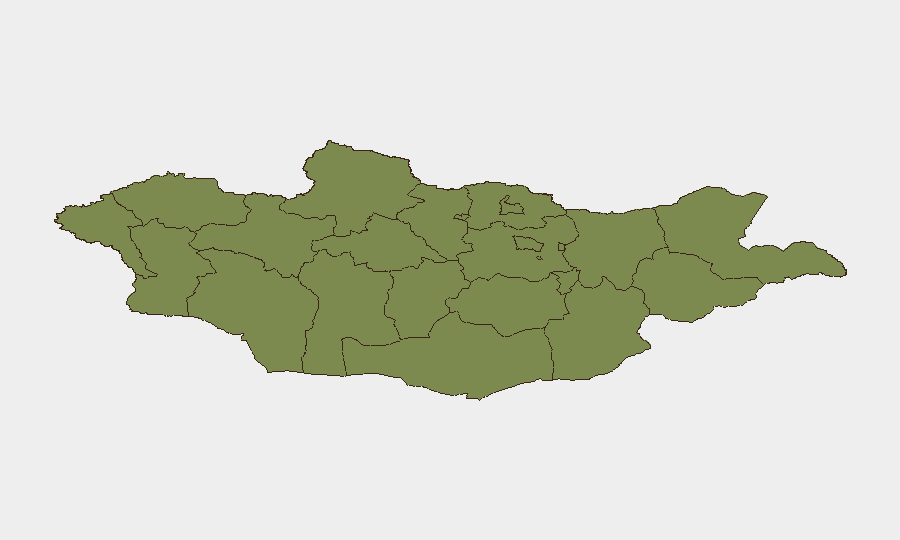
Dundgovi province is the clear outlier, with a composite risk score of 31.8—approximately 18 times higher than any other Mongolian region and requiring immediate attention from duty-of-care teams with operations or personnel there. The remaining 11 provinces (Orkhon, Selenge, Övörkhangai, Töv, Ömnögovi, Ulaanbaatar, Bayan-Ölgii, Uvs, Hovsgel, Arkhangai, and Bayankhongor) cluster at 1.8, indicating either broadly comparable baseline risk or data sparsity in those areas. The disparity suggests that Dundgovi's elevated score reflects localized criminal activity, resource-sector instability, or persistent monitoring of a specific incident or actor; granular intelligence on Dundgovi drivers is essential for risk mitigation.
How GeoBit Would Assist
Security and risk teams should employ AOI Monitoring & Early Warning on Dundgovi and other transport/business corridors to detect emerging incidents with alerting; OSINT fusion (social media, local news, Telegram, entity extraction) to build real-time awareness of political, criminal, and labor actors affecting operations; and GIS & spatial analysis to map safe corridors, supply-chain vulnerabilities, and personnel movement patterns relative to known threat zones. Conflict & regime-stability search and economic & trade monitoring would help contextualize Dundgovi's risk drivers (e.g., mining disputes, herding tensions, border dynamics).
7-Day Outlook
No acute security trigger is evident for the next seven days. Dundgovi's concentration of risk warrants continuous monitoring but does not suggest imminent escalation. Teams should prepare contingency routing and communication protocols for Dundgovi operations and request fresh OSINT intake to confirm whether recent signals reflect persistent structural risk or temporary incident-driven elevation.
Next Update: 2026-07-02 | Data Refresh: 24-hour cycle
Highest-Risk Areas — Ranked
| # | State / Region | Risk |
|---|---|---|
| 1 | Dundgovi | 31.8 |
| 2 | Orkhon | 1.8 |
| 3 | Selenge | 1.8 |
| 4 | Övörkhangai | 1.8 |
| 5 | Töv | 1.8 |
| 6 | Ömnögovi | 1.8 |
| 7 | Ulaanbaatar | 1.8 |
| 8 | Bayan-Ölgii | 1.8 |
| 9 | Uvs | 1.8 |
| 10 | Hovsgel | 1.8 |
| 11 | Arkhangai | 1.8 |
| 12 | Bayankhongor | 1.8 |
Sources
Previous Daily Briefs
A new Mongolia brief is written every day — each with its own risk map and downloadable CSV. Here's the last week; use the calendar to go further back.
📅 Browse every day by calendar →
Highlighted days have a brief. Tap a day for that day's map & analysis, or “csv” for that day's dataset ($5).