Situation Summary
Morocco faces a composite threat score of 24 (rank #null globally) driven by concentrated civil unrest, judicial dysfunction, and isolated security incidents. Two regions—Casablanca-Settat and Drâa-Tafilalet—account for the majority of tracked risk (31.3 each), while a nationwide lawyers' strike has disabled court operations and legal remedies. The last 48 hours have surfaced violent agricultural labor disputes, a projectile attack near a penitentiary in the Sahara, and ongoing crime incidents, indicating fragmented but active pressure points across urban, rural, and southern zones.
Key Developments
- Kenitra Province, Sidi Mohamed Ben Mansour – 20 July 2026
Royal Gendarmerie responded to violent clashes involving ~200 protesters who disrupted agricultural operations, burned machinery, and threw stones at officers. Gendarmes fired warning shots, resulting in two civilian injuries and one serious injury to security personnel. A judicial investigation into individual responsibility has been opened.
- Smara, Moroccan Sahara – 20 July 2026 (late)
A projectile attack struck a civilian zone near Smara penitentiary, detonating two explosions and wounding a woman. Security forces initiated forensic examination to determine trajectory and origin; the incident remains under investigation.
- Casablanca, Sidi Bernoussi district – 17 July 2026 (ongoing coverage)
Judicial Police arrested a suspect for sequestration, sexual assault with violence, and attempted arson. One victim was freed during intervention; the case is under public prosecutor supervision.
- Agadir – 17 July 2026 (official clarification issued 17–21 July)
A violent public altercation was clarified as a dispute involving a driver and two women; police arrested both the driver and a woman found with a bladed weapon. A third person remains at large.
- National – justice sector – continuing 20–21 July 2026
The Association of Moroccan Bar Associations extended an indefinite total stoppage of legal services, halting court hearings and judicial proceedings nationwide and blocking access to legal remedies.
- Southern regions (Assa-Zag, Es-Semara, Tata, Zagora) – 20 July 2026 onward
The national meteorological service issued a code orange extreme heat warning, with temperatures forecast to reach 47°C, elevating health and travel risk and straining water, power, and medical infrastructure.
Highest-Risk Areas
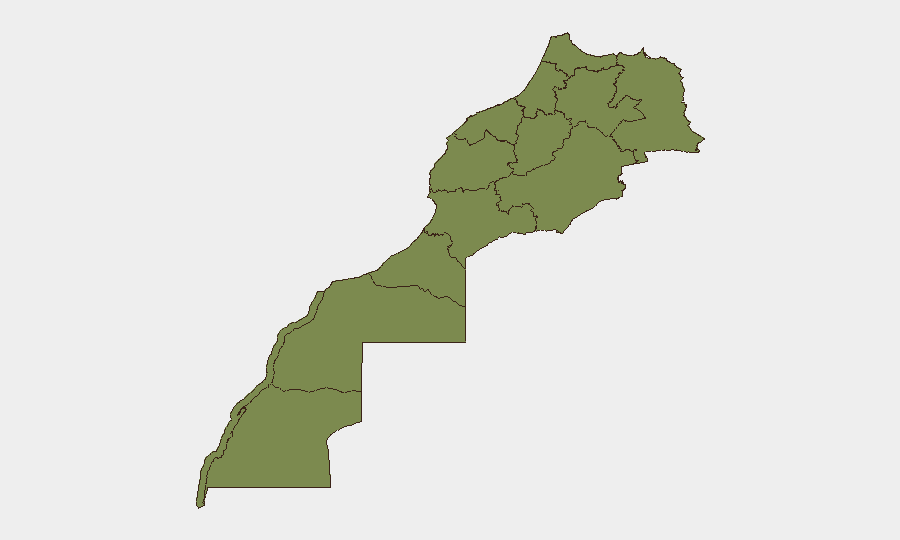
Casablanca-Settat and Drâa-Tafilalet jointly anchor Morocco's risk profile at 31.3 each, reflecting labor unrest, criminal activity, and security force responses in urban and rural zones. Casablanca's Sidi Bernoussi district has recorded violent crime and police interventions; Kenitra Province, within the same region, experienced armed dispersal of agricultural protests. Drâa-Tafilalet's link to the Smara penitentiary projectile attack suggests either transnational or localized militant activity in the Sahara fringe. Marrakech-Safi (risk 7) remains elevated but secondary. All other regions score below 3.2, indicating risk concentration rather than geographic diffusion.
How GeoBit Would Assist
Corporate security teams would employ AOI Monitoring & Early Warning to establish persistent watch on Casablanca-Settat and Drâa-Tafilalet, triggering alerts on labor disputes, security force deployments, and weapon-related activity before operational impact. OSINT Fusion & Corroboration (X/Twitter, Telegram, local news) would track the lawyers' strike, court status, and legal proceeding delays to inform travel and compliance timelines. Routing & Network Analysis would enable alternative route planning around Kenitra and southern heat zones, and Risk & Threat Assessment would quantify judicial-system disruption risk for personnel requiring legal protection or documentation services.
7-Day Outlook
The lawyers' strike shows no signs of resolution, likely persisting as the primary legal and administrative risk through end-July. Agricultural and labor tensions in Kenitra and similar rural zones are expected to remain volatile, particularly if harvest cycles or wage disputes continue. The Smara projectile incident warrants close monitoring for pattern escalation in the Sahara periphery; absent additional attacks, it is likely an isolated incident rather than a campaign. Extreme heat in the south will degrade travel safety and infrastructure reliability.
Highest-Risk Areas — Ranked
| # | State / Region | Risk |
|---|---|---|
| 1 | Casablanca-Settat | 31.3 |
| 2 | Drâa-Tafilalet | 31.3 |
| 3 | Marrakech-Safi | 7 |
| 4 | Souss-Massa | 3.2 |
| 5 | Western Sahara | 1.3 |
| 6 | Laâyoune-Sakia El Hamra | 1.3 |
| 7 | Guelmim-Oued Noun | 1.3 |
| 8 | Dakhla-Oued Ed-Dahab | 1.3 |
| 9 | Rabat-Salé-Kénitra | 1.3 |
| 10 | Béni Mellal-Khénifra | 1.3 |
| 11 | Tangier-Tetouan-Al Hoceima | 1.3 |
| 12 | Fez-Meknes | 1.3 |
Sources
Previous Daily Briefs
A new Morocco brief is written every day — each with its own risk map and downloadable CSV. Here's the last week; use the calendar to go further back.
📅 Browse every day by calendar →
Highlighted days have a brief. Tap a day for that day's map & analysis, or “csv” for that day's dataset ($5).
Atlas — our AI intelligence desk — emails them this snapshot personally. Nothing else, no list.