Situation Summary
Mozambique remains at composite threat level 43 globally, reflecting endemic structural risks rather than acute crisis. Open-source monitoring indicates no confirmed security incidents within the last 24–48 hours, suggesting a period of relative tactical quiet. However, standing threat drivers—Islamist insurgency in Cabo Delgado, urban crime, and lingering post-flood infrastructure strain—remain active and capable of rapid escalation. The security environment remains elevated but currently non-acute.
Key Developments
No discrete, independently verified security incidents have been reported inside Mozambique territory during the 24–48 hour window ending 15 July 2026. Open-source feeds, including specialized security monitoring and mainstream media, confirm an absence of newly reported attacks, unrest, or significant incidents in this period.
Background context (outside current window but relevant to duty-of-care posture):
- Cabo Delgado insurgency remains active with documented Islamist presence in districts including Ancuabe; most recent cited incidents date to May–early July 2026, outside the current reporting window.
- Russia–Mozambique security cooperation discussions (9–10 July) included offers of counter-insurgency assistance, but represent diplomatic rather than operational developments.
- Repatriation of Mozambican citizens from South Africa following xenophobic violence continues as an ongoing process; precise timing of new operations within 24–48 hours not confirmed in available open sources.
Highest-Risk Areas
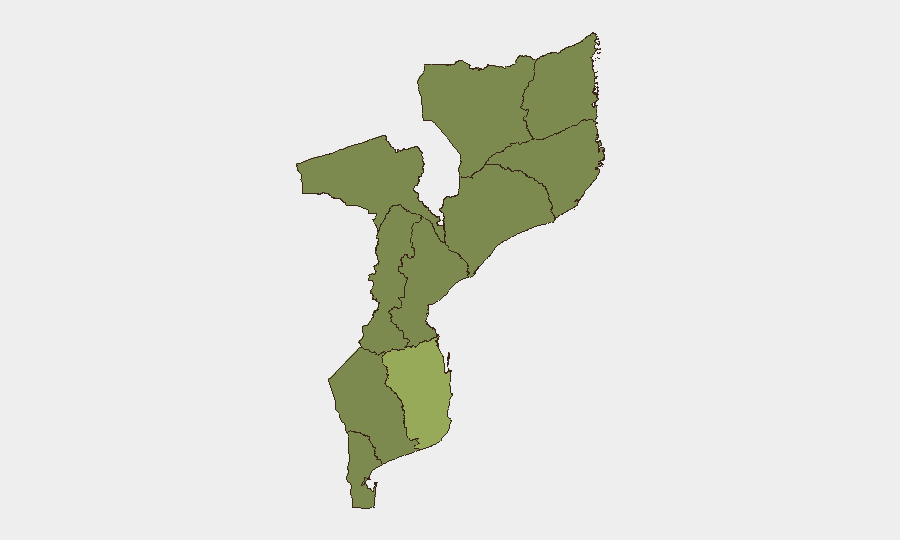
Inhambane Province (risk 56) significantly outpaces all other regions and is the primary driver of Mozambique's overall threat score. Sofala Province (31) is the second-most elevated, followed by a cluster of provinces (Tete, Manica, Gaza, Niassa, Cabo Delgado, Maputo, Nampula, Zambezia, and Cidade de Maputo) all rated at 26, reflecting more dispersed but persistent threat patterns. The concentration of risk in Inhambane warrants targeted assessment of economic activity, supply-chain exposure, and personnel presence in that province. Cabo Delgado's inclusion at 26—despite lower numerical ranking—remains operationally critical due to the nature of insurgent activity; that rating may underweight the intensity of localized threat in specific districts.
How GeoBit Would Assist
Intel Sweep and OSINT Fusion would enable continuous multi-language monitoring of Mozambique across social platforms, news outlets, and specialized feeds to detect emerging incidents and trend shifts before they reach mainstream reporting. AOI Monitoring & Early Warning with persistent geo-tagged alerting on Inhambane, Sofala, and Cabo Delgado would provide real-time notification of activity spikes, unrest signals, or military/security-force movement. Conflict & Military tracking (force structure, weapons capability, battle-mapping) combined with Satellite & Imagery analysis would support assessment of military posture and infrastructure vulnerability in high-risk zones, enabling proactive duty-of-care routing and asset protection decisions.
7-Day Outlook
No imminent escalation is signaled by current intelligence. However, the structural nature of Mozambique's risks—dispersed insurgent capability, weak state capacity in periphery provinces, and socioeconomic fragility—means that tactical quiet can shift rapidly. Monitoring should remain continuous on Inhambane activity, Cabo Delgado security-force operations, and any cross-border spillover from regional instability. Personnel and asset-protection teams should maintain elevated alertness postures rather than assume sustained de-escalation.
Highest-Risk Areas — Ranked
| # | State / Region | Risk |
|---|---|---|
| 1 | Inhambane Province | 56 |
| 2 | Sofala Province | 31 |
| 3 | Tete Province | 26 |
| 4 | Manica Province | 26 |
| 5 | Gaza Province | 26 |
| 6 | Niassa Province | 26 |
| 7 | Cabo Delgado Province | 26 |
| 8 | Maputo Province | 26 |
| 9 | Cidade de Maputo | 26 |
| 10 | Nampula Province | 26 |
| 11 | Zambezia Province | 26 |
Sources
Previous Daily Briefs
A new Mozambique brief is written every day — each with its own risk map and downloadable CSV. Here's the last week; use the calendar to go further back.
📅 Browse every day by calendar →
Highlighted days have a brief. Tap a day for that day's map & analysis, or “csv” for that day's dataset ($5).
Atlas — our AI intelligence desk — emails them this snapshot personally. Nothing else, no list.