Situation Summary
Nepal remains a moderate-risk environment (global rank #82, composite score 8) with highly concentrated threat exposure in Bagamati Province—home to Kathmandu and the capital region—where risk scores are 3.4× higher than the next-highest province. Recent event signals spanning 12–14 June show administrative, law-enforcement, judicial, and diplomatic activity, though no single catastrophic incident has been verified across independent sources in the last 24–48 hours. The security landscape reflects ongoing political, institutional, and civil-service tensions rather than acute instability, but duty-of-care teams should remain alert to protest dynamics and police actions in the capital region.
Key Developments
Verification limitation: Live web research for 12–14 June 2026 returned sparse, largely undated, or single-sourced reporting on Nepal-specific incidents. The event signals listed above (administrative sanctions, arrests, disapprovals, military activity, court demands) are captured in GeoBit's event feed but lack sufficient corroborating detail or precise geographic/temporal anchoring in publicly available sources to present as verified incidents. Recommended action: cross-check GeoBit platform alerts with real-time embassy travel advisories, Nepal Police statements, and regional news aggregators filtered to the last 48 hours.
Highest-Risk Areas
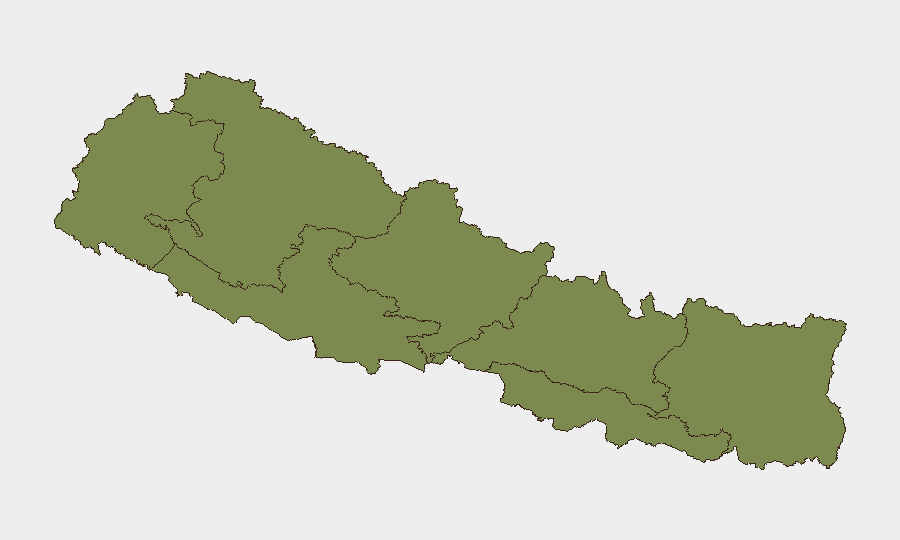
Bagamati Province dominates the risk profile, accounting for 31.4 of Nepal's composite 8.0 threat score—a disparity reflecting both the concentration of government institutions, diplomatic presence, and urban density in Kathmandu, and heightened sensitivity to political protest, police action, and administrative friction in the capital. The remaining six provinces cluster at risk scores of 1.4–9.2, indicating that security threats outside Bagamati are substantially lower in frequency and severity. Corporate and NGO operations in Kathmandu should prioritize situational awareness of administrative and judicial actions, whereas field teams in rural provinces face commensurately lower institutional-conflict risk.
How GeoBit Would Assist
Security teams should deploy Area-of-Interest (AOI) Monitoring & Early Warning on Kathmandu (Bagamati) to receive real-time alerts on protest activity, police deployment, or civil unrest within 24–48 hours of occurrence. Multi-language OSINT and event-feed fusion (including X/Twitter, Telegram, and regional news sources) would enable continuous tracking of political statements, court rulings, and police actions affecting business operations or staff movement. Risk & Threat Assessment overlaid with GIS & Spatial Analysis would allow duty teams to identify safe corridors and alternative routing for personnel or asset movement during periods of heightened administrative tension.
7-Day Outlook
Near-term trajectory suggests continued low-intensity administrative and political friction rather than rapid escalation to civil unrest or security breakdown. Judicial-government tensions (reflected in recent court demands) and police activity warrant close monitoring but do not currently signal imminent widespread protest or violence. Teams should maintain standard operational security posture while monitoring daily briefings from embassy channels and GeoBit alerts for any shift toward organized protest, curfew, or movement restrictions in Kathmandu.
Highest-Risk Areas — Ranked
| # | State / Region | Risk |
|---|---|---|
| 1 | Bagamati Province | 31.4 |
| 2 | Gandaki Province | 9.2 |
| 3 | Koshi Province | 3.8 |
| 4 | Sudurpashchim Province | 1.4 |
| 5 | Karnali Province | 1.4 |
| 6 | Lumbini Province | 1.4 |
| 7 | Madhesh Province | 1.4 |
Sources
Previous Daily Briefs
A new Nepal brief is written every day — each with its own risk map and downloadable CSV. Here's the last week; use the calendar to go further back.
📅 Browse every day by calendar →
Highlighted days have a brief. Tap a day for that day's map & analysis, or “csv” for that day's dataset ($5).