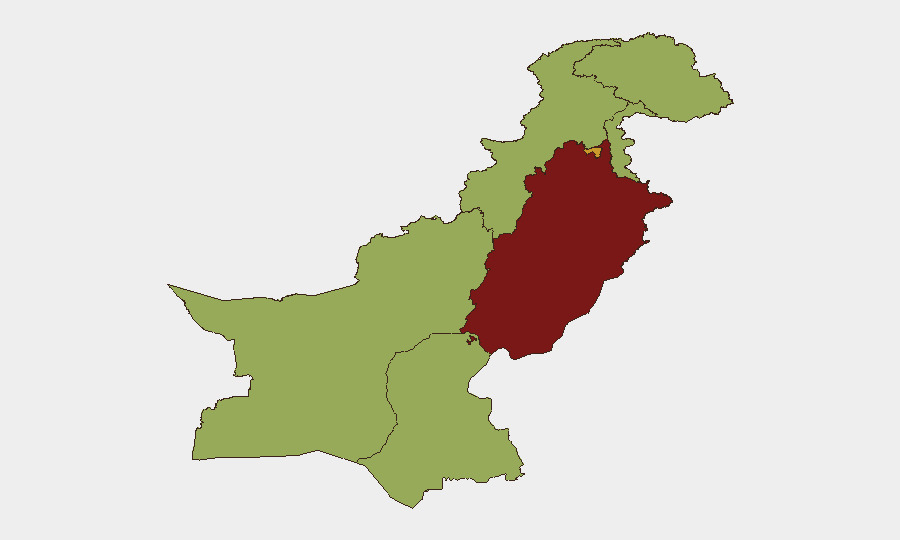
Situation Summary
Pakistan remains at elevated terrorism and political-instability risk (rank #22 globally, composite score 72), driven primarily by persistent insurgent activity from Tehreek-e-Taliban Pakistan (TTP), Islamic State–Khorasan, and Baloch separatist groups. The past 72 hours have seen a cluster of acute incidents—targeted killings in Karachi, IED discovery in Peshawar, militant cordon-and-search operations in North Waziristan, and infrastructure-threat warnings in Balochistan—reflecting a fragmented but active threat landscape across multiple provinces. Security postures have visibly heightened in major urban centers, particularly Islamabad and Quetta, signaling institutional recognition of near-term attack risk. The trajectory remains volatile rather than trending toward stabilization.
Key Developments
- Karachi, Sindh (2026-06-01): Targeted motorcycle killing near NIPA Chowrangi in Gulshan-e-Iqbal; police launched search operations, suggesting either criminal-network or sectarian violence amid routine urban security challenges.
- Peshawar, Khyber Pakhtunkhwa (2026-06-01): Bomb Disposal Unit recovered and safely defused a roadside IED on urban outskirts, averting potential casualty event against security or civilian traffic.
- North Waziristan, Khyber Pakhtunkhwa (2026-06-01): Security forces executed cordon-and-search operation following TTP militant-movement intelligence; exchange of fire reported and movement restrictions imposed on local populations.
- Quetta, Balochistan (2026-06-01): Security forces deployed intensified checkpoint protocols and snap-searches at entry points and around government/sensitive installations following credible militant-attack intelligence.
- Gwadar–Makran Coastal Highway, Balochistan (2026-06-01–02): Security agencies issued formal warnings of Baloch separatist targeting of Chinese-linked CPEC infrastructure and convoys; tighter convoy protocols and cargo-movement delays implemented.
- Islamabad Capital Territory (ongoing): High-alert security posture maintained around Red Zone, diplomatic quarter, and major hotels due to sustained terrorism concerns and reference to recent mass-casualty events.
- Sindh Interior (highways, 2026-06-01–02): Continued banditry and roadside robbery incidents reported on national highway stretches; night-travel advisories reinforced for rural corridors.
Highest-Risk Areas
Punjab (80.4) and Islamabad Capital Territory (71.4) rank highest, driven by dense urban populations, concentration of government/diplomatic/business assets, and recurring insider or mass-casualty attack patterns. Sindh (58.3) and Khyber Pakhtunkhwa (54.6) follow, reflecting ongoing TTP and sectarian violence in Karachi and persistent militant activity in the tribal periphery and Peshawar corridor. Balochistan (51.2) and Gilgit-Baltistan (52.9) register sustained threats from separatist and cross-border militant networks targeting infrastructure and security forces. The ranking underscores that risk concentrates in urbanized economic hubs and strategic corridors rather than uniformly across the country.
How GeoBit Would Assist
Security teams operating in Pakistan should deploy AOI (Area-of-Interest) Monitoring & Early Warning on key facilities and transit routes in Punjab, Islamabad, and Sindh to detect emerging attack indicators in near-real time. Intel Sweep, multi-language OSINT, and Telegram/X intelligence would track TTP, Islamic State–Khorasan, and Baloch group communications for capability and intent signals ahead of mass-casualty events. Routing & Network Analysis would enable alternative journey planning for personnel and supply convoys, particularly in Balochistan and KP, to minimize exposure to high-incident corridors and bandit-prone stretches.
7-Day Outlook
Threat tempo is expected to remain elevated through early June as security forces maintain cordon-and-search operations and intelligence-driven sweeps across KP and Balochistan. Islamabad and major Sindh urban centers will likely see sustained checkpoint activity and visible security posturing around sensitive installations. No significant de-escalation signal is evident; contingency protocols for personnel movement and asset protection should remain in place.
Highest-Risk Areas — Ranked
| # | State / Region | Risk |
|---|---|---|
| 1 | Punjab | 80.4 |
| 2 | Islamabad Capital Territory | 71.4 |
| 3 | Sindh | 58.3 |
| 4 | Khyber Pakhtunkhwa | 54.6 |
| 5 | Gilgit-Baltistan | 52.9 |
| 6 | Balochistan | 51.2 |
| 7 | Azad Kashmir | 50.4 |
Previous Daily Briefs
A new Pakistan brief is written every day — each with its own risk map and downloadable CSV. Here's the last week; use the calendar to go further back.
📅 Browse every day by calendar →
Highlighted days have a brief. Tap a day for that day's map & analysis, or “csv” for that day's dataset ($5).