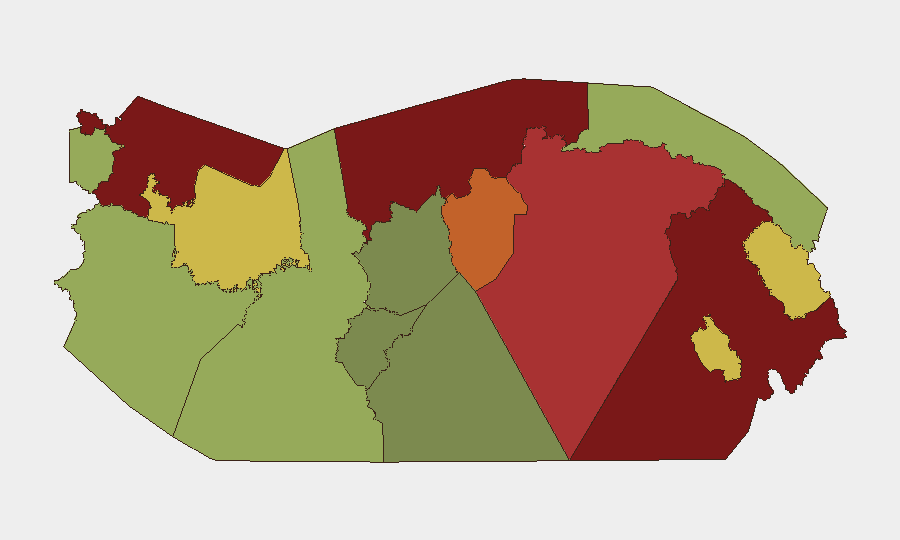
Situation Summary
Panama remains at moderate global threat ranking (#82, composite score 14) with no significant security incidents reported in the last 24–48 hours. The 56th OAS General Assembly concluded June 24 in Panama City without reported protests, clashes, or travel disruptions; standard security protocols were in place throughout. Sub-national risk remains concentrated in the eastern border region (Darién, Colón, Bocas del Toro), driven by migration-trafficking networks and limited state presence, while Panama City and central provinces maintain routine operational security posture.
Key Developments
No verified security, conflict, civil-unrest, crime, or infrastructure incidents meeting threshold criteria (specific location, date, disruptive event) have been reported in Panama in the last 24–48 hours beyond routine activity. The OAS General Assembly (June 22–24, Panama City) proceeded as scheduled with diplomatic attendance and heightened but uneventful security presence; no related demonstrations or clashes documented post-event. Web research and open-source feeds reflect normal commercial, governmental, and transport operations across the country.
Highest-Risk Areas
Eastern and northern provinces—Darién (95), Colón (88), and Bocas del Toro (82)—account for the largest concentration of composite risk, driven by transnational smuggling corridors, limited police/military coverage, and organized-crime presence along the Colombian border and Caribbean coast. Panamá Province (78) and Panamá Oeste (75) elevate risk within the metropolitan and peri-urban zones, reflecting localized gang activity and economic-displacement pressures. Indigenous territories (Ngäbe-Buglé, Emberá-Wounaan, Guna Yala) report lower composite scores but remain vulnerable to trafficking transit and resource-conflict dynamics. Central and western provinces (Coclé, Chiriquí, Veraguas) show materially lower risk and support corporate and leisure operations with fewer systematic threats.
How GeoBit Would Assist
Corporate security teams with personnel or assets in high-risk zones would deploy AOI Monitoring & Early Warning on Darién, Colón, and Panamá Province to detect emerging gang violence, trafficking activity, or roadway disruptions in real time. Multi-language OSINT (X/Twitter, local news feeds, Telegram) combined with temporal and sentiment analysis provides 6–24 hour advance notice of protests, roadblocks, or organized-crime operations affecting supply chains and staff movement. Routing & Network Analysis generates alternative route planning for employees and shipments, while Intel Sweep and conflict-event databases maintain current operational awareness of cartel-activity zones and police operations that may affect duty-of-care compliance.
7-Day Outlook
No acute deterioration is forecast over the next seven days; ongoing diplomatic normalcy post-OAS General Assembly and seasonal low risk in urban centers support routine business continuity. Persistent structural risk in Darién and Colón will remain unchanged, reflecting endemic trafficking and weak state capacity; targeted monitoring is warranted for any escalation in organized-crime turf disputes or migration-route bottlenecks that could create secondary effects on supply chains or personnel safety. Rainy-season conditions may increase road hazards and transit delays in peripheral provinces.
Highest-Risk Areas — Ranked
| # | State / Region | Risk |
|---|---|---|
| 1 | Darién | 95 |
| 2 | Colón | 88 |
| 3 | Bocas del Toro | 82 |
| 4 | Panamá Province | 78 |
| 5 | Panamá Oeste | 75 |
| 6 | Ngäbe-Buglé | 68 |
| 7 | Emberá-Wounaan | 62 |
| 8 | Veraguas | 58 |
| 9 | Chiriquí | 48 |
| 10 | Naso Tjër Di | 45 |
| 11 | Guna Yala | 42 |
| 12 | Coclé | 35 |
Sources
Previous Daily Briefs
A new Panama brief is written every day — each with its own risk map and downloadable CSV. Here's the last week; use the calendar to go further back.
📅 Browse every day by calendar →
Highlighted days have a brief. Tap a day for that day's map & analysis, or “csv” for that day's dataset ($5).