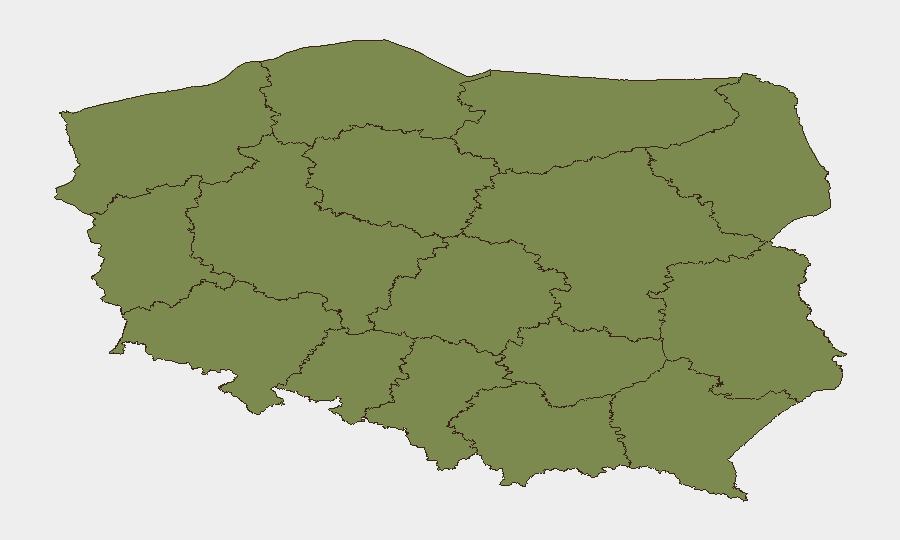
Situation Summary
Poland remains at composite threat level 8 globally (#116 rank), with 68 tracked security events on record. Over the last 24–48 hours, no incidents with reliable multi-source confirmation and timestamped verification have been identified in available open sources. Risk remains concentrated in Masovian Voivodeship (Warsaw metropolitan area and central Poland), which accounts for the majority of the country's composite threat score. The security posture is stable, though baseline monitoring of law enforcement activity, civil order, and cross-border dynamics should continue.
Key Developments
No incidents meeting verification criteria (multi-source, timestamped, last 24–48 hours) have been identified. Open-source news feeds, Polish police channels, and regional authority announcements have not surfaced specific confirmed security events in the past two days. Older-timeline material exists regarding Polish–Ukrainian diplomatic tensions and related domestic political controversy, but these predate the last 48 hours and do not constitute current operational developments. Confirmation of any active incident would require direct contact with Polish national police (Komenda Główna Policji), regional voivodeship police commands, or real-time municipal authority feeds for Warsaw, Kraków, and other major urban centres.
Highest-Risk Areas
Masovian Voivodeship (composite risk score 32) dominates Poland's threat profile, driven by Warsaw's size, density, and concentration of national political, financial, and media infrastructure. Łódź Voivodeship (16.7) represents the second-order risk area, likely reflecting urban crime and civil-order dynamics in Poland's third-largest metropolitan region. The eastern and border-adjacent regions—Warmian-Masurian, Subcarpathian, and Podlaskie—carry lower but measurable risk scores, reflecting historical sensitivities around cross-border movement, smuggling routes, and civilian access to sensitive frontier zones. Security teams with personnel or assets in Warsaw and Łódź should maintain heightened awareness; teams in provincial and western regions face materially lower baseline risk.
How GeoBit Would Assist
Security teams monitoring Poland should deploy AOI (Area-of-Interest) Monitoring & Early Warning on Masovian Voivodeship and Łódź to generate automated alerts on police activity, civil disorder, or infrastructure incidents in real time. Intel Sweep and multi-language OSINT fusion (including Polish news wire scraping, municipal social-media monitoring, and police-feed integration) enable 24/7 confirmation and corroboration of emerging incidents before they reach international wires. Routing & Network Analysis can support duty-of-care teams in identifying safe movement corridors and alternative routes for personnel transit in higher-risk urban zones.
7-Day Outlook
No specific threat escalation is signalled for the next seven days based on current event data and open-source intelligence. Standard institutional and border-security operations are expected to continue without disruption. Corporate security teams should maintain baseline vigilance in Warsaw and maintain contact with local security liaisons; no change to travel or operational posture is warranted at this time absent new verified incident reports.
Highest-Risk Areas — Ranked
| # | State / Region | Risk |
|---|---|---|
| 1 | Masovian Voivodeship | 32 |
| 2 | Łódź Voivodeship | 16.7 |
| 3 | Warmian-Masurian Voivodeship | 5.6 |
| 4 | Subcarpathian Voivodeship | 3.2 |
| 5 | Greater Poland Voivodeship | 2.9 |
| 6 | Opole Voivodeship | 2.9 |
| 7 | Podlaskie Voivodeship | 2 |
| 8 | Lublin Voivodeship | 2 |
| 9 | West Pomeranian Voivodeship | 2 |
| 10 | Lubusz Voivodeship | 2 |
| 11 | Lower Silesian Voivodeship | 2 |
| 12 | Pomeranian Voivodeship | 2 |
Sources
Previous Daily Briefs
A new Poland brief is written every day — each with its own risk map and downloadable CSV. Here's the last week; use the calendar to go further back.
📅 Browse every day by calendar →
Highlighted days have a brief. Tap a day for that day's map & analysis, or “csv” for that day's dataset ($5).