Situation Summary
Qatar's security environment has deteriorated sharply over the past 48 hours due to spillover from regional maritime conflict and intensified diplomatic engagement. A fatal incident involving a small vessel struck by shrapnel in Qatari territorial waters underscores direct exposure to wider regional hostilities, prompting maritime traffic restrictions and active search-and-rescue operations. Concurrently, high-level mediation efforts by Qatar between U.S. and Iranian delegations, coupled with announcements of frozen asset releases, reflect both political opportunity and latent instability risk. The threat environment remains elevated but geographically concentrated, with Doha and offshore areas presenting the highest near-term exposure.
Key Developments
- Offshore waters north of Qatar coast, Sunday early hours (within last 24–48h): A small vessel carrying two persons went missing; maritime rescue operations located the craft with one Qatari national deceased and one Arab resident injured. Interior Ministry sources attribute the incident to shrapnel from regional military operations in adjacent waters.
- Qatari territorial waters, Sunday (within last 24–48h): Authorities confirmed search-and-rescue operations concluded with no additional persons aboard, limiting casualty scope but confirming active maritime threat exposure in Qatari waters.
- Qatar ports and marinas, weekend into Sunday (within last 24–48h): Ministry of Interior ordered suspension of all sailing and marine activities until further notice in response to vessel attacks in the region, effectively implementing a maritime lockdown for civilian and commercial operators.
- Doha (diplomatic quarter), last 24–48 hours: U.S. diplomats and Iranian delegates arrived or are present for indirect peace talks mediated by Qatari officials, focusing on interim truce and Strait of Hormuz maritime security; Qatar's role as mediator amplifies political sensitivity and security posture requirements.
- Doha financial institutions, statement issued Monday (covering weekend period): Iran's president announced Qatar will release USD 6 billion in frozen Iranian assets as part of interim peace arrangement; reflects continued high-level financial and political engagement amid regional conflict with potential sanctions-compliance implications.
- Qatar administration, 2026-07-05: Government imposed new administrative sanctions, contributing to the recent spike in governance-level response actions.
Highest-Risk Areas
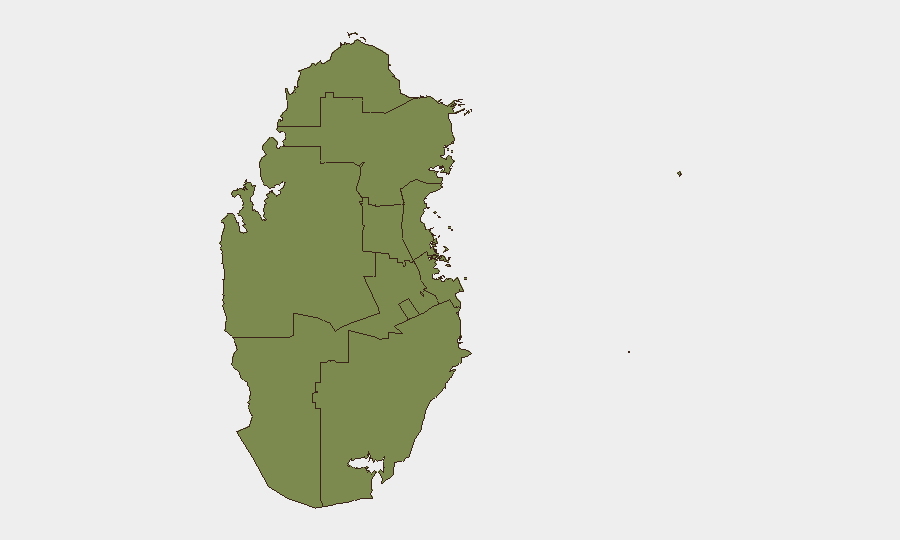
Doha dominates the risk profile (31.4 composite score), driven by maritime exposure, diplomatic concentration, and financial asset transfers occurring simultaneously. Al Shahaniya (18.8) shows elevated but secondary risk, reflecting potential spillover from nearby offshore incidents and broader regional instability. Remaining governorates register minimal independent risk (1.4–3.5), indicating threat concentration in the capital and one neighboring zone. The disparity underscores that security operations and duty-of-care focus should prioritize Doha and its offshore approaches; personnel and assets in outlying regions face proportionally lower exposure absent new trigger events.
How GeoBit Would Assist
Security teams should deploy AOI Monitoring & Early Warning on Doha's diplomatic quarter and Qatari territorial waters to detect escalation signals and vessel movements in real time. Maritime & Aviation tracking combined with Conflict & Military intelligence capabilities enables continuous situational awareness of regional military activity and vessel incidents that may cascade into Qatari airspace or waters. Network & Actor Analysis and Intelligence & OSINT (including Telegram and social-media sentiment tracking) provide early signals of diplomatic breakdown or policy shifts affecting mediation efforts and sanctions enforcement.
7-Day Outlook
Maritime restrictions are expected to remain in place through the week pending stabilization of regional hostilities; additional vessel incidents in Qatari waters remain possible if adjacent military operations continue. Diplomatic talks may produce interim confidence-building measures, potentially easing restrictions by mid-week, but escalation risk remains material if indirect negotiations fail. Corporate teams should maintain heightened alert status for maritime operations and monitor diplomatic messaging for policy shifts affecting financial and travel security.
Highest-Risk Areas — Ranked
| # | State / Region | Risk |
|---|---|---|
| 1 | Doha | 31.4 |
| 2 | Al Shahaniya | 18.8 |
| 3 | Al Khor and Al Thakhira | 3.5 |
| 4 | Ash Shamal | 1.4 |
| 5 | Al Rayyan | 1.4 |
| 6 | Al-Daayen | 1.4 |
| 7 | Umm Salal | 1.4 |
| 8 | Al Wakrah | 1.4 |
Sources
Previous Daily Briefs
A new Qatar brief is written every day — each with its own risk map and downloadable CSV. Here's the last week; use the calendar to go further back.
📅 Browse every day by calendar →
Highlighted days have a brief. Tap a day for that day's map & analysis, or “csv” for that day's dataset ($5).
Atlas — our AI intelligence desk — emails them this snapshot personally. Nothing else, no list.