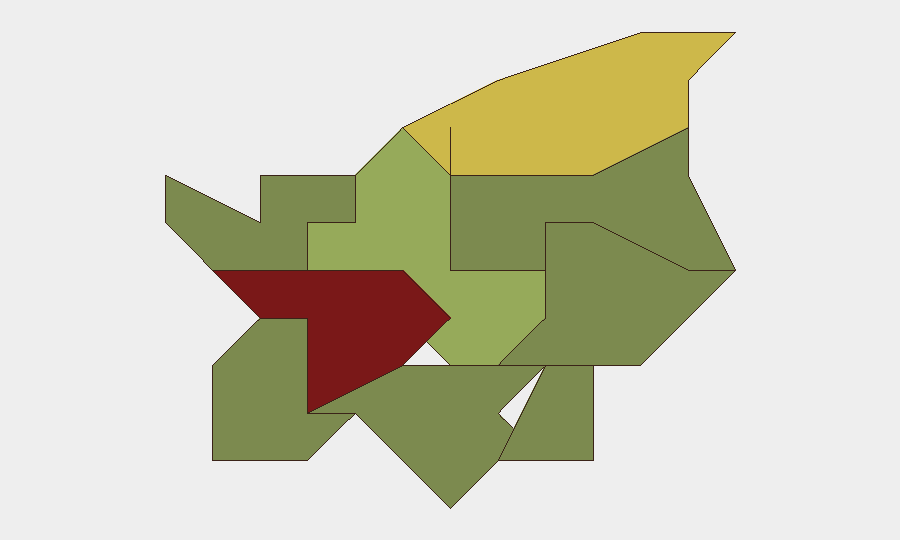
Situation Summary
San Marino remains at very low overall security risk (composite threat score 2, globally ranked #197) with no verified significant incidents in the last 24–48 hours. The microstate continues to experience routine petty crime typical of small European jurisdictions, with no credible reports of terrorism, civil unrest, infrastructure disruption, or political instability. Current threat environment is stable and consistent with longer-standing baseline risk for the region.
Key Developments
No discrete security events meeting verification and recency thresholds were identified in San Marino during the last 24–48 hours. Available open-source reporting, social media monitoring, and regional news feeds contain no credible incidents of civil unrest, terrorism alerts, major crime, infrastructure failure, or travel advisory updates specific to San Marino. Lack of real-time incident reporting for a microstate of this size reflects normal information scarcity rather than unreported activity. Existing travel and security guidance for Italy and the broader EU region remains unchanged and general in character (baseline terrorism risk in Europe, petty crime, occasional demonstrations).
Highest-Risk Areas
Città di San Marino (risk score 85) dominates the threat landscape as the capital and primary population and economic center, where concentration of administrative, commercial, and tourism activity naturally elevates exposure to petty crime and crowded-venue risks. Serravalle (68) follows as the second-largest urban zone and also presents elevated routine crime and tourist-related vulnerability. These two castelli (districts) account for the preponderance of documented risk; the remaining seven districts (Borgo Maggiore, Fiorentino, Domagnano, and others) present materially lower scores, reflecting sparser population density and limited transient exposure. Risk in all districts remains modest in absolute terms and aligns with petty theft, pick-pocketing, and vehicle crime rather than organized crime, terrorism, or civil unrest.
How GeoBit Would Assist
Security teams with personnel or assets in San Marino should employ Intel Sweep and multi-language OSINT fusion to detect early warning of any emerging civil unrest, cross-border incident spillover from Italy, or terrorism-related activity; AOI Monitoring & Early Warning configured for the two highest-risk districts (Città di San Marino and Serravalle) would provide persistent surveillance and alert capability on social media, local news, and police reporting; and Routing & Network Analysis can support duty-of-care planning by identifying alternative transport corridors and lower-risk movement patterns for personnel transit between districts or to/from Italy.
7-Day Outlook
No material change in San Marino's security posture is anticipated over the next seven days. Routine baseline risks—petty crime, occasional demonstrations, standard European terrorism context—will remain the dominant concern for corporate teams. Monitoring should remain calibrated to early detection of any Italy-adjacent instability or unexpected local civil unrest, but no trigger events or escalation drivers are currently evident.
Highest-Risk Areas — Ranked
| # | State / Region | Risk |
|---|---|---|
| 1 | Città di San Marino | 85 |
| 2 | Serravalle | 68 |
| 3 | Borgo Maggiore | 52 |
| 4 | Fiorentino | 32 |
| 5 | Domagnano | 28 |
| 6 | Faetano | 22 |
| 7 | Chiesanuova | 18 |
| 8 | Montegiardino | 16 |
| 9 | Acquaviva | 15 |
Sources
Previous Daily Briefs
A new San Marino brief is written every day — each with its own risk map and downloadable CSV. Here's the last week; use the calendar to go further back.
📅 Browse every day by calendar →
Highlighted days have a brief. Tap a day for that day's map & analysis, or “csv” for that day's dataset ($5).
Atlas — our AI intelligence desk — emails them this snapshot personally. Nothing else, no list.