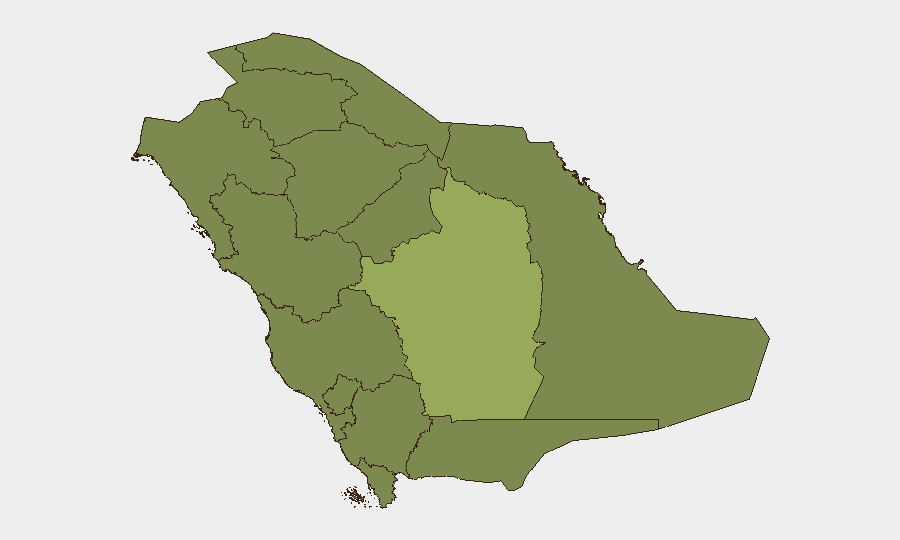
Situation Summary
Saudi Arabia remains at composite threat rank #59 globally (32/100), with 79 tracked events. The Kingdom faces an elevated but currently backgrounded strategic threat posture linked to Iranian and regional actors, following documented drone and missile strikes earlier in 2026—most notably the 8 March Al Kharj labour-camp attack. Open reporting from the past 24–48 hours does not document new domestic terrorism, civil unrest, or infrastructure attacks; current risk reflects sustained military investment and air-defense readiness rather than acute new incidents. Riyadh Region continues to dominate sub-national threat concentration.
Key Developments
No clearly verified domestic incidents meeting 24–48 hour recency and multi-source confirmation thresholds are available in current open reporting. The following contextual signals inform the security picture:
- Kingdom-wide – ongoing (mid-late June 2026): Analysts and Gulf media describe Saudi Arabia as maintaining elevated strategic threat posture and "real and persistent security threats" tied to Iran and regional escalation; military investment and force-posture adjustments frame current readiness rather than specific new attacks.
- Riyadh Region – 23 June 2026: GeoBit event signal tracking records a "Blockade · RIYADH vs COMPANY" event; open sources do not yet provide incident-specific detail, location, or casualty confirmation.
- Kingdom-wide – 23 June 2026: Small Arms Combat signal attributed to "EUROPE vs SAUDI" recorded in event feed; context and location not yet clarified in available open reporting.
- Trader-related unrest – 24 June 2026: "Violent Protest/Riot · TRADER" signal flagged; no location, motive, or scale detail available in current web research.
- Bank rejection signal – 23 June 2026: Financial-sector "Reject · BANK" event logged; operational context unclear.
Note on temporal scope: Earlier 2026 drone/missile events in Saudi Arabia (March–June) are referenced in current threat assessments but lie outside the 24–48 hour reporting window.
Highest-Risk Areas
Riyadh Region (52.3 composite risk) significantly outweighs all other sub-national zones and drives overall Kingdom threat concentration—a 68% gap above Makkah (31.2). The capital remains the highest-value target for state and non-state actors given its economic, political, and military centrality. Makkah and 'Asir Province (29.8) follow but at substantially lower risk elevation. All remaining provinces cluster at 22.3, indicating either lower activity density or more diffuse, lower-intensity event patterns. Risk in Riyadh is driven by diplomatic incidents, financial/banking activity, infrastructure targeting, and proximity to command-and-control nodes.
How GeoBit Would Assist
Corporate security teams should employ Intel Sweep and global event feeds to monitor real-time Kingdom-wide incident signals, paired with OSINT fusion & corroboration (Twitter/Telegram, multi-language sources) to validate or clarify emerging event codes—such as the Blockade and Trader unrest flagged above—before they escalate. AOI Monitoring & Early Warning with persistent watches on Riyadh Region, Makkah, and critical infrastructure nodes (petrochemical, banking, transport hubs) can provide alert-based early notification of protests, security operations, or air-defense activity. Routing & Network Analysis enables real-time alternative-path planning for staff movement if diplomatic incidents or blockades affect key corridors.
7-Day Outlook
No acute escalation is expected based on available signals, though the Kingdom's threat environment remains elevated relative to baseline due to regional Iran–GCC tensions and March 2026 precedent. Monitoring should prioritize clarification of the 23–24 June signals (Blockade, Trader unrest, Bank rejection) through targeted OSINT to determine whether they represent isolated incidents or early indicators of broader instability. Travel and asset-protection postures should remain consistent with current advisory levels unless event correlation or new intelligence suggests tactical change.
Highest-Risk Areas — Ranked
| # | State / Region | Risk |
|---|---|---|
| 1 | Riyadh Region | 52.3 |
| 2 | Makkah Region | 31.2 |
| 3 | 'Asir Province | 29.8 |
| 4 | Medina Province | 22.8 |
| 5 | Northern Borders Province | 22.3 |
| 6 | Al-Bahah Province | 22.3 |
| 7 | Jazan Province | 22.3 |
| 8 | Najran Region | 22.3 |
| 9 | Tabuk Province | 22.3 |
| 10 | Al Jawf Region | 22.3 |
| 11 | Ḥa'il Province | 22.3 |
| 12 | Al-Qassim Province | 22.3 |
Sources
Previous Daily Briefs
A new Saudi Arabia brief is written every day — each with its own risk map and downloadable CSV. Here's the last week; use the calendar to go further back.
📅 Browse every day by calendar →
Highlighted days have a brief. Tap a day for that day's map & analysis, or “csv” for that day's dataset ($5).