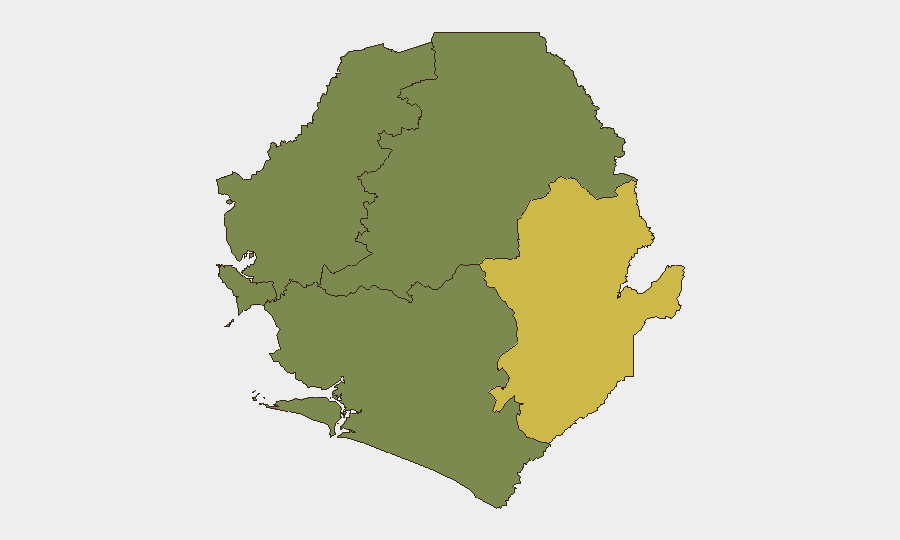
Situation Summary
Sierra Leone remains a low-threat environment with a composite risk score of 5 (ranked #152 globally). No significant security, civil-unrest, criminal, or infrastructure incidents have been confirmed in open sources over the last 24–48 hours. The country's overall stability trajectory is stable, though Eastern Province carries elevated risk requiring continued monitoring.
Key Developments
- Washington, D.C. – 18 June 2026 · IMF Executive Board approved a US$211 million Resilience and Sustainability Facility loan to support Sierra Leone's climate resilience and balance-of-payments stability. No security incidents or civil unrest linked to this macroeconomic decision have been reported.
- No corroborated acute security events in Sierra Leone (last 24–48 hours) · Web search, major news wires, and official government/travel-advisory channels show no reports of protests, riots, armed conflict, terrorist activity, or large-scale criminal violence. Unconfirmed social-media claims lack independent corroboration and do not meet reporting thresholds.
- Cholera monitoring ongoing · A cholera event signal remains in GeoBit's tracking as a health/humanitarian concern; no acute outbreak surge has been reported in the last 24 hours, but public-health vigilance in affected areas remains warranted.
Highest-Risk Areas
Eastern Province (risk score 68) is the clear driver of national-level concern, reflecting historical patterns of resource competition, cross-border trafficking, and limited state authority in remote zones. Western Area (risk 35)—which includes Freetown and immediate surroundings—ranks second, primarily reflecting urban crime, petty theft, and occasional gang activity affecting expatriate and commercial populations. The three northern and southern provinces carry minimal indexed risk and are broadly stable. Corporate and duty-of-care teams with assets or personnel in the Eastern Province should maintain heightened situational awareness and liaison with local authorities; Western Area requires standard urban security protocols.
How GeoBit Would Assist
Teams securing people and assets in Sierra Leone would benefit from AOI Monitoring & Early Warning focused on Eastern Province and Freetown to detect nascent unrest, cross-border incidents, or health emergencies in real time. Multi-language OSINT and X/Twitter intelligence corroborate or refute unconfirmed social-media claims and fill gaps between official statements and ground truth. Risk & Threat Assessment and Network & Actor Analysis enable identification of criminal networks, trafficking routes, and armed-group movements that could affect supply chains or personnel safety.
7-Day Outlook
Sierra Leone is expected to remain stable through the near term. Continued attention to health systems (cholera surveillance) and Eastern Province border dynamics is prudent; no acute escalation is forecast. Monitoring should focus on government compliance with IMF conditions and any downstream policy announcements that could affect labor, commerce, or local grievance levels.
Highest-Risk Areas — Ranked
| # | State / Region | Risk |
|---|---|---|
| 1 | Eastern Province | 68 |
| 2 | Western Area | 35 |
| 3 | North West Province, Sierra Leone | 0 |
| 4 | Northern Province, Sierra Leone | 0 |
| 5 | Southern Province, Sierra Leone | 0 |
Sources
Previous Daily Briefs
A new Sierra Leone brief is written every day — each with its own risk map and downloadable CSV. Here's the last week; use the calendar to go further back.
📅 Browse every day by calendar →
Highlighted days have a brief. Tap a day for that day's map & analysis, or “csv” for that day's dataset ($5).