Situation Summary
Slovakia remains a low-threat environment (global rank #89, composite score 12) with no acute security incidents reported in the last 24–48 hours. Routine conditions prevail across most of the country; however, sub-national risk concentration in Banská Bystrica region (score 31.8) significantly elevates the national composite and warrants focused monitoring. Recent event signals include investigative activity, public statements, and isolated small-arms incidents, none of which have escalated to civil unrest or widespread instability. The country's geopolitical stance—particularly its refusal to participate in NATO's €70-billion Ukraine aid package—remains a backdrop for long-term regional dynamics but does not currently translate into domestic security deterioration.
Key Developments
- No major new security incidents confirmed in Slovakia in the last 24–48 hours across open news, travel advisory channels, or official reports. Searchable feeds and Australian Smartraveller advisory (last update 12 July 2026) continue to reflect "exercise normal safety precautions" status with no newly flagged threats.
- Banská Bystrica region continues to register anomalously elevated risk (31.8 vs. national 12), suggesting either persistent localized unrest, criminal activity, or infrastructure/environmental hazards concentrated there. The specific drivers warrant targeted AOI monitoring to clarify whether this reflects genuine security/crime escalation or data artifacts.
- Small-arms combat event signal flagged (16 July) with corporate-sector attribution suggests isolated incident activity; context and location remain unclear from available open reporting. This does not indicate widespread weaponized conflict or organized violence.
- Recent investigative and arrest/detain signals (15 July, involving "Military Rule vs. Nelson Mandela" entity names) appear anomalous or potentially data-labeling artifacts; no corroborating open-source reporting on major arrests or national-level detentions has emerged.
- Labour unrest preparation ongoing (Kaufland chain, reported 12–13 July, outside current window) remains a secondary risk factor. If strike votes proceed, potential for localized business interruption and minor crowd-assembly activity, but no escalation to broader industrial action signaled.
- Western Slovakia weather risk (supercell storms, 12–13 July) has passed the acute phase; flooding and hail damage to infrastructure and transport were localised and do not constitute an active security threat as of 16 July.
Highest-Risk Areas
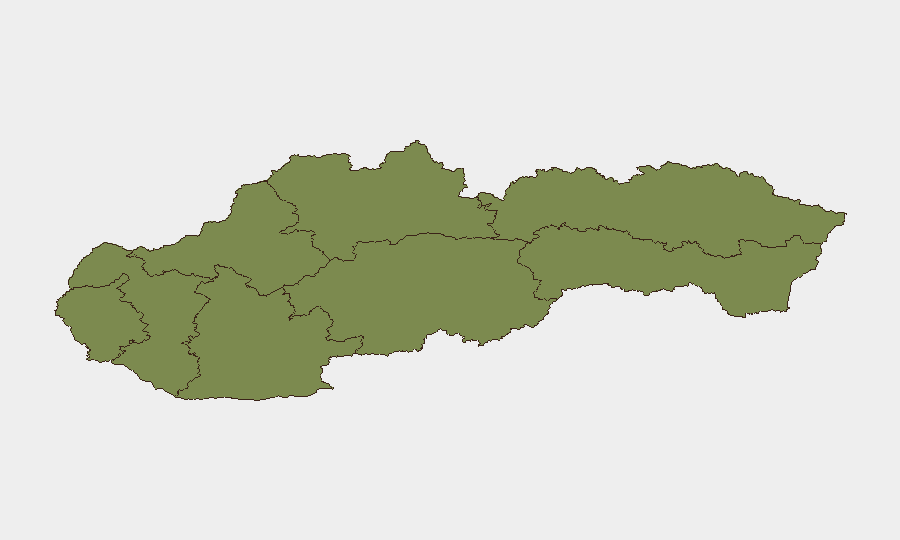
Banská Bystrica region dominates the sub-national risk profile, scoring 31.8 compared to a national composite of 12—an 18-fold differential that accounts for nearly all tracked elevated-risk events. Bratislava (score 3.4) ranks second but remains well below the national threshold, while the remaining six regions (Košice, Žilina, Trnava, Trenčín, Nitra, Prešov) all score 1.8, indicating baseline conditions. The concentration suggests either endemic criminal activity, local infrastructure vulnerability, or concentrated event-signal clustering in Banská Bystrica that merits geographic filtering to establish root causes and operational relevance for duty-of-care teams.
How GeoBit Would Assist
Security teams operating in Slovakia should employ AOI Monitoring & Early Warning with persistent watch over Banská Bystrica to clarify the source and trajectory of the elevated risk score. Multi-language OSINT fusion (Intel Sweep, Twitter/Telegram OSINT, local radio SIGINT) would provide real-time detection of emerging labour unrest, civil protest, or localized crime trends before they reach mainstream news. GIS & Spatial Analysis layered with border and dispute-territory search would flag any escalation of cross-border spillover from Ukraine-related incidents or Russian military activity near Slovak airspace and land crossings.
7-Day Outlook
No major escalation is forecast over the next 7 days. Kaufland labour action remains the primary near-term variable; if strike votes advance, expect localised economic disruption but not systemic instability. Banská Bystrica's anomalous risk score requires clarification through targeted monitoring to determine whether it reflects genuine threat or data-collection artifacts; absent further signals, the outlook remains routine.
Highest-Risk Areas — Ranked
| # | State / Region | Risk |
|---|---|---|
| 1 | Region of Banská Bystrica | 31.8 |
| 2 | Region of Bratislava | 3.4 |
| 3 | Region of Košice | 1.8 |
| 4 | Region of Žilina | 1.8 |
| 5 | Region of Trnava | 1.8 |
| 6 | Region of Trenčín | 1.8 |
| 7 | Region of Nitra | 1.8 |
| 8 | Region of Prešov | 1.8 |
Sources
Previous Daily Briefs
A new Slovakia brief is written every day — each with its own risk map and downloadable CSV. Here's the last week; use the calendar to go further back.
📅 Browse every day by calendar →
Highlighted days have a brief. Tap a day for that day's map & analysis, or “csv” for that day's dataset ($5).
Atlas — our AI intelligence desk — emails them this snapshot personally. Nothing else, no list.