Situation Summary
Slovenia maintains a low composite threat profile (global rank #150, score 5/100) with no active major security incidents reported in the last 24–48 hours. All sub-national regions carry zero or minimal risk scores, indicating stable conditions across the country. The security environment remains consistent with Slovenia's recent baseline as a NATO member and EU state with effective state capacity and law enforcement.
Key Developments
No reportable security incidents were identified in Slovenia during the 24–48 hour reporting window (2026-06-26 to 2026-06-27). Recent signal activity (public statements and administrative actions flagged by GeoBit event feeds on 2026-06-26 and 2026-06-27) do not correspond to verified security, crime, conflict, or infrastructure disruptions within Slovenian territory. Cross-border developments involving Spain and Ireland noted in the event log are unrelated to Slovenia's domestic threat landscape.
Highest-Risk Areas
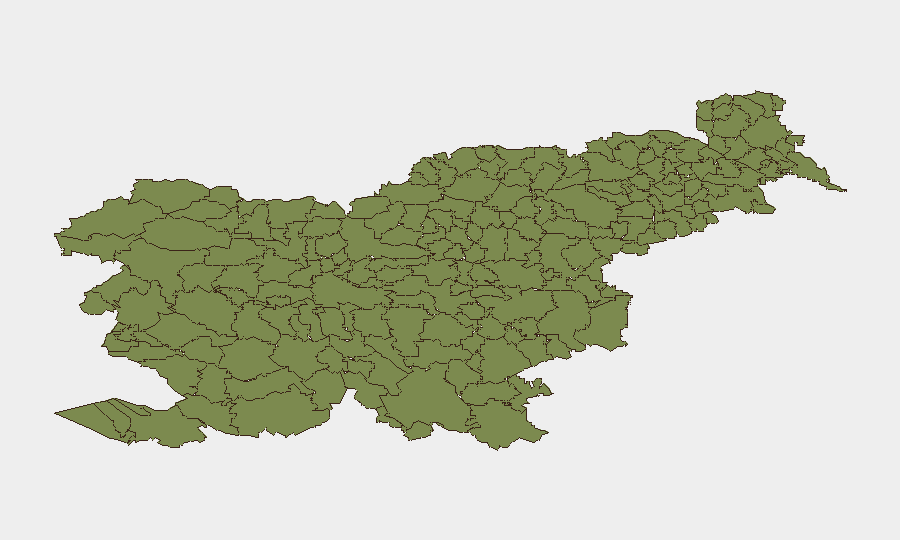
All 12 tracked sub-national regions (Bovec, Kobarid, Kanal, Kranjska Gora, Gorje, Tolmin, Bohinj, Cerkno, Brda, Šempeter-Vrtojba, Renče-Vogrsko, and Miren-Kostanjevica) register identical zero risk scores, indicating uniform low threat across Slovenia's geography. This flat risk profile reflects stable governance, police capacity, and absence of active conflict, organized crime, or protest activity in any locality. The northwestern border regions and Alpine valleys—historically monitored for cross-border movement and transit crime—show no current elevated activity.
How GeoBit Would Assist
For corporate teams managing personnel or assets in Slovenia, GeoBit's AOI (Area-of-Interest) Monitoring & Early Warning capability would provide persistent watch on key business hubs (Ljubljana, Maribor, Celje) with real-time alerting on emerging incidents, protests, or infrastructure disruptions. OSINT fusion across Slovenian news, social media, and official sources (police, transport, local government) would enable duty-of-care teams to detect first signals of travel delays, security incidents, or policy changes affecting operations. Routing & Network Analysis and maritime/aviation tracking support contingency planning for personnel movement and supply-chain continuity in the unlikely event of regional disruption.
7-Day Outlook
No material change to Slovenia's low-risk posture is anticipated over the next seven days. Continued monitoring of cross-border EU mobility, NATO-exercise schedules, and domestic political calendars is standard practice; no specific triggers suggest elevated risk within the coming week.
Report Date: 2026-06-27 | Next Update: 2026-06-28 | Questions/Escalation: Contact GeoBit Duty Officer
Highest-Risk Areas — Ranked
| # | State / Region | Risk |
|---|---|---|
| 1 | Bovec | 0 |
| 2 | Kobarid | 0 |
| 3 | Kanal | 0 |
| 4 | Kranjska Gora | 0 |
| 5 | Gorje | 0 |
| 6 | Tolmin | 0 |
| 7 | Bohinj | 0 |
| 8 | Cerkno | 0 |
| 9 | Brda | 0 |
| 10 | Šempeter-Vrtojba | 0 |
| 11 | Renče-Vogrsko | 0 |
| 12 | Miren-Kostanjevica | 0 |
Sources
Previous Daily Briefs
A new Slovenia brief is written every day — each with its own risk map and downloadable CSV. Here's the last week; use the calendar to go further back.
📅 Browse every day by calendar →
Highlighted days have a brief. Tap a day for that day's map & analysis, or “csv” for that day's dataset ($5).