Situation Summary
Sri Lanka remains at moderate composite threat level (rank #49 globally, 7.3/10) with governance instability and civil-sector friction dominating recent signals. A cluster of arrest, investigation, and public-statement events on 2026-06-10 suggests active law-enforcement activity and inter-agency tensions, possibly linked to ongoing 2019 Easter bombings accountability. The Western Province accounts for nearly 48% of sub-national risk; concentrated pressure in Colombo and surrounding areas warrants enhanced situational awareness for corporate personnel and supply-chain assets.
Key Developments
- Colombo, 2026-06-10 — Multiple arrest/detention events recorded; context suggests active investigation phase, possibly related to 2019 Easter bombings evidence disclosure (reported 2026-06-10, News 1st).
- 2026-06-10 — Sri Lanka Ministry of Public Security issued public statement regarding investigation findings; alleged involvement of former military intelligence official in Easter attacks facilitation.
- 2026-06-10 — Police investigation initiated; unclear scope, but timing aligns with public-sector accountability signals (2026-06-08) and arrest cluster.
- 2026-06-10 — Banking sector issued public statement vis-à-vis Sri Lanka government; nature of disagreement not clarified in available signals—monitor for economic/regulatory friction.
- 2026-06-10 — Maritime/diplomatic tension: Sri Lanka and Maldives exchanged public statements (dual signals, 2026-06-10); background context required, but regional relations show strain.
- 2026-06-08 — Public sector disapproval signal recorded; suggests internal governance friction or labor/administrative tensions.
Highest-Risk Areas
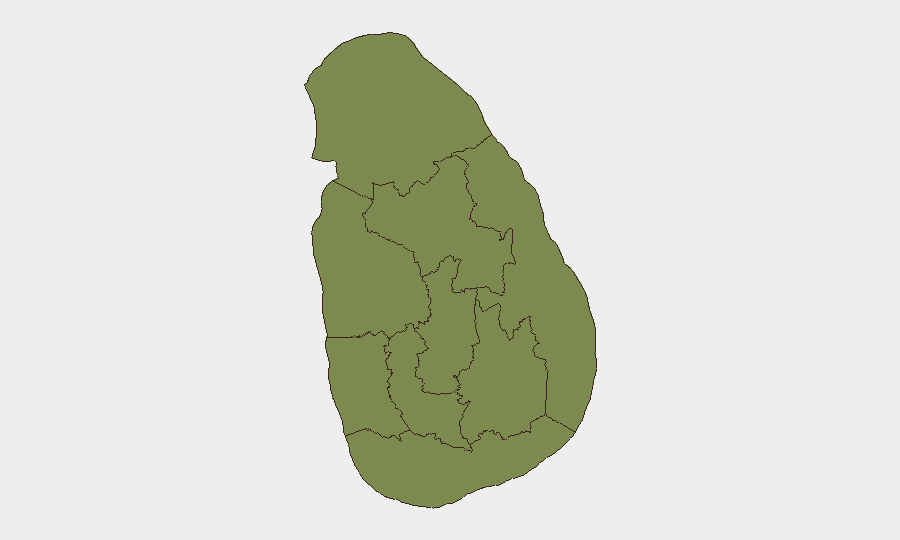
The Western Province (risk 35.1) concentrates nearly half of all sub-national threat—Colombo and suburbs remain the operational and political center where governance, law enforcement, and business intersect. Uva Province (23.3) represents a secondary pressure point; combined, these two regions account for ~63% of mapped risk. North Western and Eastern Provinces (11.1 and 10.6 respectively) show lower but material risk, likely reflecting historical communal sensitivities and informal economic activity. Northern and Central regions remain comparatively stable. Corporate presence in Colombo and the Western Province corridor should assume elevated incident probability and maintain active duty-of-care monitoring.
How GeoBit Would Assist
Intel Sweep & OSINT Fusion provides real-time cross-referencing of public statements, arrest records, and investigative announcements to disambiguate arrest clusters and assess whether they signal systemic instability or routine law enforcement. AOI Monitoring & Early Warning deployed on Colombo business districts, ports, and key road networks delivers persistent alerting on protests, roadblocks, or police activity that could affect personnel movement or supply chains. Network & Actor Analysis maps relationships among government agencies, military intelligence, and security forces to anticipate coordination gaps or rivalry that may trigger secondary incidents.
7-Day Outlook
The confluence of Easter bombings accountability, banking-sector friction, and inter-agency investigation activity suggests 5–10 days of continued governance signaling and possible follow-on arrests. Regional maritime tension with Maldives poses low immediate physical risk to land-based corporate operations but warrants monitoring for port or trade delays. Absence of mass-casualty or protest signals is positive; maintain baseline elevated posture in Western Province pending clarification of investigation scope and political outcome.
Highest-Risk Areas — Ranked
| # | State / Region | Risk |
|---|---|---|
| 1 | Western Province | 35.1 |
| 2 | Uva Province | 23.3 |
| 3 | North Western Province | 11.1 |
| 4 | Eastern Province | 10.6 |
| 5 | Sabaragamuwa Province | 9.7 |
| 6 | Northern Province | 5.6 |
| 7 | Central Province | 5.6 |
| 8 | North Central Province | 5.1 |
| 9 | Southern Province | 5.1 |
Sources
Previous Daily Briefs
A new Sri Lanka brief is written every day — each with its own risk map and downloadable CSV. Here's the last week; use the calendar to go further back.
📅 Browse every day by calendar →
Highlighted days have a brief. Tap a day for that day's map & analysis, or “csv” for that day's dataset ($5).