Situation Summary
Switzerland remains at global threat rank #181 with a composite threat score of 2, indicating a stable, low-risk security environment overall. However, elevated diplomatic tensions surrounding US–Iran ceasefire negotiations at Bürgenstock (canton Nidwalden) have created a localized, contained security event that warrants close attention through 22 June. Swiss authorities have maintained visible security perimeters around the talks venue with no reported incidents affecting wider public safety or critical infrastructure. The risk profile remains compartmentalized to the negotiation site and its immediate vicinity.
Key Developments
- Bürgenstock, Nidwalden – 21 June 2026: Iranian negotiators suspended participation in US–Iran ceasefire talks after new threats from US President Trump, halting direct engagement but allowing mediators (Qatar, Pakistan) to maintain shuttle diplomacy. [2][3][4][6][7][8]
- Bürgenstock, Nidwalden – 21–22 June 2026: Iranian officials announced two conditions for returning to talks—a Trump apology and Israeli withdrawal from southern Lebanon—with media reports indicating the delegation considered imminent departure from Switzerland. [2][3][6][8]
- Bürgenstock/Lucerne region – 21–22 June 2026: Swiss security forces maintained a visible police presence and extended venue security operations into Monday morning, with movement restrictions limited to the resort area and no wider impact on public transport or critical infrastructure. [1][6][7]
- Bürgenstock, Nidwalden – 21–22 June 2026: Negotiations reportedly continued in a second day despite the Iranian walkout, with focus on implementing the fragile ceasefire and managing Strait of Hormuz shipping protocols. [1][5][6][7]
- Switzerland-wide – 21–22 June 2026: No significant civil unrest, protests, violent incidents, or infrastructure disruption linked to the talks have been reported across Swiss cities or regions outside the immediate Bürgenstock perimeter. [2][4][5][6][7]
Highest-Risk Areas
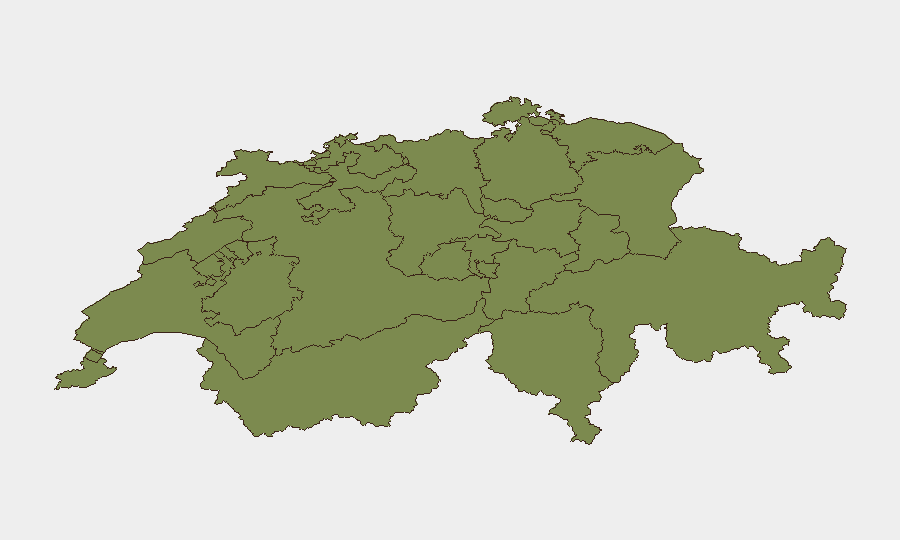
Lucerne (31.4) and Nidwalden (17.7) dominate the sub-national risk ranking, with Nidwalden's elevation driven almost entirely by the Bürgenstock talks and associated diplomatic security operations. Bern follows at 10.1, reflecting its role as the national capital and seat of government coordination; however, no active incidents are currently reported there. Geneva (3.3) and Zurich (3.1), despite being major financial and transport hubs, carry below-average risk scores, indicating that baseline security in Switzerland's largest metropolitan centers remains low and stable. All other cantons score below 2.5, signaling minimal current threat activity.
How GeoBit Would Assist
Corporate security teams should employ Intel Sweep and OSINT fusion to monitor ongoing diplomatic communications and media reporting on talks resumption or collapse, paired with sentiment & temporal analysis of Iranian and US official statements to detect escalatory signals. AOI Monitoring & Early Warning services focused on the Bürgenstock–Lucerne corridor would provide real-time alerts if security posture changes, demonstrations materialize, or the talks dissolve unexpectedly. Routing & Network Analysis tools can identify alternative transport and logistics corridors should localized access restrictions expand beyond the current perimeter.
7-Day Outlook
The talks remain suspended but not formally terminated as of 22 June; Iranian departure from Switzerland is a distinct possibility within 48–72 hours, which would likely reduce localized security risk rapidly. If negotiations resume under revised terms, the Bürgenstock site will likely remain under elevated security through early July. Absent a major escalation or new incident, the broader Swiss security environment is expected to remain stable and conducive to normal business operations across all regions outside the immediate talks zone.
Highest-Risk Areas — Ranked
| # | State / Region | Risk |
|---|---|---|
| 1 | Lucerne | 31.4 |
| 2 | Nidwalden | 17.7 |
| 3 | Bern | 10.1 |
| 4 | Geneva | 3.3 |
| 5 | Zurich | 3.1 |
| 6 | Schwyz | 2.3 |
| 7 | Solothurn | 2.1 |
| 8 | Basel-City | 1.4 |
| 9 | Jura | 1.4 |
| 10 | Basel-Landschaft | 1.4 |
| 11 | Aargau | 1.4 |
| 12 | Vaud | 1.4 |
Sources
Previous Daily Briefs
A new Switzerland brief is written every day — each with its own risk map and downloadable CSV. Here's the last week; use the calendar to go further back.
📅 Browse every day by calendar →
Highlighted days have a brief. Tap a day for that day's map & analysis, or “csv” for that day's dataset ($5).