Situation Summary
Tajikistan remains in a steady-state security posture with no reported ground-level incidents in the last 24–48 hours. The country's composite threat score of 13 reflects baseline structural risks—primarily stemming from the porous Tajik–Afghan border and periodic tensions with Kyrgyzstan—rather than acute active violence. Diplomatic and regional security cooperation are the primary observable developments, indicating no imminent destabilization but continued institutional focus on border control and counter-terrorism.
Key Developments
- Dushanbe, 11–12 June 2026: India's Minister of State for External Affairs Kirti Vardhan Singh visited Tajikistan for bilateral talks on trade, connectivity, and security cooperation, reflecting deepening India–Tajikistan strategic engagement on regional stability issues.
- Kazan, Russia, 10–12 June 2026: CSTO foreign ministers, including Tajikistan's representatives, accelerated planning for a targeted intergovernmental program to strengthen the Tajikistan–Afghanistan border. Tajik officials subsequently denied social-media reports of separate side negotiations on this topic, indicating active information control around border-security narratives.
- Regional (Pakistan–Central Asia), 11–12 June 2026: Pakistan's Interior Minister convened security and counter-terrorism talks with counterparts from Tajikistan, Uzbekistan, Kyrgyzstan, and Kazakhstan, focused on transnational threats including illegal migration, narcotics trafficking, and terrorism.
- No reported ground-level incidents: Open-source monitoring identified no verifiable protests, armed clashes, terrorist attacks, cross-border skirmishes, infrastructure disruptions, or high-impact crimes within Tajikistan during the last 24–48 hours.
Highest-Risk Areas
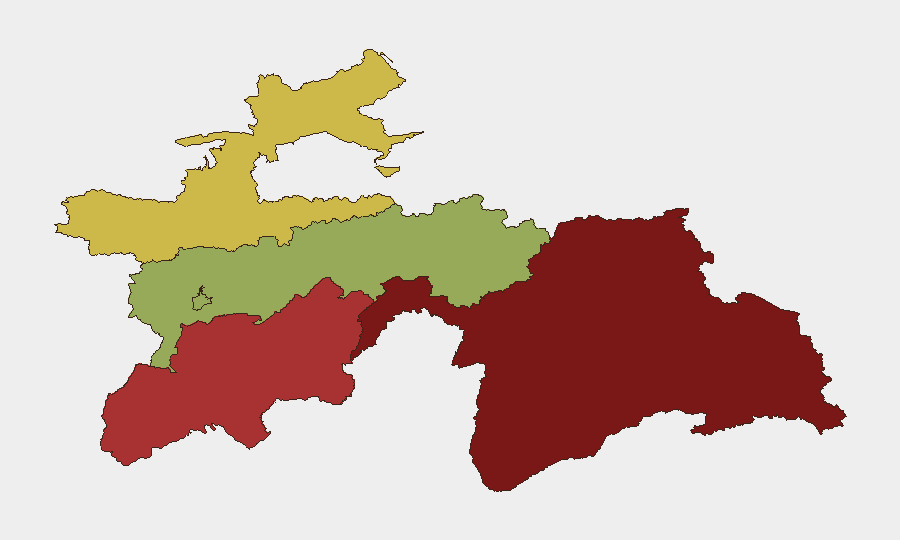
Gorno-Badakhshan Autonomous Region (GBAO, risk score 92) remains the country's critical vulnerability, driven by its remote mountainous terrain, porous Afghan border, and limited state capacity. Khatlon Region (78) ranks second, reflecting similar border pressures and historical cross-border trafficking networks. Together, these two regions account for the majority of Tajikistan's transnational crime, narcotics, and irregular-migration exposure. Dushanbe (42), while significantly lower-risk, remains the capital and focus of political and diplomatic activity; routine security incidents there carry disproportionate operational impact for international personnel and businesses.
How GeoBit Would Assist
Security teams with personnel or assets in Tajikistan should employ AOI Monitoring & Early Warning on Gorno-Badakhshan and Khatlon border zones to detect trafficking, movement anomalies, or emerging cross-border incidents before they escalate. Intel Sweep and multi-language OSINT fusion across local, regional, and Russian-language sources provide real-time corroboration of on-the-ground developments and official denials (such as the recent border-program narrative control). Routing & Network Analysis supports duty-of-care planning for personnel traveling between Dushanbe and provincial capitals, identifying safer corridors and alternative routes during periods of elevated regional tension.
7-Day Outlook
No acute catalyst for destabilization is visible in the near term. Ongoing CSTO border-strengthening discussions suggest a managed, incremental approach to Tajik–Afghan security rather than emergency response. Expect continued routine diplomatic engagement and cyclical counter-terrorism coordination; the absence of reported incidents in the last 48 hours is consistent with the current baseline risk trajectory for Tajikistan's major urban centers and transport corridors.
Highest-Risk Areas — Ranked
| # | State / Region | Risk |
|---|---|---|
| 1 | Gorno-Badakhshan Autonomous Region | 92 |
| 2 | Khatlon Region | 78 |
| 3 | Sughd Region | 65 |
| 4 | Districts of Republican Subordination | 58 |
| 5 | Dushanbe | 42 |
Sources
Previous Daily Briefs
A new Tajikistan brief is written every day — each with its own risk map and downloadable CSV. Here's the last week; use the calendar to go further back.
📅 Browse every day by calendar →
Highlighted days have a brief. Tap a day for that day's map & analysis, or “csv” for that day's dataset ($5).