Situation Summary
Tunisia remains a moderate global security concern (rank #47, composite threat score 23) with acute risk concentrated in the capital, Tunis (sub-national score 31.4). Recent signals indicate domestic political friction, including arrests of journalists and administrative sanctions, alongside a persistent state of emergency and rolling civil unrest. The security environment is shaped by ongoing terrorism risk in border regions, infrastructure strain from a severe heatwave, and periodic demonstrations in urban centers, though no single major incident has been confirmed in the immediate 24–48 hour window.
Key Developments
Data gap advisory: Open-source verification of specific, time-stamped security incidents in Tunisia for July 21–23, 2026 remains limited. The following signals are drawn from GeoBit event feeds but lack independent cross-corroboration across multiple outlets:
- Political tensions escalating – Tunis, July 21–23, 2026
Presidential public statements, disapprovals directed at both Algerian authorities and domestic actors, and administrative sanctions issued by Tunisian authorities suggest heightened political friction. A journalist arrest on July 22 aligns with this pattern.
- Administrative action – Tunisia (national), July 23, 2026
Unspecified administrative sanctions were announced; scope and affected sector remain unclear from available open sources.
- Journalist detained – location unconfirmed, July 22, 2026
An arrest of a journalist was recorded; details on charges, detention location, and release status are not yet confirmed in open reporting.
- Ongoing civil protection operations – nationwide, July 19–20, 2026 (reference data older than 48h)
Tunisia's Civil Protection executed 914 interventions in 24 hours, including 162 fire responses and 163 road rescues, indicating sustained operational tempo across the country.
Older structural risks (heatwave-related power outages affecting health outcomes, rolling nationwide demonstrations, and elevated terror threat in mountain and border zones near Algeria and Libya) continue but are not discrete new incidents.
Highest-Risk Areas
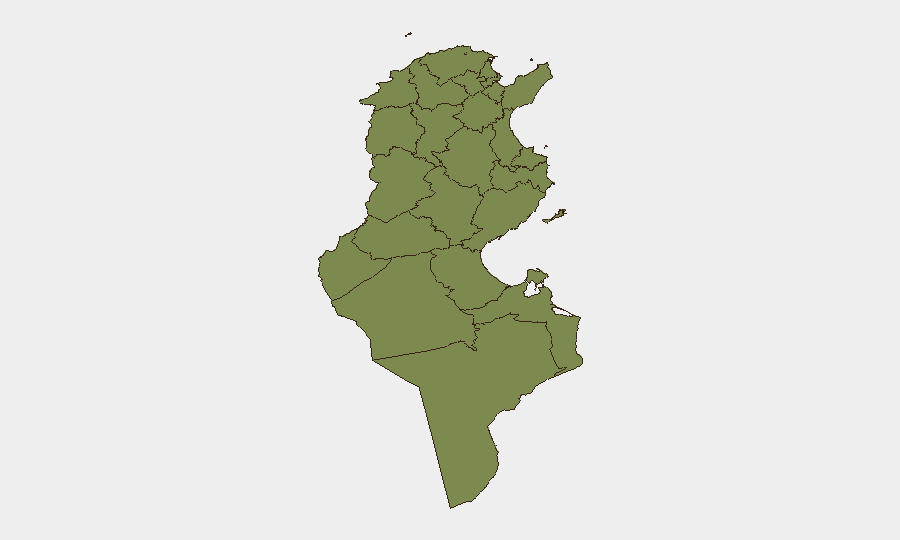
Tunis dominates the risk landscape, with a composite score of 31.4—more than 2.4 times higher than the second-ranked region, Sfax (12.7). This reflects the capital's role as the political, administrative, and media center; recent signals of presidential directives, journalist arrests, and administrative sanctions are all concentrated there. Sfax, Tunisia's second-largest city and key port, carries moderate risk (12.7), likely tied to economic activity, labor movements, and secondary protest activity. All other tracked regions score between 1.4 and 5.2, indicating that security risk is heavily weighted toward the capital and coastal commercial hubs.
How GeoBit Would Assist
Security teams with staff or assets in Tunisia should deploy AOI Monitoring & Early Warning on Tunis and Sfax to detect demonstrations, police activity, and checkpoint changes in real time. Intel Sweep and multi-language OSINT fusion (including X/Twitter, local media, and Telegram channels) would rapidly corroborate or refute the political signals now appearing in event feeds, clarifying the journalist arrest and administrative sanctions. Conflict and network analysis would help map which political or civil-society actors are driving the escalating rhetoric, enabling duty-of-care teams to assess proximity risk to their personnel.
7-Day Outlook
Political tension appears to be rising, with judicial and administrative actions accelerating. If demonstrations spread from Tunis to secondary cities or labor unrest intensifies, risk could shift upward. Heatwave-related infrastructure failures and periodic security force responses to protest activity will likely persist. No imminent major incident is signaled, but volatility remains elevated; continuous monitoring is warranted.
Highest-Risk Areas — Ranked
| # | State / Region | Risk |
|---|---|---|
| 1 | Tunis | 31.4 |
| 2 | Sfax | 12.7 |
| 3 | Nabeul | 5.2 |
| 4 | Tataouine | 1.4 |
| 5 | Monastir | 1.4 |
| 6 | Mahdia | 1.4 |
| 7 | Médenine | 1.4 |
| 8 | Jendouba | 1.4 |
| 9 | Béja | 1.4 |
| 10 | Bizerte | 1.4 |
| 11 | Ariana | 1.4 |
| 12 | Manouba | 1.4 |
Sources
Previous Daily Briefs
A new Tunisia brief is written every day — each with its own risk map and downloadable CSV. Here's the last week; use the calendar to go further back.
📅 Browse every day by calendar →
Highlighted days have a brief. Tap a day for that day's map & analysis, or “csv” for that day's dataset ($5).
Atlas — our AI intelligence desk — emails them this snapshot personally. Nothing else, no list.