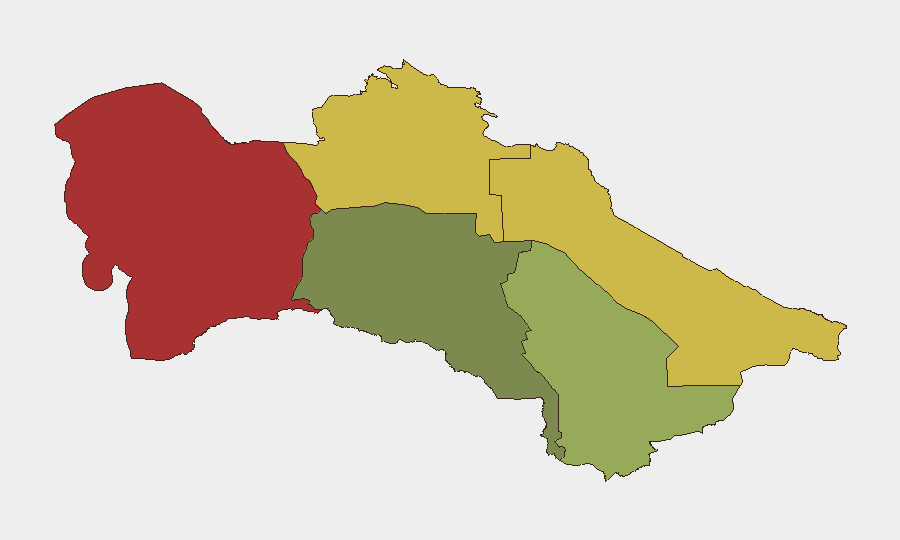
Situation Summary
Turkmenistan remains stable with no credible security incidents reported in the past 24–48 hours. The national composite threat score stands at 2, reflecting a low-risk operational environment. Recent diplomatic activity (UN Security Council engagement on Afghanistan, US–Turkmenistan economic cooperation) indicates normal state functions and international engagement. Sub-national risk variation is material, however, with border regions—particularly Balkan and Lebap—carrying elevated risk profiles relative to the capital.
Key Developments
- Ashgabat, 10 June 2026 – Turkmenistan's UN Security Council delegation presented regional infrastructure and stabilization initiatives (TAPI gas pipeline, TAP power line, rail connectivity) as economic tools to support Afghan stability; no domestic security incidents referenced.
- Ashgabat, ~10–11 June 2026 – US–Turkmenistan bilateral engagement progressed on artificial intelligence, gas-export diversification, and education modernization; policy and trade focus with no reported security incidents or unrest.
- Regional context, last 48 hours – UN and open-source reporting on Middle East and Central Asian tensions do not identify spillover incidents, cross-border incursions, or new security events on Turkmenistan's territory.
- No credible acute incidents – Web research, social-media monitoring (X/Twitter, Telegram), and independent reporting identified no verifiable civil unrest, organized crime activity, infrastructure disruption, or acute travel risk in the past 24–48 hours.
Highest-Risk Areas
Balkan Region (risk 78) and Lebap Region (risk 68) account for the largest share of sub-national threat concentration, driven primarily by proximity to Afghanistan and Uzbekistan borders and associated cross-border crime, smuggling, and residual militant activity. Dashoguz Region (62) presents similar border-adjacent exposures along the Uzbekistan and Kazakhstan frontiers. By contrast, Ashgabat City (18) and Ahal Region (35) carry substantially lower risk profiles, reflecting state security concentration in the capital and lower exposure to transnational threats in the south. Organizations with assets, personnel, or supply-chain dependencies in Balkan and Lebap should prioritize border-zone awareness and incident-triggered contingency protocols.
How GeoBit Would Assist
Teams managing Turkmenistan exposure should employ AOI Monitoring & Early Warning with persistent watch on high-risk border zones (Balkan, Lebap, Dashoguz) to trigger alerts on cross-border movement, infrastructure disruption, or security incidents in real time. Intel Sweep and multi-language OSINT (including Telegram and local-language social-media monitoring) provide continuous horizon-scanning for civil unrest, political instability, or crime activity in data-poor environments where state media control limits reporting. Routing & Network Analysis supports alternative journey planning and supply-chain resilience for personnel and cargo transiting high-risk regions.
7-Day Outlook
No material change in the threat trajectory is anticipated over the next 7 days absent new cross-border escalation or domestic political disruption. Balkan and Lebap Regions will likely remain elevated-risk operating environments due to endemic border-zone pressures. Monitoring should remain continuous, with emphasis on early warning for any spike in regional unrest or change in state security posture.
Highest-Risk Areas — Ranked
| # | State / Region | Risk |
|---|---|---|
| 1 | Balkan Region | 78 |
| 2 | Lebap Region | 68 |
| 3 | Dashoguz Region | 62 |
| 4 | Mary Region | 42 |
| 5 | Ahal Region | 35 |
| 6 | Ashgabat City | 18 |
Sources
Previous Daily Briefs
A new Turkmenistan brief is written every day — each with its own risk map and downloadable CSV. Here's the last week; use the calendar to go further back.
📅 Browse every day by calendar →
Highlighted days have a brief. Tap a day for that day's map & analysis, or “csv” for that day's dataset ($5).