Situation Summary
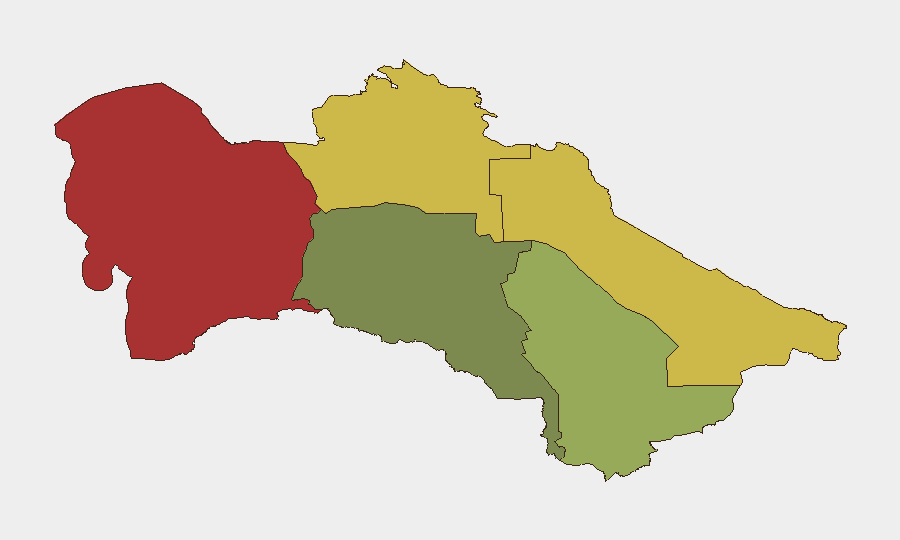
Turkmenistan remains at low overall security risk (composite score 3; rank #186 globally), with no discrete security incidents recorded in the past week. The country's threat environment is characterized by regional variation, with border areas in the west and north substantially elevated above the capital. The current trajectory shows stability at the national level, though persistent operational risk persists in specific velayats.
Key Developments
- Ashgabat, 21–23 October 2026: International Conference and Exhibition "Oil and Gas of Turkmenistan–2026" concluded with energy-sector cooperation agreements signed on 22 October; no security incidents reported.
- Ashgabat, 23 October 2026: Cabinet of Ministers reviewed technical re-equipment and strengthening of Türkmengaz operations; gas supply continuity confirmed with no infrastructure threats noted.
- Ashgabat, 24 October 2026: Energy officials outlined production targets of approximately 80 bcm of gas for 2026 and reiterated interest in the Trans-Caspian gas route; no operational disruptions reported.
- Dashoguz velayat, 23 October 2026: Authorities announced expansion of cottonseed-processing capacity; no civil unrest, criminal activity, or operational disruption documented.
- Ashgabat, 24 October 2026: Government announced preparations for international labor-related forums scheduled for November; no political instability or civil unrest reported.
Highest-Risk Areas
Balkan Region (risk score 78) and Lebap Region (risk score 68) drive the country's aggregate threat profile, reflecting persistent challenges in border security, smuggling interdiction, and occasional cross-border activity. Dashoguz Region (risk score 62) presents elevated risk linked to its position as Turkmenistan's northernmost velayat and proximity to Afghanistan and Uzbekistan. By contrast, Ashgabat City (risk score 18) and Ahal Region (risk score 35) remain substantially lower-risk, reflecting greater state capacity and monitoring in the capital and southern areas. Risk concentration in the northwest and north reflects geographical and administrative vulnerabilities rather than acute destabilization.
How GeoBit Would Assist
Security teams monitoring Turkmenistan would leverage AOI Monitoring & Early Warning to establish persistent watch over Balkan and Lebap regions, triggering alerts on cross-border or trafficking signals. OSINT Fusion & Corroboration (multi-language search, X/Telegram intelligence, and event-feed aggregation) would provide real-time visibility into regime stability, energy-infrastructure developments, and border-sector activity. GIS & Spatial Analysis combined with Routing & Network Analysis would support duty-of-care planning for personnel transiting high-risk velayats and alternative routing during localized incidents.
7-Day Outlook
No imminent security deterioration is forecast for the coming week. Energy sector and commercial activity remain the primary operational focus for the government, with no indicators of political instability or civil unrest. Monitoring should remain elevated in Balkan and Lebap regions as a precautionary measure, given their persistent baseline risk profile.
Highest-Risk Areas — Ranked
| # | State / Region | Risk |
|---|---|---|
| 1 | Balkan Region | 78 |
| 2 | Lebap Region | 68 |
| 3 | Dashoguz Region | 62 |
| 4 | Mary Region | 42 |
| 5 | Ahal Region | 35 |
| 6 | Ashgabat City | 18 |
Sources
Previous Weekly Briefs
A new Turkmenistan brief is written every Monday, covering the week — each with its own risk map and downloadable CSV. Use the calendar to go further back.
- October 19, 2026
- October 12, 2026
- October 5, 2026
- September 28, 2026
- September 21, 2026
- September 14, 2026
- September 7, 2026
📅 Browse past briefs by calendar →
Highlighted days have a brief. Tap a day for that day's map & analysis, or “csv” for that day's dataset ($5).
Atlas — our AI intelligence desk — emails them this snapshot personally. Nothing else, no list.