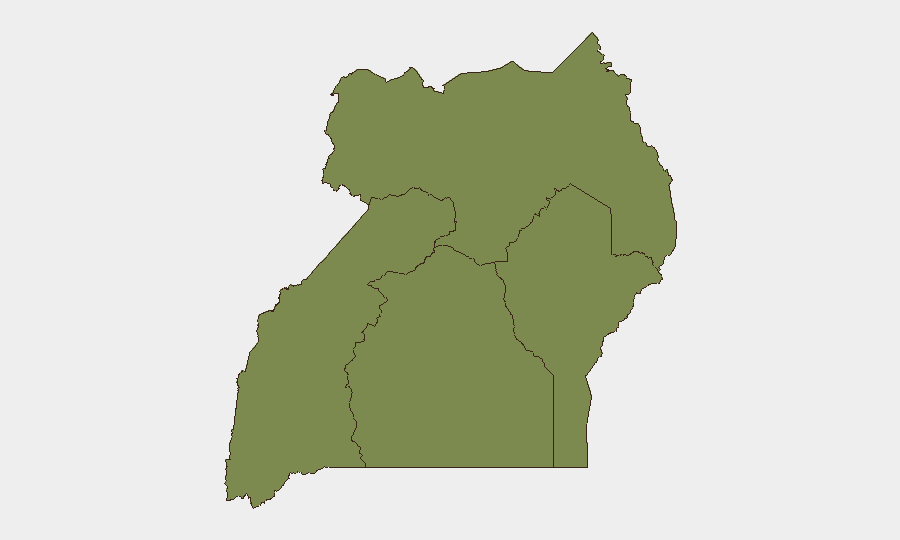
Situation Summary
Uganda remains at composite threat rank #59 globally, with an uptick in state security operations and media repression over the past 48 hours. The Central Region (risk score 32) dominates the risk landscape, reflecting ongoing tensions around law enforcement, military operations, and government accountability. Recent signals point to escalating friction between state security forces, civil society, and international observers, with no immediate de-escalation indicators.
Key Developments
- Kampala, 2026-07-05 to 07-06 — Uganda's military ordered the shutdown of NTV Uganda and Daily Monitor, with security personnel deployed at Nation Media Group premises and broadcasts interrupted. This represents a significant escalation in press restrictions within the past 48 hours.
- Kampala, 2026-07-06 — Gen. Muhoozi Kainerugaba publicly stated on X that he does "not believe in a free press" and confirmed that media outlets would not reopen without his permission, signaling official policy backing for the crackdown.
- Kampala, 2026-07-06 — President Yoweri Museveni issued a public defense of UPDF security operations, claiming arrests are lawful prosecutions rather than extrajudicial actions. He linked the crackdown to efforts against corruption, organized crime, and abuse of public office, citing State House bribery networks.
- Washington, 2026-07-06 — U.S. Senator Jim Risch called for a review of Washington's security ties with Uganda in response to the weekend media shutdown, indicating potential erosion of bilateral security relations.
- Kampala, 2026-07-05 — Authorities initiated investigations into recent military and security force operations, with conflicting public narratives emerging between government and civil-society sources regarding the legality and scale of arrests.
Highest-Risk Areas
Central Region (risk 32) accounts for the bulk of Uganda's security volatility, driven by Kampala-based political contestation, military operations, and media control efforts. Western Region (26.2) remains elevated, reflecting longer-standing tensions and localized conflict dynamics. Northern and Eastern Regions show substantially lower current risk (5.8 and 2 respectively), indicating that the primary threat surface is urban, political, and state-apparatus centered rather than territorially dispersed.
How GeoBit Would Assist
Security teams should deploy Intel Sweep and X/Twitter OSINT to track real-time statements from military leadership and government officials, coupled with sentiment and temporal analysis to gauge escalation velocity. AOI Monitoring & Early Warning on Kampala and other Central Region nodes would provide persistent alerting on security-force movements, media restrictions, and protest activity. Network & Actor Analysis would map relationships between UPDF command, State House, and international actors (e.g., U.S. security partnerships) to anticipate policy shifts affecting duty-of-care obligations.
7-Day Outlook
The media shutdown suggests a consolidation of state control rather than a temporary enforcement action; further restrictions on civil society and international movement reporting are plausible. International pressure (U.S. review of security ties) may accelerate within 7–14 days, potentially triggering secondary enforcement actions or defensive rhetoric. Personnel and asset risk in Central Region should be reassessed under a heightened state-repression scenario.
Highest-Risk Areas — Ranked
| # | State / Region | Risk |
|---|---|---|
| 1 | Central Region | 32 |
| 2 | Western Region | 26.2 |
| 3 | Northern Region | 5.8 |
| 4 | Eastern Region | 2 |
Sources
Previous Daily Briefs
A new Uganda brief is written every day — each with its own risk map and downloadable CSV. Here's the last week; use the calendar to go further back.
📅 Browse every day by calendar →
Highlighted days have a brief. Tap a day for that day's map & analysis, or “csv” for that day's dataset ($5).
Atlas — our AI intelligence desk — emails them this snapshot personally. Nothing else, no list.