Situation Summary
United Arab Emirates remains a relatively low-threat environment globally (#66 of tracked nations, composite threat score 15), but regional escalation is creating acute tactical risks. Over the past 48 hours, UAE air defenses have intercepted six drones, and senior UAE–Iran security officials have engaged in face-to-face talks for the first time since regional conflict intensified. Abu Dhabi and Dubai account for substantially elevated sub-national risk compared to other emirates, driven by their status as strategic hubs and proximity to regional tensions. Current trajectory suggests managed but elevated alertness rather than imminent acute threat to civilian or corporate operations.
Key Developments
- UAE airspace (nationwide), 14–16 June 2026 — Air defense systems intercepted six unmanned drones over a 48-hour period; UAE officials confirmed no damage or casualties reported. Attribution and origin remain under official assessment.
- UAE–Iran security channel, 12–15 June 2026 — Senior security delegations from UAE and Iran held face-to-face meetings, the first such direct engagement since regional conflict began; described as effort to establish crisis communication and reduce uncontrolled escalation.
- Dubai Emirate, 13 June 2026 — Administrative sanctions issued by Dubai authorities; specific scope and targets not yet publicly detailed in available reporting.
- UAE national level, 15 June 2026 — UAE government issued a public statement (content not yet specified in open reporting); timing suggests response to regional developments or air defense activity.
Highest-Risk Areas
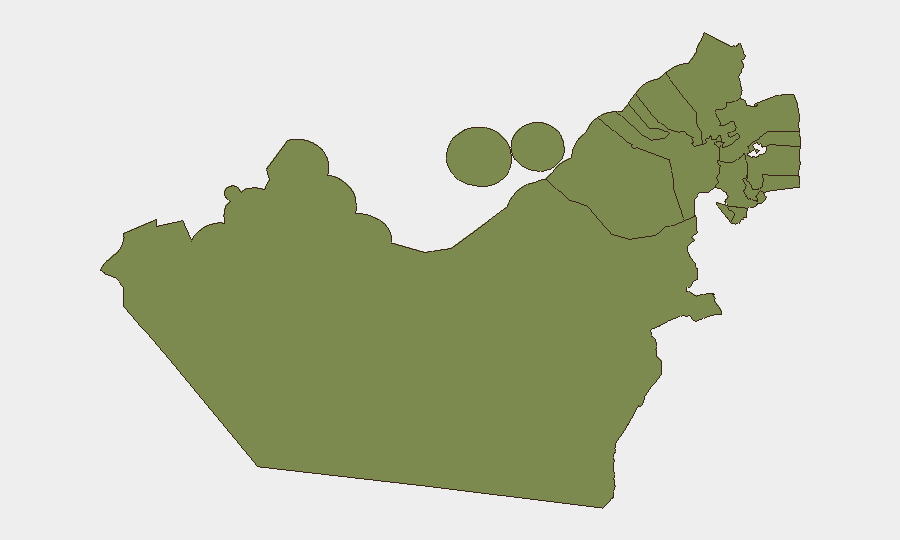
Abu Dhabi Emirate (risk 31.4) and Dubai (risk 29.3) are significantly elevated relative to all other emirates, which cluster at 1.4. This disparity reflects their roles as the UAE's capital and primary commercial/logistics hub respectively—concentration of government infrastructure, foreign business presence, critical port and aviation assets, and international financial operations makes them higher-value targets in any regional scenario. The remaining five emirates (Sharjah, Ajman, Ras al-Khaimah, Fujairah, Umm al-Quwain) show materially lower composite risk, indicating that threat pressure is concentrated in the two major metropolitan and administrative centers.
How GeoBit Would Assist
Security and duty-of-care teams should deploy AOI Monitoring & Early Warning to establish persistent watch on Abu Dhabi and Dubai airspace, ports, and critical infrastructure with automated alerting for drone activity, maritime anomalies, or sudden official statements. OSINT fusion (X/Twitter, local UAE media, official channels, and multi-language feeds) paired with sentiment & temporal analysis enables real-time detection of emerging diplomatic or security signals. Routing & Network Analysis and Maritime & Aviation tracking support contingency planning for personnel, supply chains, and evacuation routes should regional tensions escalate further.
7-Day Outlook
Regional diplomatic engagement between UAE and Iran suggests a measured de-escalation approach over the immediate term, reducing the probability of uncontrolled escalation. However, drone interception activity and heightened air defense posture will likely persist as a baseline security condition for at least 7–10 days. Corporate operations should maintain standard elevated protocols for critical personnel and assets in Abu Dhabi and Dubai while awaiting clarity on attribution and intent behind intercepted drone activity.
Highest-Risk Areas — Ranked
| # | State / Region | Risk |
|---|---|---|
| 1 | Abu Dhabi Emirate | 31.4 |
| 2 | Dubai | 29.3 |
| 3 | Sharjah Emirate | 1.4 |
| 4 | Ajman Emirate | 1.4 |
| 5 | Ras al-Khaimah | 1.4 |
| 6 | Fujairah Emirate | 1.4 |
| 7 | Umm al-Quwain | 1.4 |
Sources
Previous Daily Briefs
A new United Arab Emirates brief is written every day — each with its own risk map and downloadable CSV. Here's the last week; use the calendar to go further back.
📅 Browse every day by calendar →
Highlighted days have a brief. Tap a day for that day's map & analysis, or “csv” for that day's dataset ($5).