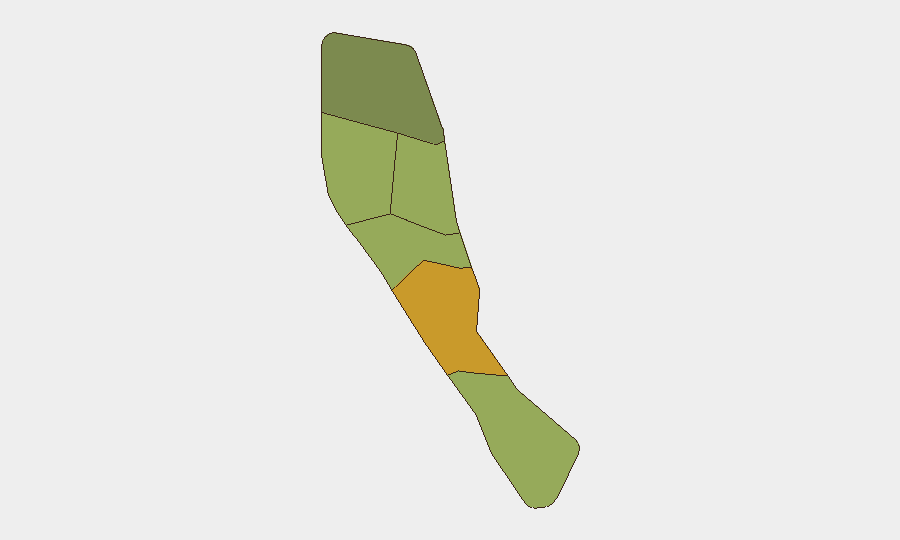
Situation Summary
Vanuatu remains a low-threat environment (global rank #187; composite score 2.5) with no tracked active conflict, civil unrest, or acute security incidents in the last 24–48 hours. The security landscape is shaped by geopolitical positioning rather than domestic instability: Australia and Vanuatu formalized the "Nakamal Agreement" on 29 June, a strategic security pact designed to constrain foreign military presence and require consultation on security arrangements. Political debate continues around alleged China–Vanuatu security talks, but no verified incidents or operational security disruptions have materialized.
Key Developments
- Port Vila, Shefa Province – 29 June 2026: Vanuatu–Australia "Nakamal Agreement" signed in Canberra by PM Jotham Napat and PM Anthony Albanese, formalizing security and development cooperation with explicit restrictions on foreign military bases and consultation requirements on security matters.
- Canberra, Australia – 29 June 2026: High-level bilateral talks between Vanuatu PM Jotham Napat and Australian PM Anthony Albanese to formalize the Nakamal Agreement, framed as a regional security measure to counter potential Chinese security engagement.
- Port Vila, Shefa Province – 1 July 2026: Pacific Innovation Forum on Climate and Environment (PIFCE) convened with Pacific youth and climate leaders; focus on community-based climate adaptation and children's safety rather than immediate security risks.
- Port Vila, Shefa Province – 1 July 2026: Vanuatu Department of Climate Change leading PIFCE implementation in coordination with regional partners; event environment assessed as organized and peaceful.
- Port Vila, Shefa Province – late June 2026: Domestic and regional political debate ongoing regarding alleged China–Vanuatu security negotiations; Vanuatu government publicly denies commitments allowing Chinese security presence.
Highest-Risk Areas
Shefa Province (risk 72) dominates the sub-national ranking and contains the capital, Port Vila, where political decision-making, diplomatic activity, and high-profile international engagement occur. Penama (58), Sanma (52), and Malampa (48) follow but remain moderate-risk zones. Risk elevation in these areas reflects exposure to geopolitical competition and climate-related vulnerabilities rather than active criminal networks or armed groups. No sub-national area shows indicators of imminent instability.
How GeoBit Would Assist
Security teams monitoring Vanuatu should employ AOI Monitoring & Early Warning to track Port Vila and Shefa Province for political developments, diplomatic activity shifts, or protest mobilization around the Nakamal Agreement or alleged China negotiations. OSINT Fusion & Corroboration across X/Twitter, regional news, and government statements would clarify contested claims about China–Vanuatu security talks and detect any escalatory rhetoric or policy reversals. Regime-Stability Search would provide baseline assessment of government cohesion and ministerial positioning on the Australian security pact.
7-Day Outlook
No material deterioration in Vanuatu's security posture is anticipated. The Nakamal Agreement ratification and PIFCE forum are low-risk administrative and diplomatic events. Political debate around Chinese engagement will likely persist in regional media and opposition discourse but is unlikely to trigger unrest. Duty-of-care teams should maintain standard monitoring of Port Vila and Shefa Province but require no elevated alert posture.
Highest-Risk Areas — Ranked
| # | State / Region | Risk |
|---|---|---|
| 1 | Shefa Province | 72 |
| 2 | Penama | 58 |
| 3 | Sanma | 52 |
| 4 | Malampa | 48 |
| 5 | Tafea | 45 |
| 6 | Torba | 35 |
Sources
Previous Daily Briefs
A new Vanuatu brief is written every day — each with its own risk map and downloadable CSV. Here's the last week; use the calendar to go further back.
📅 Browse every day by calendar →
Highlighted days have a brief. Tap a day for that day's map & analysis, or “csv” for that day's dataset ($5).