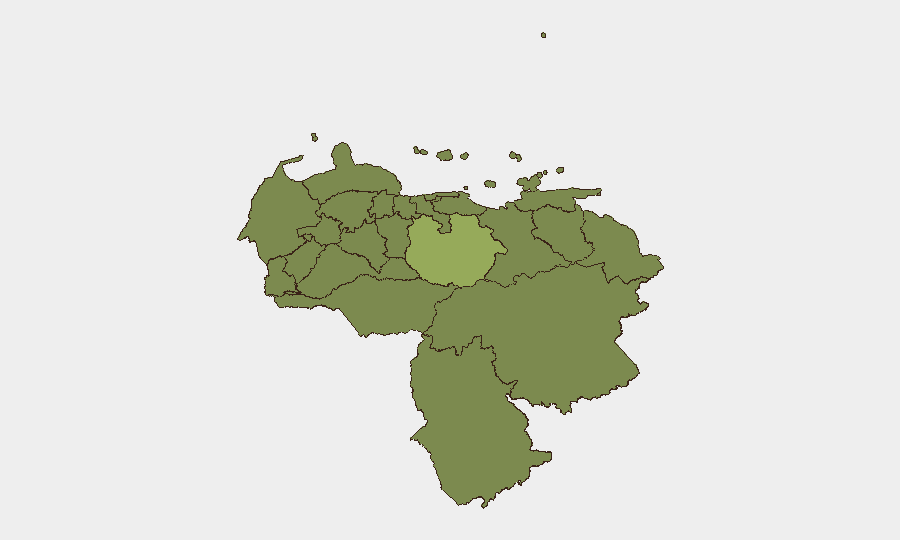
Situation Summary
Venezuela remains a critical security environment ranked #35 globally (composite threat score 55). Recent signals point to escalating state-security tensions, including military force deployment, arrests of political figures and citizens, and civil unrest tied to investigations and student activity as of 11–12 June. Canada and the U.S. maintain maximum travel warnings due to persistent violent crime, kidnapping networks, gang activity, and severely degraded state capacity. The security trajectory is deteriorating rather than stabilizing.
Key Developments
- 2026-06-12 · Military Force Deployment. President-led conventional military action reported; specific location and operational scope require clarification from real-time feeds to assess impact on commercial or expatriate operations.
- 2026-06-11 · Arrest of Political Figure. Government detained a politician; context (charges, faction, implications for stability) not yet detailed in available public sources.
- 2026-06-11 · Citizen Arrest / Detention. Security forces apprehended at least one civilian; no confirmed location or connection to protest activity yet established.
- 2026-06-11 · Student-Led Public Statements. Student groups issued public statements coinciding with broader disapproval signals, suggesting youth mobilization; typical flashpoints are Caracas (Federal District) and university districts.
- 2026-06-11 · Investigative Actions Against Villages. Security or investigative agencies conducted operations in two separate villages; Guarico State (highest sub-national risk, 54.5) and rural areas in Anzoategui or Barinas may be involved, though specific locations remain unconfirmed.
- 2026-06-11 · Physical Assault / Anti-Government Violence. At least one assault tied to government opposition was reported; scale and location unknown from current data.
- 2026-06-11–12 · Broad Disapproval Signals. Multiple public-disapproval events from Venezuela and international statement from Cuba suggest widening political or diplomatic friction; exact triggers require real-time monitoring.
- 2026-06-10 · U.S. Sanctions Amendments (OFAC GL 46C, 47A, 48B, 50B, 51B, 52A, 54A). Treasury issued updated general licenses affecting oil, gas, and mineral sectors; compliance and financial exposure for entities in those industries requires immediate review, though not a ground-level security event.
Highest-Risk Areas
Guarico State dominates sub-national risk (54.5), followed at significant distance by the Federal District (34.8). Guarico's rural character, remote terrain, and apparent presence of illegal armed groups or state-security operations make it highest priority for asset protection teams. The Federal District (Caracas) combines political sensitivity, student activism, and security-force operations, elevating risk for expatriate populations and corporate offices. Secondary-tier risk (25–27) clusters across Anzoategui, Carabobo, Vargas, and Barinas—petroleum-production zones and rural agricultural regions where criminal and state-actor overlap is pronounced. Teams with personnel or supply chains in these zones should expect elevated interdiction, extortion, and detention risks.
How GeoBit Would Assist
Real-time AOI Monitoring & Early Warning on Guarico, the Federal District, and Anzoategui would provide persistent alerting on military movements, arrests, and civil unrest before broader media reporting. Multi-language X/Twitter and Telegram OSINT combined with sentiment & temporal analysis would track student and opposition messaging, identifying protest escalation windows. Routing & Network Analysis would enable security teams to plan alternate travel corridors and supply logistics around known military checkpoints and high-risk villages. Network & Actor Analysis would map government, military, and opposition faction alignments to anticipate cascading detention or violence risks.
7-Day Outlook
Military activity, political arrests, and student mobilization suggest elevated volatility through mid-June. Criminal kidnapping and gang violence will persist independently of state action. Any further high-profile detention or military operation in Guarico or Caracas could trigger broader unrest and tighter security-force posture, raising interdiction risk for business travel and logistics. Regular real-time monitoring and scenario-contingency briefings are operationally warranted.
Highest-Risk Areas — Ranked
| # | State / Region | Risk |
|---|---|---|
| 1 | Guarico State | 54.5 |
| 2 | Federal District | 34.8 |
| 3 | Anzoategui State | 26.2 |
| 4 | Carabobo State | 25.6 |
| 5 | Vargas State | 25.1 |
| 6 | Barinas State | 24.8 |
| 7 | Monagas State | 24.8 |
| 8 | Tachira State | 24.8 |
| 9 | Zulia State | 24.6 |
| 10 | Aragua State | 24.6 |
| 11 | Merida State | 24.6 |
| 12 | Falcon State | 24.5 |
Sources
Previous Daily Briefs
A new Venezuela brief is written every day — each with its own risk map and downloadable CSV. Here's the last week; use the calendar to go further back.
📅 Browse every day by calendar →
Highlighted days have a brief. Tap a day for that day's map & analysis, or “csv” for that day's dataset ($5).