Situation Summary
Zimbabwe remains a stable, lower-threat environment globally (ranked #132 of ~195 countries), with composite threat score of 7 and 447 tracked events. The dominant risk concentration is sharply localized to Harare, which carries a composite risk score of 31.8—approximately 18 times higher than any other province. Recent signal activity (early July 2026) includes diplomatic disapproval statements and a bilateral tension indicator involving China, though no verifiable security incidents, civil unrest, or infrastructure disruptions have been confirmed in the last 24–48 hours.
Key Developments
No specific, independently verified security, conflict, crime, civil unrest, or travel-risk incidents have been reliably identified in Zimbabwe over the last 24–48 hours.
GeoB it's event signal feed records three "Disapprove" indicators (2026-07-02 and 2026-07-04) and one public statement (2026-07-02), but open-source reporting does not yet clarify their operational substance or geographic specificity. A bilateral disapproval signal involving Zimbabwe and China (2026-07-04) suggests potential diplomatic friction, but no security or operational impact on the ground has been corroborated in accessible reporting.
Recommendation: Teams should confirm the nature and scope of these signals through dedicated diplomatic or bilateral intelligence channels before adjusting operational posture.
Highest-Risk Areas
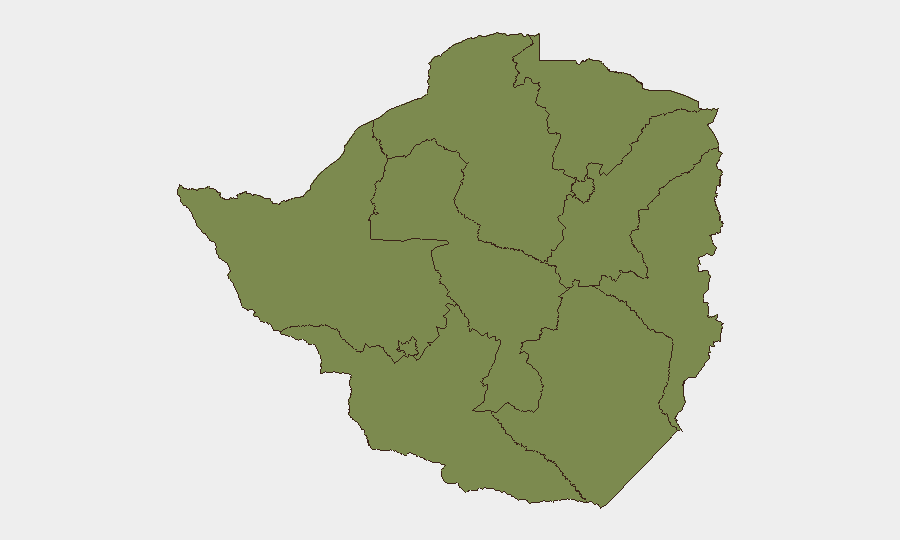
Harare dominates the risk profile, with a score of 31.8 compared to 1.8 across all nine other provinces—a stark concentration. This disparity reflects Harare's role as the capital and economic center, where political, diplomatic, and civil-society activities are densest, alongside the largest resident expat and corporate populations. All provincial areas outside Harare currently score uniformly low (1.8), indicating either stable conditions or lower reporting density. Security and risk teams with personnel or assets in Harare should maintain heightened monitoring; teams operating in peripheral provinces face baseline risk consistent with southern African regional norms.
How GeoBit Would Assist
Corporate security teams in Zimbabwe should deploy AOI Monitoring & Early Warning on Harare CBD and diplomatic quarters to detect emerging civil unrest, protest clustering, or security force mobilization before operational impact. Intel Sweep and X/Twitter OSINT capabilities enable real-time tracking of political statements, civil-society activity, and security commentary from verified local sources, reducing latency in threat recognition. Conflict & Military and Network & Actor Analysis modules support ongoing assessment of government stability, factional dynamics, and international pressure points (e.g., China relationship) that could escalate risk.
7-Day Outlook
Over the next seven days, monitor the diplomatic signals (Zimbabwe–China) for escalation into trade, investment, or security cooperation adjustments that could indirectly affect business operations. Harare should remain the primary focus for monitoring; no systemic instability indicators are currently visible, but the concentration of national risk in the capital warrants continuous watch. Recommended action: activate standing alerts on Harare-based platforms and establish direct contact with government liaison counterparts to clarify the substance and timeline of current diplomatic activity.
Highest-Risk Areas — Ranked
| # | State / Region | Risk |
|---|---|---|
| 1 | Harare | 31.8 |
| 2 | Mashonaland West Province | 1.8 |
| 3 | Matabeleland South Province | 1.8 |
| 4 | Masvingo Province | 1.8 |
| 5 | Matabeleland North Province | 1.8 |
| 6 | Midlands Province | 1.8 |
| 7 | Bulawayo Province | 1.8 |
| 8 | Mashonaland Central Province | 1.8 |
| 9 | Mashonaland East Province | 1.8 |
| 10 | Manicaland Province | 1.8 |
Sources
Previous Daily Briefs
A new Zimbabwe brief is written every day — each with its own risk map and downloadable CSV. Here's the last week; use the calendar to go further back.
📅 Browse every day by calendar →
Highlighted days have a brief. Tap a day for that day's map & analysis, or “csv” for that day's dataset ($5).
Atlas — our AI intelligence desk — emails them this snapshot personally. Nothing else, no list.