Situation Summary
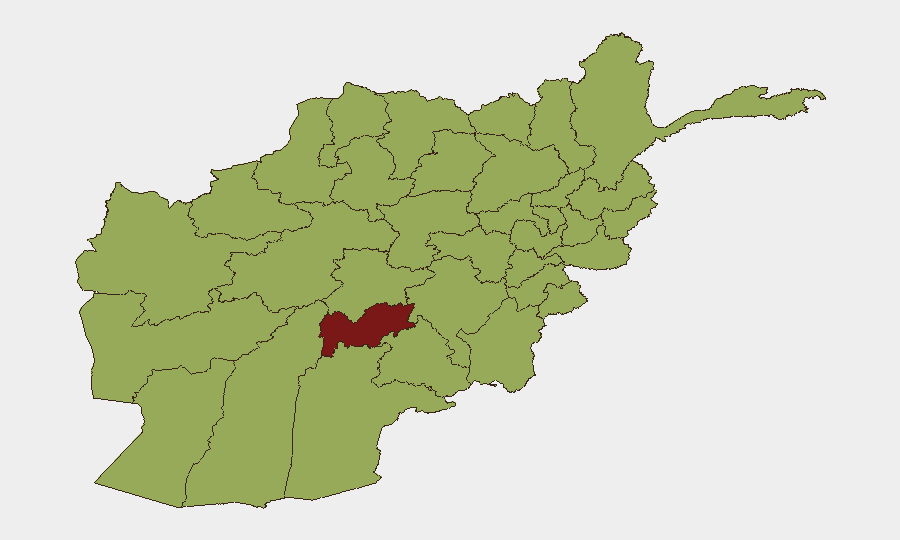
Afghanistan remains in a state of fragile stability with persistent insurgent activity and cross-border security pressures. The composite threat score of 72.1 places Afghanistan at #19 globally, driven primarily by ongoing insurgency operations across multiple provinces. Sub-national risk is highly concentrated, with Uruzgan Province presenting an exceptional outlier at 80.5—nearly 30 points above the second-ranked Maidan Wardak—suggesting localized but acute instability. The trajectory reflects endemic rather than acute deterioration, though flashpoint provinces warrant continuous monitoring.
Key Developments
Recent event signals indicate elevated activity in governance, law enforcement, and cross-border dimensions:
- 2026-06-04 · Healthcare Sector Tension – Public statement issued by Afghanistan targeting medical professionals; specifics of location and underlying cause require clarification but suggests civilian-sector friction.
- 2026-06-03 · Cross-Border Military Activity – Conventional military force event attributed to Pakistan; consistent with recurring cross-border fire/airstrike pattern documented in prior reporting. Location and casualty status unclear from available signals.
- 2026-06-03 · Journalism/Press Freedom Incident – Criminal detention event targeting journalist; reflects ongoing constraints on media freedom and potential for harassment of independent reporting.
- 2026-06-03 · Academic/Intellectual Sector Pressure – Arrest or detention of professor signals potential targeting of educational or knowledge sectors; context requires clarification.
- 2026-06-02 · Congressional/International Pressure – Arrest/detention event linked to Congress; may indicate U.S.-linked individual or consequence of Congressional scrutiny.
- 2026-06-02 · Media Relations Deterioration – Disapproval statement by Afghan entity toward media outlet; part of broader pattern of press constraint.
Note: Event signals lack geographic granularity and casualty/operational detail. Full incident reporting required for risk-impact assessment.
Highest-Risk Areas
Uruzgan Province dominates the risk landscape at 80.5, more than 40% above the national average and 24 points above the second-highest province. This exceptional concentration suggests active insurgent presence, limited state control capacity, or both. Maidan Wardak (56.2) and Balkh (51.4) follow at material but notably lower levels, indicating either secondary operational zones or areas where risk is more dispersed.
The remaining nine ranked provinces (Helmand through Badghis) cluster tightly at 50.5–50.8, suggesting baseline endemic risk across the southern and western regions typical of Taliban/ISKP strongholds and ungoverned or contested terrain. Balkh's elevation above this cluster may reflect northern instability or cross-border vulnerability. Personnel and assets in Uruzgan should be treated as high-exclusion risk; operations in the 50.5–51.4 band require standard conflict-zone protocols.
How GeoBit Would Assist
Intel Sweep & OSINT Fusion would aggregate X/Telegram feeds, local media, and YouTube content to surface real-time event signals with geographic specificity—filling the current gap in location and motive detail for the arrests and military events noted above. AOI Monitoring & Early Warning would establish persistent watch on Uruzgan, Maidan Wardak, and Balkh with automated alerting for violence, detention, or cross-border activity, enabling duty-of-care teams to react to emerging flashpoints. Network & Actor Analysis would map journalist detention, professor arrest, and cross-border incidents to specific state and non-state actors, clarifying threat drivers and second-order risk to personnel.
7-Day Outlook
Near-term trajectory points to sustained low-intensity insurgent pressure with sporadic spikes in cross-border incidents and state pressure on civil-society actors (media, academia). No indicators suggest imminent nationwide escalation; however, Uruzgan and adjacent provinces remain prone to rapid localized deterioration. Organizations should maintain heightened vigilance on staff safety in high-risk provinces and expect continued Pakistani military activity along the border.
Highest-Risk Areas — Ranked
| # | State / Region | Risk |
|---|---|---|
| 1 | Uruzgan Province | 80.5 |
| 2 | Maidan Wardak Province | 56.2 |
| 3 | Balkh Province | 51.4 |
| 4 | Helmand Province | 50.8 |
| 5 | Zabul Province | 50.5 |
| 6 | Kandahar Province | 50.5 |
| 7 | Ghazni Province | 50.5 |
| 8 | Paktika Province | 50.5 |
| 9 | Farah Province | 50.5 |
| 10 | Nimruz Province | 50.5 |
| 11 | Jowzjan Province | 50.5 |
| 12 | Badghis Province | 50.5 |
Sources
Previous Daily Briefs
A new Afghanistan brief is written every day — each with its own risk map and downloadable CSV. Here's the last week; use the calendar to go further back.
📅 Browse every day by calendar →
Highlighted days have a brief. Tap a day for that day's map & analysis, or “csv” for that day's dataset ($5).