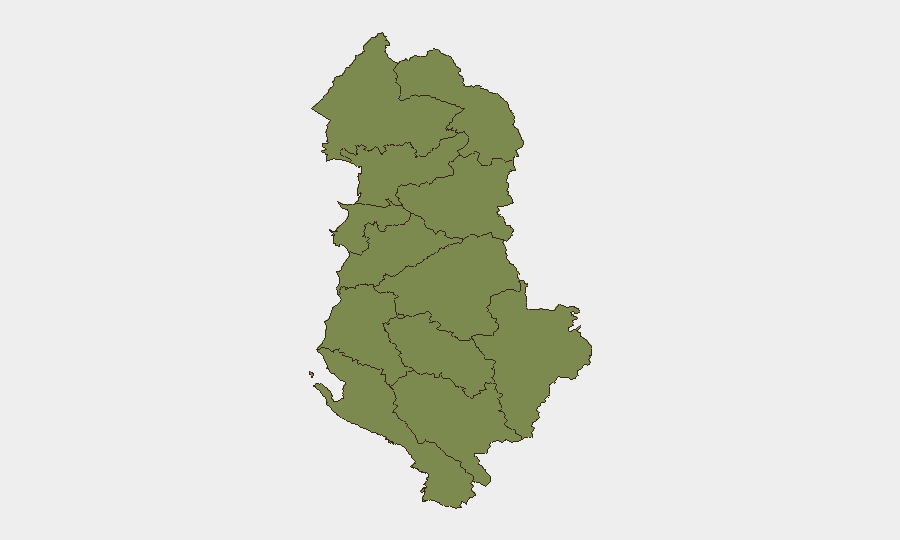
Situation Summary
Albania remains a moderate-risk environment (global rank #74) with acute localized instability concentrated in Elbasan County and driven by sustained anti-government protest activity centered on a contested coastal development deal. The past 24–48 hours show no de-escalation: Tirana has entered day 24 of consecutive nightly demonstrations, protest activity has spread to the disputed Porto Romano coastal zone, and government cyber-security posture has been formally elevated in response to recent infrastructure incidents. Political friction is intensifying around Prime Minister Rama's governance, creating conditions for larger rallies and sporadic disruption to transport and commerce in the capital.
Key Developments
- Tirana – Day 24 of nightly protests (24 June, evening). Several thousand mainly young demonstrators again blocked central boulevards and converged on the Prime Minister's Office, chanting anti-government slogans over the planned sale of Porto Romano coastline; heavy police presence but no major clashes or arrests reported. Political messaging now frames the deal as corrupt and foreign-influenced, broadening discontent beyond the coastal issue.
- Durrës County / Porto Romano – coordinated coastal protest (24 June). Activists held a smaller gathering at or near the disputed beach zone to protest non-transparent land deals and environmental risks; local social media showed banners and flares, no violence reported, but signals coordination between capital and coastal protest networks.
- National – Cyber Security Authority formalized investigative role (24 June). Albania's AKSK announced creation of a new multi-agency intelligence group (AKSK, SHISH, armed forces, Interior Ministry) in response to recent cyber incidents, signaling heightened government concern over critical infrastructure and state systems vulnerability.
- U.S. administration – Western Balkans National Emergency continued (24 June). The U.S. formally reaffirmed the National Emergency declaration for the Western Balkans, preserving sanctions tools against destabilizing actors in Albania and neighboring states; this maintains external pressure on corruption and organized-crime networks but also underscores regional governance fragility.
- Political tension escalation (24 June). International coverage frames PM Rama as "beleaguered," emphasizing that sustained youth-led protest has become a focal point for broader grievances over corruption, governance, and foreign-linked projects; increased risk of larger demonstrations and unscheduled civil unrest.
- Property damage follow-on narrative (21 June, narrative persistence through 24 June). Vandalism at a former luxury coastal development site continues to feature prominently in protest messaging and government security assessments, sustaining activist momentum and public anger over development transparency.
Highest-Risk Areas
Elbasan County dominates the sub-national risk profile (score 32), though the current acute threat concentrates in Tirana city (within Tirana County, score 2) and the Durrës/Porto Romano coastal corridor (Durrës County, score 2). The Elbasan risk score likely reflects organized crime and trafficking activity historically endemic to that region; the current flare is political. Vlorë County (score 13.4) remains elevated but is not the immediate epicenter of current unrest. Risk to corporate operations and resident personnel is currently highest in central Tirana during evening hours and in the Durrës coastal zone where protest coordination is active.
How GeoBit Would Assist
Security teams should deploy AOI Monitoring & Early Warning on Tirana's central districts and Porto Romano to track protest size, timing, and route patterns with 24–48-hour alerting. Entity extraction and network analysis of protest organizers via X/Twitter and Telegram OSINT would enable early detection of calls for larger or regionally coordinated action. Cyber threat search and intelligence would supplement national AKSK assessments, identifying potential vulnerabilities to state or critical-infrastructure systems that could compound political instability.
7-Day Outlook
Protests are expected to persist or escalate through the week, with highest risk in central Tirana during evening hours and potential flash-point activity at Porto Romano. No imminent signs of major police crackdowns or violent escalation, but cumulative pressure on PM Rama's administration and broadening public discontent create conditions for larger, less predictable gatherings. Cyber incidents remain an under-monitored secondary risk to infrastructure and government operations.
Highest-Risk Areas — Ranked
| # | State / Region | Risk |
|---|---|---|
| 1 | Elbasan County | 32 |
| 2 | Vlorë County | 13.4 |
| 3 | Berat County | 5 |
| 4 | Durrës County | 2 |
| 5 | Shkodër County | 2 |
| 6 | Kukës County | 2 |
| 7 | Lezhë County | 2 |
| 8 | Dibër County | 2 |
| 9 | Tirana County | 2 |
| 10 | Fier County | 2 |
| 11 | Korçë County | 2 |
| 12 | Gjirokastër County | 2 |
Sources
Previous Daily Briefs
A new Albania brief is written every day — each with its own risk map and downloadable CSV. Here's the last week; use the calendar to go further back.
📅 Browse every day by calendar →
Highlighted days have a brief. Tap a day for that day's map & analysis, or “csv” for that day's dataset ($5).