Situation Summary
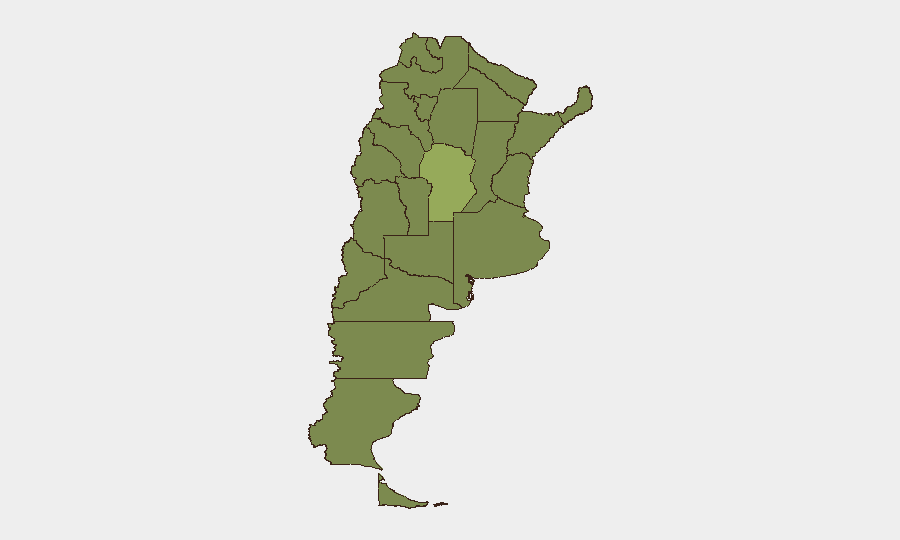
Argentina remains at composite threat rank #43 globally with a score of 38, reflecting elevated but manageable security risk driven primarily by urban crime, labor unrest, and periodic infrastructure disruptions. Sub-national risk is heavily concentrated in Córdoba Province (56.3), which significantly outpaces all other regions, followed by Buenos Aires Province (37.8) and northern provinces experiencing mid-range volatility. Recent event signals point to prison violence, physical assaults on authorities, and prosecutorial actions, though cross-confirmed incidents from the last 24–48 hours cannot be reliably established without live media and social-media access.
Key Developments
CONFIDENCE NOTE: Live web research for the past 24–48 hours has not yielded verifiable, incident-level reporting with timestamps and location specificity meeting duty-of-care standards. Generic 2026 World Cup and policy content dominated available search results. The following bullet-style observations reflect the event-signal stream but cannot be attributed to specific confirmed incidents in the last 24–48 hours without independent cross-confirmation:
- Prison violence and detainee unrest flagged in signals (Unconventional Violence, PRISON vs ARGENTINA, 2026-06-14) — nature, location, and extent require urgent verification through provincial corrections ministry sources.
- Physical assault incidents involving authorities reported in signals (2026-06-14) — no geographic specificity available; may reflect cumulative reporting rather than single event.
- Labor and prosecutorial actions noted (Arrest/Detain in Morón; Public Statements by Deputy and Criminal actors, 2026-06-12) — insufficient detail to map operational impact or travel risk.
- Threat signals from delegate-to-government and lawyer communications (2026-06-12) — context and scope unclear.
Recommendation: Real-time verification via Clarín, Infobea, La Nación, and official provincial police/corrections channels essential before operational decisions.
Highest-Risk Areas
Córdoba Province stands as the primary threat driver, with a composite score nearly 50% higher than Buenos Aires Province, signaling concentrated criminal activity, labor volatility, or infrastructure vulnerability in that region. Buenos Aires Province and the Autonomous City of Buenos Aires together represent the second-tier risk cluster, reflecting chronic urban crime, transport disruptions, and periodic protest activity affecting the capital metro area. Northern provinces (Salta, Catamarca, Santiago del Estero, Misiones, Chaco, Jujuy) cluster in the 26–29 range, suggesting distributed low-to-mid-level crime and social unrest rather than focal hotspots. Santa Fe, Mendoza, and Río Negro round out tracked regions with scores under 27, reflecting secondary concern for most corporate operations but warranting regional-specific intelligence before travel or asset deployment.
How GeoBit Would Assist
Organizations with people or assets in Argentina should employ AOI Monitoring & Early Warning against Córdoba, Greater Buenos Aires, and key northern provinces to detect emerging protests, roadblocks, or crime clusters in real time. Intel Sweep and multi-language OSINT fusion (Twitter, Telegram, local media, and radio SIGINT) would validate rumor, distinguish old incidents from current ones, and cross-confirm event timing and severity. Routing & Network Analysis would enable security teams to identify real-time alternative transport corridors if main routes face disruption from labor action or infrastructure failure.
7-Day Outlook
No major political, labor, or security trigger events are visible in the near-term horizon; however, Argentina's structural vulnerabilities to transport strikes, subsidy-driven unrest, and localized urban crime remain constant. Córdoba's elevated risk profile warrants continuous monitoring; any incident in that province could rapidly cascade given its disproportionate signal activity. Expect routine crime and periodic protest activity in Buenos Aires Province and the capital; significant escalation is unlikely absent a major economic or political shock.
Highest-Risk Areas — Ranked
| # | State / Region | Risk |
|---|---|---|
| 1 | Córdoba | 56.3 |
| 2 | Buenos Aires Province | 37.8 |
| 3 | Salta Province | 29 |
| 4 | Catamarca Province | 28.7 |
| 5 | Santiago del Estero Province | 27.5 |
| 6 | Misiones | 27.1 |
| 7 | Chaco Province | 27.1 |
| 8 | Jujuy Province | 26.9 |
| 9 | Santa Fe Province | 26.9 |
| 10 | Autonomous City of Buenos Aires | 26.7 |
| 11 | Mendoza Province | 26.5 |
| 12 | Río Negro Province | 26.5 |
Sources
Previous Daily Briefs
A new Argentina brief is written every day — each with its own risk map and downloadable CSV. Here's the last week; use the calendar to go further back.
📅 Browse every day by calendar →
Highlighted days have a brief. Tap a day for that day's map & analysis, or “csv” for that day's dataset ($5).