Situation Summary
Armenia remains a low-to-moderate global threat environment (rank #113, composite score 8) but faces acute political-economic turbulence following government asset-seizure actions and ongoing tension over transit-corridor development. The past 48 hours have seen concentrated civil unrest in Yerevan tied to oligarch-linked property confiscation, opposition parliamentary resistance, and agricultural-sector economic stress from Russian trade embargoes. No armed escalation or major security incidents have been confirmed in the immediate period, though the concentration of political friction in the capital and periphery creates conditions for localized protest and potential obstruction.
Key Developments
- Yerevan, July 16 – Employees of Gagik Tsarukyan–owned companies (Multi Group, Prosperous Armenia Party) staged protests demanding reopening of sealed facilities after government moved to place Araratcement under state management and seek broader asset confiscation. Risk: civil unrest and potential confrontation with authorities in central Yerevan.
- Lake Sevan (Gegharkunik), July 16 – Prosecutor General's Office announced demand for return of lakeside residential and commercial property (Multi Group Concern LLC holdings) to state ownership. Risk: legal-administrative action with potential for local resistance and protest near key tourism and infrastructure zones.
- Constitutional Court, Yerevan, July 16 – Court upheld Central Electoral Commission confirmation of June 7 parliamentary election results; opposition "Armenia" bloc responded by pledging to use mandates as a "tool of resistance" and continue struggle against government. Risk: politicized parliamentary obstruction and opposition-led rallies, especially in central Yerevan.
- Southern Armenia (Syunik/Zangezur corridor), July 16 – Government approved TRIPP/"Trump Route" corridor arrangements, including land-use and development rights for TRIPP Development Company in designated transit zones. Risk: potential local opposition, property disputes, and sabotage risk along reconfigured transit corridors.
- Agricultural regions nationwide, July 16 – Russian trade embargoes on Armenian agricultural products force rapid market reorientation; farmers reporting economic losses and heightened uncertainty. Risk: livelihood stress, potential economic protests, and political destabilization among rural constituencies.
- Yerevan, mid-July – EU deploying civilian advisory mission to counter hybrid threats (cyber, disinformation, critical infrastructure vulnerabilities). Risk context: heightened perception of external threat; increased monitoring and security measures may create friction with regional actors.
Highest-Risk Areas
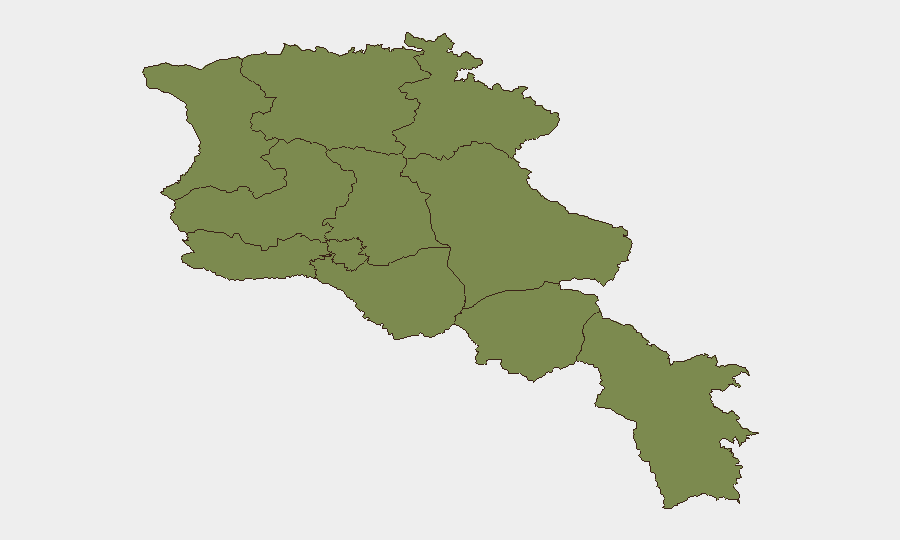
Ararat Province dominates the sub-national ranking (risk 31.8), reflecting proximity to the Azerbaijan border and historical military flashpoints; however, current 48-hour risk is concentrated in Yerevan (rank 2, score 7.0), where political-economic friction, asset seizure protests, and opposition resistance are actively generating civil-unrest and stability risks. Gegharkunik (Lake Sevan property disputes) and Syunik (corridor development) carry secondary administrative and infrastructure-related tensions. Remaining provinces show minimal detected activity; the gap between Ararat and other regions suggests either lower current activity or concentration of monitoring/reporting on the capital.
How GeoBit Would Assist
Security teams should deploy AOI Monitoring & Early Warning on Yerevan protest zones (government buildings, Tsarukyan offices, parliament) to track opposition rally timing and scale; Intel Sweep and multi-language OSINT (X, Telegram, Armenian news) to detect emerging grievances and coordination signals among farmers, property-rights activists, and opposition figures; and Network & Actor Analysis to map key oligarch-affiliated stakeholders and protest organizers. Election monitoring capabilities should track opposition obstruction tactics in parliament.
7-Day Outlook
Near-term trajectory favors continued low-intensity political friction—protests, parliamentary obstruction, and local property disputes—rather than armed escalation. However, cumulative economic stress (agricultural embargoes, asset seizures) and opposition momentum create risk of larger, coordinated civil unrest within 7–14 days if government accelerates confiscations or opposition mobilizes constituencies outside Yerevan.
Highest-Risk Areas — Ranked
| # | State / Region | Risk |
|---|---|---|
| 1 | Ararat Province | 31.8 |
| 2 | Yerevan | 7 |
| 3 | Lori Province | 1.8 |
| 4 | Tavush Province | 1.8 |
| 5 | Kotayk Province | 1.8 |
| 6 | Gegharkunik Province | 1.8 |
| 7 | Vayots Dzor Province | 1.8 |
| 8 | Syunik Province | 1.8 |
| 9 | Shirak Province | 1.8 |
| 10 | Aragatsotn Province | 1.8 |
| 11 | Armavir Province | 1.8 |
Sources
Previous Daily Briefs
A new Armenia brief is written every day — each with its own risk map and downloadable CSV. Here's the last week; use the calendar to go further back.
📅 Browse every day by calendar →
Highlighted days have a brief. Tap a day for that day's map & analysis, or “csv” for that day's dataset ($5).
Atlas — our AI intelligence desk — emails them this snapshot personally. Nothing else, no list.