Situation Summary
Austria remains a low-threat environment with a composite threat score of 2 and global rank #194. No confirmed security incidents, civil unrest, infrastructure disruptions, or travel risks were identified in open sources for the 24–48 hours preceding this brief. Austrian authorities have issued multiple investigative and public statements in the reporting period, though the specific operational context of these statements could not be verified through independent corroboration. The overall security trajectory remains stable.
Key Developments
Open-source reporting for Austria during 24–48 June 2026 did not yield corroborated, location-specific security incidents meeting verification criteria. Event signals logged in the GeoBit platform (investigations, public statements, and disapprovals by Austrian authorities on 2026-06-27 through 2026-06-29) appear diplomatic or investigative in nature and do not indicate active domestic threats or operational incidents at this time. Cross-referencing with Austrian news wires, official Interior Ministry channels, and major outlets (ORF, Die Presse, Der Standard) yielded no matching incident reports for the same period. Recommendation: Corporate security teams requiring real-time incident detail should monitor Austrian Federal Police press feeds and interior ministry bulletins directly, as open-source corroboration windows for localized incidents remain narrow.
Highest-Risk Areas
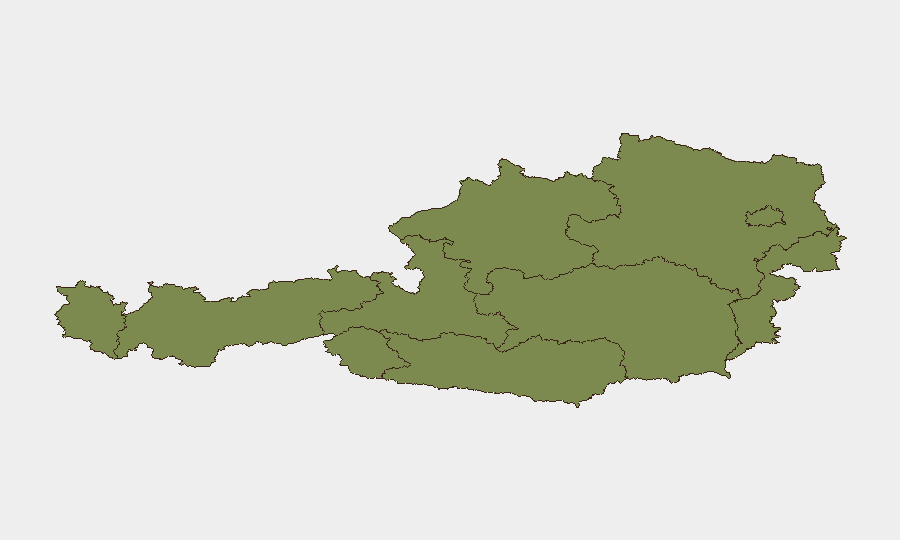
Salzburg dominates the sub-national ranking with a composite risk score of 31.4—substantially higher than all other Austrian regions. Vienna follows at 4.9, while Styria (3.2) and the remaining eight states cluster at 1.4 each. The significant gap between Salzburg and Vienna warrants attention; Salzburg's risk drivers should be clarified through direct enquiry with GeoBit analysts or regional law-enforcement liaisons, as the underlying events are not itemized in open reporting. Vienna's secondary risk level aligns with its status as the capital and administrative center, where political activity, diplomatic presence, and transit volumes are naturally elevated. Teams with personnel or critical assets in Salzburg should ensure duty-of-care protocols account for this elevated regional risk posture.
How GeoBit Would Assist
Security teams can deploy AOI Monitoring & Early Warning to establish persistent watch over Salzburg and Vienna, with alert thresholds tuned to operational risk tolerance. Intel Sweep and OSINT fusion capabilities—including multi-language search, entity extraction, and corroboration of social media and news feeds—enable continuous background monitoring of threat actors, political instability signals, and incident developments without reliance on manual daily reporting. Risk & Threat Assessment and Network & Actor Analysis modules support deeper investigation of the diplomatic and investigative signals currently being logged by Austrian authorities, helping teams understand whether these reflect routine governance or emerging operational concerns.
7-Day Outlook
Austria's security environment is expected to remain stable over the next seven days absent new geopolitical shocks or transnational incidents affecting the region. Salzburg's elevated risk profile warrants continued monitoring, particularly if investigative activity by authorities persists or escalates. Teams should maintain awareness of any developments affecting transit corridors (road, rail, air) linking Austria to neighboring states, as these remain critical for business continuity and staff mobility.
Highest-Risk Areas — Ranked
| # | State / Region | Risk |
|---|---|---|
| 1 | Salzburg | 31.4 |
| 2 | Vienna | 4.9 |
| 3 | Styria | 3.2 |
| 4 | Vorarlberg | 1.4 |
| 5 | Tyrol | 1.4 |
| 6 | Lower Austria | 1.4 |
| 7 | Upper Austria | 1.4 |
| 8 | Carinthia | 1.4 |
| 9 | Burgenland | 1.4 |
Sources
Previous Daily Briefs
A new Austria brief is written every day — each with its own risk map and downloadable CSV. Here's the last week; use the calendar to go further back.
📅 Browse every day by calendar →
Highlighted days have a brief. Tap a day for that day's map & analysis, or “csv” for that day's dataset ($5).