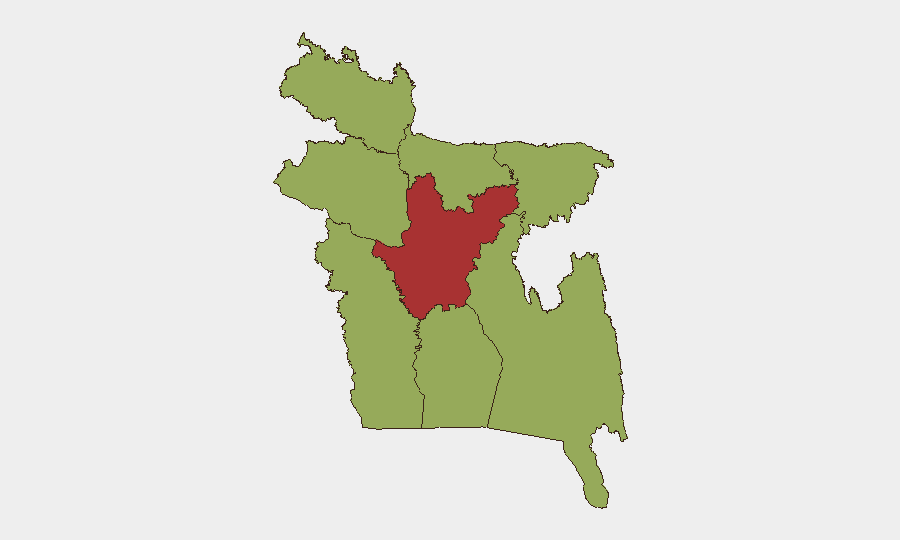
Situation Summary
Bangladesh remains at moderate global risk (rank #33, composite score 67) with escalating India–Bangladesh border tensions and deteriorating domestic law-and-order metrics dominating the security picture over the past 48 hours. Dhaka Division carries significantly elevated risk (76.7) compared to other regions, reflecting capital-city concentration of political activity, administrative scrutiny, and cross-border dynamics. A combination of confirmed border standoffs, unconfirmed cross-border casualty claims, and rapid online disinformation regarding communal violence is raising threat perception and potential for localized flashpoints.
Key Developments
- India–Bangladesh border standoff resolved (Mekhliganj, Cooch Behar sector; 12 June 2026): Indian BSF and Bangladeshi BGB ended a tense confrontation in which 40+ Bangladeshi nationals were detained at zero point before being returned to Bangladesh. BGB reported foiling eight push-back attempts in 24 hours, signaling sustained pressure and tighter bilateral controls.[1][3]
- Border Guard Bangladesh reinforces defensive positions (various frontier points; last 24 hours): Social-video reporting shows BGB deploying additional personnel and constructing bunker-like defensive works in response to Indian fencing operations and cross-border tensions, indicating a forward-leaning security posture inconsistent with routine operations.[5][7]
- India–Bangladesh fencing dispute escalates (Meghalaya-adjacent sectors; reported 12 June 2026): Recent Indian media footage documents heightened tension along new fencing installations, with Bangladeshi forces reportedly contesting alignment over approximately 105 acres of disputed or sensitive boundary land. Risk of minor confrontation remains elevated at these micro-level flashpoints.[7][8]
- Unconfirmed cross-border casualty claims circulate (border locations unspecified; partisan social sources, 12 June 2026): Islamist-aligned social media accounts allege two Bangladeshi nationals were killed by Indian BSF "in the last 48 hours." No corroborating mainstream media, NGO, or official reporting has surfaced; treat as unconfirmed but indicative of rising community grievance and mobilization rhetoric.[4]
- Domestic law-and-order crisis highlighted in parliament (countrywide; 12–13 June 2026): MP Rumeen Farhana and civil-society group MSF publicly presented statistics showing 605 murders and 196 abductions in March–April 2026, plus 32 mob-violence deaths in May. This political escalation reflects growing domestic criticism of security performance and feeds public risk perception.[2]
- Large-scale communal-violence claims spread online (specific districts unspecified; social media, last 48 hours): Viral posts allege 94 temple attacks, 25 rape cases, and 45 murders of Hindus "in the past 48 hours." No mainstream outlet, rights organization, or embassy corroborates such figures; classified as likely disinformation but signals susceptibility to rapid online inflaming of communal tensions.[9]
Highest-Risk Areas
Dhaka Division (76.7) is the dominant risk driver, reflecting concentration of political administration, media focus, and border-adjacent populations. Rajshahi, Sylhet, and Khulna divisions show materially elevated risk (47–50), likely reflecting proximity to India–Bangladesh border zones experiencing active fencing disputes and cross-border movement pressures. The subnational differentiation is sharp: Dhaka's score is 50% higher than the second-ranked division, indicating capital-centric governance strain, administrative action, and reputational/travel-advisory sensitivity disproportionately affect corporate operations and personnel in the city.
How GeoBit Would Assist
Risk teams should use Intel Sweep and OSINT fusion (X/Telegram monitoring, multi-language social-media sentiment analysis, and cross-referencing against mainstream outlets) to rapidly distinguish verified border incidents from disinformation narratives. Area-of-Interest (AOI) Monitoring with alerting on Dhaka Division and the India–Bangladesh frontier would enable real-time detection of crowd, protest, or military movement changes. Early Warning & Prediction tools, combined with entity extraction and network analysis, help surface emerging communal or political mobilization before it escalates to mass action or violence.
7-Day Outlook
Border tension is likely to remain elevated as Indian fencing work continues and BGB maintains heightened defensive posture; localized minor confrontations or rhetorical escalation should be expected. Domestic law-and-order criticism and unverified communal-violence claims will likely sustain elevated online discourse and perceptions of insecurity among religious minorities and travelers. Absent a major bilateral diplomatic reset or significant cross-border incident, overall threat level is expected to remain in the moderate-to-moderately-elevated band over the next week.
Highest-Risk Areas — Ranked
| # | State / Region | Risk |
|---|---|---|
| 1 | Dhaka Division | 76.7 |
| 2 | Rajshahi Division | 50.4 |
| 3 | Sylhet Division | 47.9 |
| 4 | Khulna Division | 46.7 |
| 5 | Barishal Division | 46.7 |
| 6 | Chittagong Division | 46.7 |
| 7 | Rangpur Division | 46.7 |
| 8 | Mymensingh Division | 46.7 |
Sources
Previous Daily Briefs
A new Bangladesh brief is written every day — each with its own risk map and downloadable CSV. Here's the last week; use the calendar to go further back.
📅 Browse every day by calendar →
Highlighted days have a brief. Tap a day for that day's map & analysis, or “csv” for that day's dataset ($5).