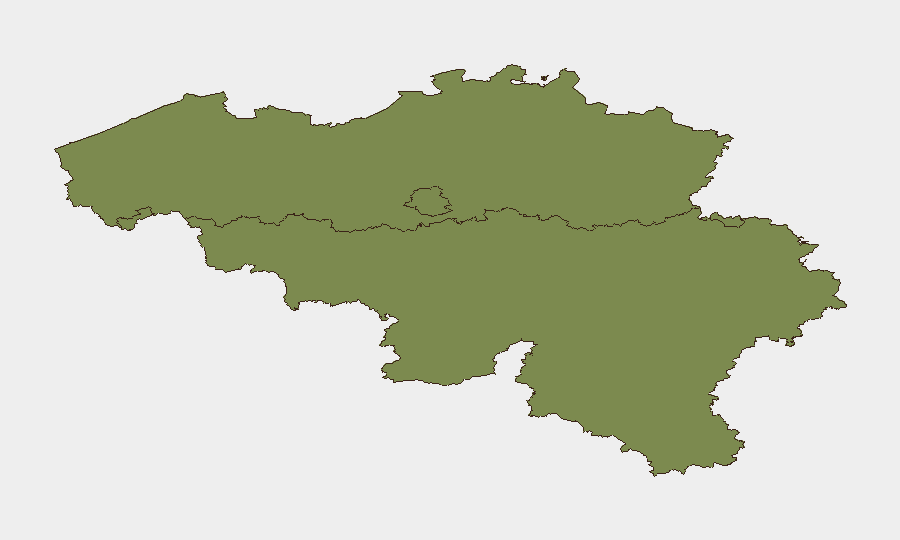
Situation Summary
Belgium remains a low-intensity threat environment globally (ranked #157), but risk is heavily concentrated in Brussels-Capital, where the composite threat score (31.4) is more than 20 times that of Flanders or Wallonia. Recent 24–48-hour developments include regulatory actions by the European Commission and Belgian authorities, along with a confirmed explosive incident in Molenbeek (Brussels) on 24 July. The trajectory suggests elevated administrative and regulatory friction alongside localized security incidents, with Brussels as the clear focal point for corporate duty-of-care planning.
Key Developments
- Molenbeek, Brussels (24 Jul) – A blast was reported outside a residential building; Brussels fire services confirmed the incident. No casualty or attribution data available at time of brief.
- European Commission (24 Jul) – Administrative sanctions issued; details suggest regulatory enforcement activity relevant to corporate operations or compliance.
- Brussels Authorities (25 Jul) – Multiple official statements and a formal demand issued to a company; one statement indicates disapproval of unnamed actions. Regulatory or compliance escalation likely.
- Google (24 Jul) – European authorities issued a disapproval statement; context suggests ongoing EU regulatory scrutiny of tech operations.
- US Government (24 Jul) – Investigation launched or ongoing; scope unclear from available signals but may relate to cross-Atlantic regulatory or security matters.
- Presidential Statement (25 Jul) – Belgian or EU-level executive disapproval issued; details not specified in current reporting.
- European–Moscow Signal (24 Jul) – Disapproval from European actors toward Moscow; context suggests geopolitical tension unrelated to immediate Belgium security but relevant to broader EU stability.
Highest-Risk Areas
Brussels-Capital dominates Belgium's threat profile, with a composite risk score 22× higher than either Flanders or Wallonia. This concentration reflects the capital's status as a hub for EU institutions, diplomatic missions, international finance, and regulatory agencies—all sources of elevated administrative friction, cyber interest, and occasional street-level incidents (e.g., the Molenbeek blast). Flanders and Wallonia register equivalent, minimal baseline risk (1.4 each), indicating that corporate and duty-of-care concerns should prioritize Brussels-specific monitoring and contingency planning. Regional diversification of assets or personnel outside Brussels substantially reduces exposure.
How GeoBit Would Assist
Organizations with personnel or assets in Brussels should deploy Intel Sweep and multi-language OSINT to track regulatory actions, public statements, and emerging incidents in real time; AOI Monitoring & Early Warning on Brussels (especially transit hubs and diplomatic zones) provides persistent alerts for security events; and Network & Actor Analysis clarifies relationships between regulatory bodies, companies, and geopolitical actors to contextualize compliance or sanctions risk. These capabilities allow security teams to distinguish between administrative escalation (low operational risk) and localized threats (higher duty-of-care urgency).
7-Day Outlook
Regulatory pressure on tech and corporate compliance is likely to continue or intensify, with further statements from EU or Belgian authorities expected. The Molenbeek incident should be monitored for claims of responsibility or pattern signals; isolated blasts do not immediately suggest organized campaign, but tracking will confirm or rule out escalation. Overall threat level to corporate operations remains low outside Brussels, but duty-of-care teams should maintain heightened administrative compliance posture and situational awareness in the capital.
Highest-Risk Areas — Ranked
| # | State / Region | Risk |
|---|---|---|
| 1 | Brussels-Capital | 31.4 |
| 2 | Flanders | 1.4 |
| 3 | Wallonia | 1.4 |
Sources
Previous Daily Briefs
A new Belgium brief is written every day — each with its own risk map and downloadable CSV. Here's the last week; use the calendar to go further back.
📅 Browse every day by calendar →
Highlighted days have a brief. Tap a day for that day's map & analysis, or “csv” for that day's dataset ($5).
Atlas — our AI intelligence desk — emails them this snapshot personally. Nothing else, no list.