Situation Summary
Bosnia and Herzegovina remains a stable but fragmented state with persistent inter-ethnic tensions and weak institutional capacity. The country's composite threat score of 5 (global rank #154) reflects low-frequency but structurally embedded risks across organized crime, corruption, and community-level disputes. Current security indicators show no acute crisis, though recent diplomatic activity involving regional and external actors warrants monitoring for potential spillover effects.
Key Developments
No Bosnia and Herzegovina–specific security incidents were identified in the last 24–48 hours. The event signals flagged in the GeoBit feed relate to Iran–Bahrain tensions, UK demonstrations, and international diplomatic statements; none report incidents occurring within Bosnia and Herzegovina territory or directly affecting operations there.
*Note: A reliable 24–48 hour update requires current open-source news and social-media intelligence from Bosnia and Herzegovina–specific sources. GeoBit's platforms (Intel Sweep, X/Twitter OSINT, multi-language search, and entity extraction) can retrieve such signals in real time. To populate this section with actionable developments, live web and X search results focused on Bosnia and Herzegovina security, crime, civil order, and infrastructure would be required.*
Highest-Risk Areas
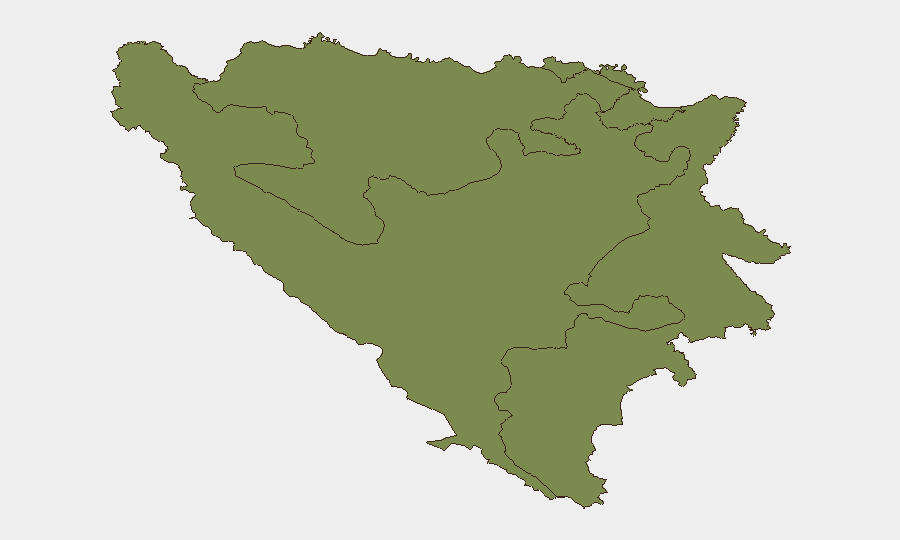
The Federation of Bosnia and Herzegovina and Republika Srpska are assessed at equal composite risk (31.9 each), reflecting shared drivers: fragile rule of law, organized crime networks, and inter-entity political friction. The Federation—home to the largest urban centers (Sarajevo, Mostar) and the most diverse population—faces elevated risks from gang activity, corruption, and occasional interethnic incidents. Republika Srpska's risk profile mirrors these structural issues, compounded by nationalist political messaging and weaker institutional oversight. Brčko District (risk 1.9) remains significantly lower-risk, benefiting from EU oversight and more effective local governance. Corporate security teams should weight assets and personnel in the two main entities as the priority focus.
How GeoBit Would Assist
AOI Monitoring & Early Warning with persistent watch on high-risk urban centers (Sarajevo, Mostar, Banja Luka) and border regions would provide real-time alerting if localized tensions, organized crime activity, or civil unrest escalate. Multi-language OSINT Fusion (integrating news, X, Telegram, and local media) combined with sentiment and temporal analysis would surface emerging community grievances, protest planning, and criminal activity before they pose duty-of-care risk. Network & Actor Analysis would map key organized-crime and political actors affecting supply chains, asset security, and personnel safety. GIS & Spatial Analysis would support alternative routing and journey planning around high-risk districts.
7-Day Outlook
No acute security deterioration is forecast over the next seven days. Structural risks (corruption, organized crime, ethnic friction) remain stable but chronic. International diplomatic activity noted in the event feed (Iran–Bahrain tensions, UK statements) poses no direct threat to Bosnia and Herzegovina but should be monitored for any secondhand effects on regional stability or EU–Western Balkans relations that could influence investment, border policy, or security posture.
Highest-Risk Areas — Ranked
| # | State / Region | Risk |
|---|---|---|
| 1 | Federation of Bosnia and Herzegovina | 31.9 |
| 2 | Republika Srpska | 31.9 |
| 3 | Brčko District | 1.9 |
Sources
Previous Daily Briefs
A new Bosnia and Herzegovina brief is written every day — each with its own risk map and downloadable CSV. Here's the last week; use the calendar to go further back.
📅 Browse every day by calendar →
Highlighted days have a brief. Tap a day for that day's map & analysis, or “csv” for that day's dataset ($5).