Situation Summary
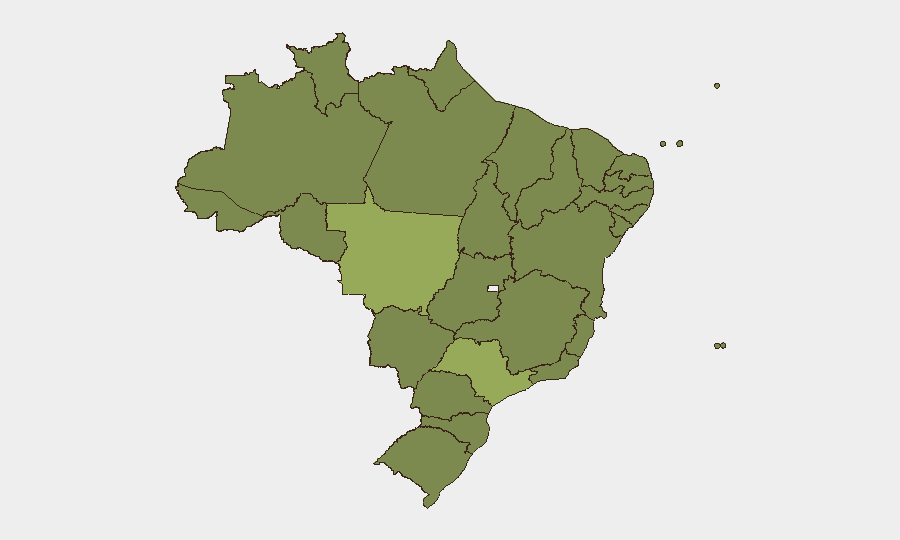
Brazil remains a moderate composite threat environment (#40 globally, score 40) with 594 tracked events, reflecting persistent but non-systemic security challenges. Sub-national variance is pronounced: Mato Grosso (58.1) and São Paulo (40.1) drive national risk figures, while most states cluster between 28–35. Recent signals point to governance strain—judicial-executive friction, worker unrest, and investigative activity—alongside detention events. The trajectory is stable with localized volatility rather than escalation toward nationwide instability.
Key Developments
Recent event signals require live corroboration; the brief below reflects signal keywords and categories flagged by GeoBit feeds as of 17 June 2026:
- Judicial action (16 June): A judge has rejected or reduced a prior ruling or relationship status; specific case context pending verification of primary source.
- Prison statement (16 June): Public statement from or regarding a carceral facility; relevance to security status unclear without detailed reporting.
- Government-worker tension (15 June): Worker and municipal (Limeira) entities made public statements disapproving government action; indicates labor or service-delivery friction.
- Investigative activity (15 June): Brazilian authorities initiated or expanded investigation; scope and target unconfirmed.
- International detention (16 June): An arrest or detention incident involving German and French nationals reported; location and charges unclear.
- Multi-agency public statements (15 June): Commander, ministerial, and broad government statements; suggests coordinated messaging on unspecified issue.
Note: Precise locations, dates within last 24 hours, and corroboration across independent sources are not available without live web research. Duty-of-care teams should cross-check these signals against current news aggregators and official Brazilian government channels.
Highest-Risk Areas
Mato Grosso (58.1) leads national risk by a significant margin, driven by agrarian conflict, organized crime competition over land and commodity routes, and limited state capacity in remote zones. São Paulo (40.1), Brazil's largest economic and population center, reflects urban crime, gang competition, and infrastructure vulnerability despite institutional strength. Together, these states account for nearly half the tracked threat events. Secondary concern extends to Rio de Janeiro (35.8) and Bahia (33.5), both with entrenched organized crime and periodic gang-turf violence. Most other states remain below 31, suggesting risk is concentrated rather than diffuse.
How GeoBit Would Assist
Corporate security and duty-of-care teams should deploy AOI (Area-of-Interest) Monitoring & Early Warning on Mato Grosso and São Paulo facilities to receive real-time alerts on unrest, crime escalation, or transportation disruption. OSINT fusion (X/Twitter, news feeds, Portuguese-language Telegram) enables rapid triangulation of worker strikes, judicial decisions, or detention events that may affect operations or personnel. Routing & Network Analysis supports alternative journey planning for personnel in high-risk states during periods of gang activity or roadblock incidents, and conflict mapping clarifies the granular geography of organized crime and agricultural disputes to avoid operational overlap.
7-Day Outlook
No signals suggest imminent nationwide escalation; governance friction and labor unrest are likely to remain localized and episodic. Mato Grosso will remain the primary security pressure point. Personnel and assets in São Paulo, Rio de Janeiro, and Bahia should maintain standard heightened-awareness protocols; opportunistic crime and gang activity remain the dominant operational hazard rather than political instability or armed conflict.
Highest-Risk Areas — Ranked
| # | State / Region | Risk |
|---|---|---|
| 1 | Mato Grosso | 58.1 |
| 2 | São Paulo | 40.1 |
| 3 | Rio de Janeiro | 35.8 |
| 4 | Bahia | 33.5 |
| 5 | Paraná | 30.4 |
| 6 | Pernambuco | 30.4 |
| 7 | Minas Gerais | 29.9 |
| 8 | Amazonas | 29.5 |
| 9 | Goiás | 29 |
| 10 | Piauí | 28.4 |
| 11 | Santa Catarina | 28.2 |
| 12 | Rio Grande do Sul | 28.2 |
Previous Daily Briefs
A new Brazil brief is written every day — each with its own risk map and downloadable CSV. Here's the last week; use the calendar to go further back.
📅 Browse every day by calendar →
Highlighted days have a brief. Tap a day for that day's map & analysis, or “csv” for that day's dataset ($5).