Situation Summary
Bulgaria remains a lower-threat environment (global rank #137, composite score 6) with contained but active security pressures. A second consecutive wave of bomb-threat emails disrupted state institutions and courthouses nationwide on 7–8 July, indicating persistence of disruptive threats to public administration. Regional maritime security cooperation has expanded to protect critical infrastructure, while political risk around energy sanctions policy continues to influence Bulgaria's strategic posture. The threat environment is manageable but requires sustained monitoring of institutional disruption and critical infrastructure vulnerabilities.
Key Developments
- Nationwide (Sofia, Gabrovo, Burgas, other cities) – 7–8 July 2026: Anonymous bomb-threat emails targeted state institutions and courthouses for a second consecutive day, forcing evacuations and security checks. bTV and Radio Bulgaria English Service confirmed ongoing "new wave" of threats disrupting administrative continuity across multiple locations.
- Black Sea maritime zone – 8 July 2026: Romania, Bulgaria, and Turkey formally expanded their joint NATO-backed demining mission to include protection of critical energy facilities, telecom networks, and undersea pipelines. The mandate now explicitly addresses infrastructure protection following rising regional maritime security challenges.
- Sofia and Athens – 8–10 July 2026: Three Bulgarian ministers (Economy, Energy, Innovation/Digital Transformation) are attending an international security and economics forum in Athens focusing on European security, energy independence, and defence posture, signaling active engagement on regional stability issues.
- EU/Bulgaria energy policy – 8 July 2026 reporting: Bulgaria, alongside Italy, continues to push for removal of two Russian entities (Patriarch Kirill, Vagit Alekperov) from the proposed EU 21st sanctions package, highlighting ongoing political risk and tensions over energy interests and sanctions alignment.
- Sofia – early July 2026: Municipal cyber-resilience and urban safety event ("Hack Smart Sofia 2026") underscores local focus on digital transformation and urban resilience, reflecting institutional awareness of cyber and infrastructure vulnerabilities.
Highest-Risk Areas
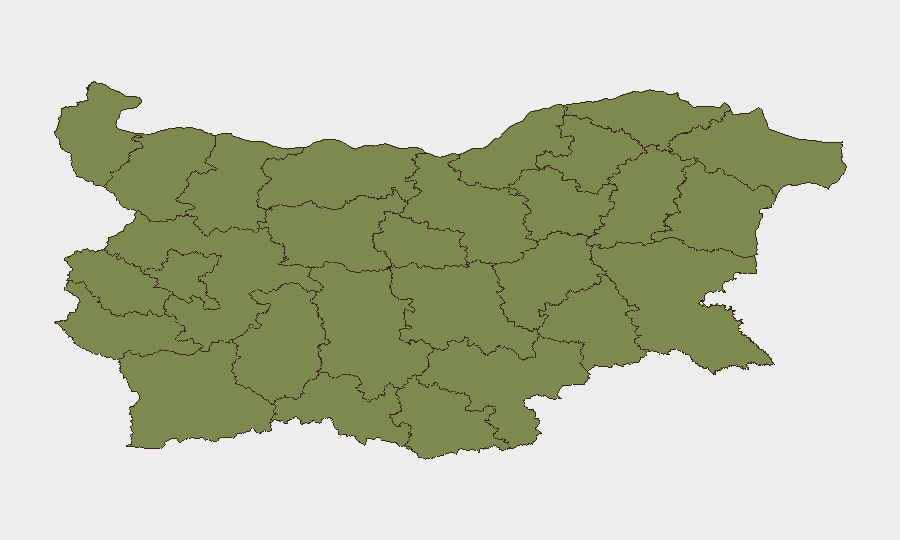
Gabrovo (risk 31.8) and Sofia-City (risk 22.3) dominate Bulgaria's sub-national threat profile by a significant margin, accounting for the majority of tracked incidents and composite risk. Gabrovo's exceptionally elevated score warrants investigation into specific institutional, infrastructure, or security dynamics; Sofia's risk reflects capital-city concentration of state institutions, critical infrastructure, diplomatic presence, and administrative targets (as evidenced by the recent courthouse and state institution bomb threats). All other tracked regions remain at low baseline risk (1.8–3.3), indicating a highly localized rather than nationwide threat footprint.
How GeoBit Would Assist
Security teams would deploy Intel Sweep and global event feeds for real-time detection of institutional threats and disruptions, coupled with Telegram/X OSINT to track bomb-threat communications and actor claims before public disclosure. AOI Monitoring & Early Warning on Sofia's government, judicial, and critical infrastructure clusters would provide persistent alerting on threats to courthouses, energy facilities, and telecom assets; GIS & Spatial Analysis would map threat patterns and identify secondary targets. Risk & Threat Assessment cross-referenced with entity extraction would link bomb-threat campaigns to known threat actors and assess escalation risk.
7-Day Outlook
Bomb-threat waves typically persist for 3–7 days before subsiding or shifting; monitoring for escalation to actionable devices or secondary targeting of energy/telecom infrastructure is critical. The Black Sea maritime infrastructure-protection mission expansion reduces some exposure but requires vigilance for cyber or hybrid threats to underwater assets. Political risk around EU sanctions will continue; energy sector supply-chain and sanctions evasion vulnerabilities remain under pressure but are not expected to trigger acute disruptions in the near term.
Highest-Risk Areas — Ranked
| # | State / Region | Risk |
|---|---|---|
| 1 | Gabrovo | 31.8 |
| 2 | Sofia-City | 22.3 |
| 3 | Burgas | 3.3 |
| 4 | Yambol | 1.8 |
| 5 | Kardzhali | 1.8 |
| 6 | Haskovo | 1.8 |
| 7 | Vidin | 1.8 |
| 8 | Pernik | 1.8 |
| 9 | Kyustendil | 1.8 |
| 10 | Montana | 1.8 |
| 11 | Vratsa | 1.8 |
| 12 | Pleven | 1.8 |
Sources
Previous Daily Briefs
A new Bulgaria brief is written every day — each with its own risk map and downloadable CSV. Here's the last week; use the calendar to go further back.
📅 Browse every day by calendar →
Highlighted days have a brief. Tap a day for that day's map & analysis, or “csv” for that day's dataset ($5).
Atlas — our AI intelligence desk — emails them this snapshot personally. Nothing else, no list.