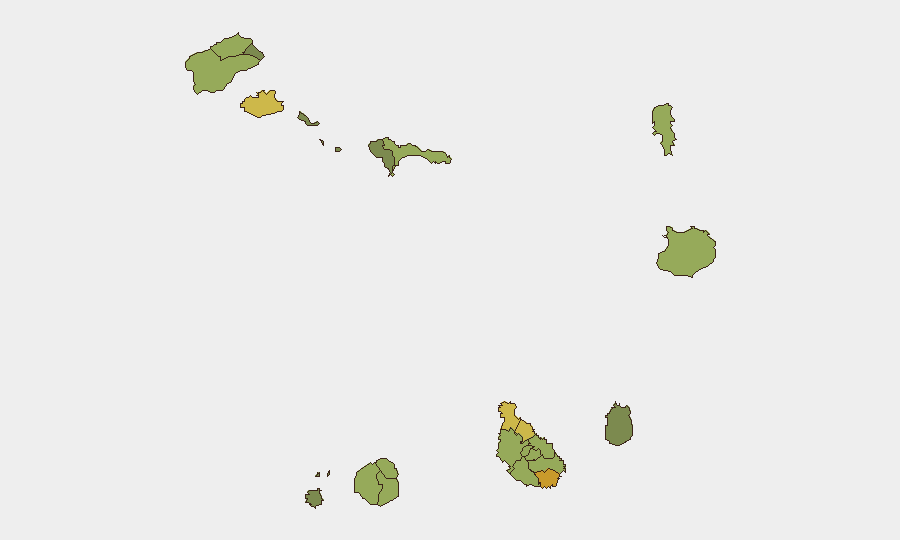
Situation Summary
Cape Verde remains a low-threat environment by global standards (composite threat score 7), with no active conflict, terrorism, or major civil unrest reported. The country's security posture is stable, though localized crime and administrative enforcement activity continue in urban centers. Recent event signals reflect routine law-enforcement coordination between Cape Verde and Portugal rather than emergent instability. Current trajectory suggests maintenance of baseline security conditions with no indicators of acute deterioration.
Key Developments
- 2026-06-21 · Praia (likely) — Two arrest/detain events logged involving Portugal and Cape Verde authorities. Nature, individuals, and specific locations remain unconfirmed; likely routine cross-border or extradition-related administrative action rather than security incident.
- No corroborating security events detected in last 24–48 hours — Web research yielded no reports of crime spikes, civil unrest, transport disruptions, weather emergencies, or political instability in Cape Verde. Available open-source coverage focused on World Cup sports results and visa-facilitation stories unrelated to country risk.
- Ongoing baseline urban crime — Praia and São Miguel (ranked 72 and 68 respectively) remain highest-risk administrative divisions, suggesting persistent street-level crime and property offenses typical of capital and secondary urban centers.
Highest-Risk Areas
Praia (capital, risk 72) and São Miguel (risk 68) drive the country's composite threat score, reflecting concentration of crime, petty theft, and robbery in dense urban zones. São Vicente (Mindelo, risk 65) and Tarrafal (risk 62) follow as secondary crime hotspots. These rankings correlate with population density, tourism footfall, and informal-economy activity rather than organized violence, insurgency, or political instability. Port cities and tourist corridors (Sal, risk 48) show elevated but moderate risk, consistent with transient populations and cash-based commerce.
How GeoBit Would Assist
Intel Sweep & OSINT Fusion would combine global event feeds, X/Twitter monitoring, and multi-language search to detect early signals of crime trends, labor unrest, or administrative enforcement that may affect expatriate or corporate operations. AOI Monitoring & Early Warning on Praia, São Miguel, and port zones would provide persistent watch and threshold-based alerting if crime patterns spike or political sentiment shifts. Routing & Network Analysis would support duty-of-care teams in identifying safer transit corridors and alternative supply-chain pathways in higher-risk municipalities.
7-Day Outlook
No acute security deterioration is expected in the near term. Baseline conditions—localized property crime in urban centers, routine law enforcement, and administrative stability—are likely to persist. Teams should maintain standard expatriate security protocols (situational awareness in Praia and Mindelo, secure accommodation, local liaison) and monitor GeoBit feeds for changes in the arrest/detain signal stream or emergence of new event classes (protest, strike, infrastructure disruption).
Highest-Risk Areas — Ranked
| # | State / Region | Risk |
|---|---|---|
| 1 | Praia | 72 |
| 2 | São Miguel | 68 |
| 3 | São Vicente | 65 |
| 4 | Tarrafal | 62 |
| 5 | São Filipe | 58 |
| 6 | Santa Catarina | 58 |
| 7 | Santa Cruz | 55 |
| 8 | Mosteiros | 52 |
| 9 | São Salvador do Mundo | 52 |
| 10 | Ribeira Grande | 50 |
| 11 | Porto Novo | 48 |
| 12 | Sal | 48 |
Sources
Previous Daily Briefs
A new Cape Verde brief is written every day — each with its own risk map and downloadable CSV. Here's the last week; use the calendar to go further back.
📅 Browse every day by calendar →
Highlighted days have a brief. Tap a day for that day's map & analysis, or “csv” for that day's dataset ($5).