Situation Summary
Cuba remains a mid-tier global security concern (rank #88, threat score 15) characterized by structural economic strain, infrastructure degradation, and latent political tension rather than acute violence or organized instability. The last 48 hours have yielded limited discrete incident reporting; instead, open-source intelligence reflects ongoing power crises, regime-level policy posturing around defense and economic protection, and intensified diplomatic complaints over sanctions—all of which compound vulnerability to localized unrest. Havana dominates the risk profile (score 32.2), while provincial centers carry marginal individual risk; the primary near-term threat vector is infrastructure failure triggering spontaneous public frustration rather than coordinated opposition.
Key Developments
- Nationwide power infrastructure strain (11–14 June 2026). Social media and diaspora outlets report prolonged electricity outages lasting 50–80 hours across multiple provinces, with public complaints citing lack of official explanation and characterization of the power system as "near collapse." No formal incident declarations, but reports indicate heightened citizen frustration and potential catalyst for localized demonstrations.
- Cuban government announces defense and economic protection plan (12 June 2026). State-linked media report establishment of a "plan de prioridades para optimizar la defensa y la protección del desarrollo económico," framed as response to external pressure. This signals regime focus on securitization and tighter governance posture, though does not constitute a discrete security incident.
- Havana neighborhood blackout protests (10 June, re-amplified 13–15 June). Short-form video and social posts document cacerolazos and street protests in Santos Suárez and adjacent barrios on 10 June; current feeds continue to circulate these testimonies alongside reports of new outages, suggesting sustained potential for copycat unrest if power deficits persist.
- Diplomatic escalation over sanctions impact (10–11 June, ongoing circulation). Cuban state institutions (ICAP) and official representatives denounce U.S. sanctions at international forums (FAO, Geneva), emphasizing exacerbation of food and fuel shortages. Diplomatic posturing underscores material vulnerabilities but does not reflect new kinetic activity.
- Russia–Cuba vaccine production agreement (announced 10–13 June, trending). Media highlight bilateral agreement for joint cancer-vaccine manufacturing, signaling deepening Russia ties as alternative to Western embargo. Strategic but not an acute security incident; reflects Havana's alliance pivot.
Highest-Risk Areas
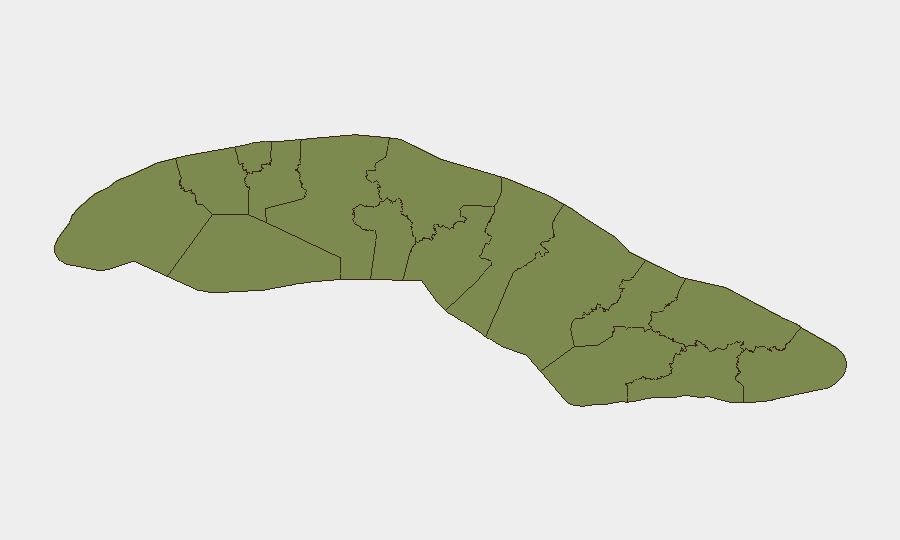
Havana accounts for approximately two-thirds of tracked national risk (32.2 of ~88 composite score), driven by population density, infrastructure vulnerability, higher incident reporting baseline, and concentration of state and commercial assets. Sancti Spiritus (10.0) ranks second but at a fraction of Havana's risk level, indicating highly uneven geographic exposure. The remaining ten provinces cluster between 2.2 and 3.4, suggesting that risk to personnel and assets outside the capital is low and diffuse. Corporate teams should treat Havana as the operational priority for duty-of-care monitoring, while acknowledging that infrastructure-driven unrest (blackouts) or supply disruptions can affect any region, particularly if accompanied by new political shocks.
How GeoBit Would Assist
Security teams should deploy AOI Monitoring & Early Warning on Havana neighborhoods (Santos Suárez, Centro Habana, Playa) to detect nascent protest or unrest activity before escalation, coupled with X/Twitter and Telegram OSINT to capture real-time social mobilization around power cuts and supply grievances. Regime-stability search and sentiment analysis across diaspora and domestic social platforms would provide early signals of coordination or organized dissent, while economic and trade monitoring can track sanctions impact on fuel and food supply chains that underpin stability.
7-Day Outlook
The near-term trajectory hinges on power-grid stability and absence of new external shocks (e.g., further U.S. sanctions, regional military escalation). If outages persist or worsen, scattered localized protests similar to 10 June are probable, particularly in Havana; sustained unrest remains unlikely absent coordinated opposition leadership. Geopolitical escalation (e.g., New York–Cuba tensions noted in 15 June signals) warrants close watch for secondary effects on regime posture or capital controls.
Highest-Risk Areas — Ranked
| # | State / Region | Risk |
|---|---|---|
| 1 | Havana | 32.2 |
| 2 | Sancti Spiritus | 10 |
| 3 | Pinar del Rio | 3.4 |
| 4 | Villa Clara | 3.1 |
| 5 | Santiago de Cuba | 3 |
| 6 | Mayabeque | 2.8 |
| 7 | Holguín | 2.8 |
| 8 | Las Tunas | 2.5 |
| 9 | Granma | 2.5 |
| 10 | Artemisa | 2.2 |
| 11 | Matanzas | 2.2 |
| 12 | Cienfuegos | 2.2 |
Sources
Previous Daily Briefs
A new Cuba brief is written every day — each with its own risk map and downloadable CSV. Here's the last week; use the calendar to go further back.
📅 Browse every day by calendar →
Highlighted days have a brief. Tap a day for that day's map & analysis, or “csv” for that day's dataset ($5).