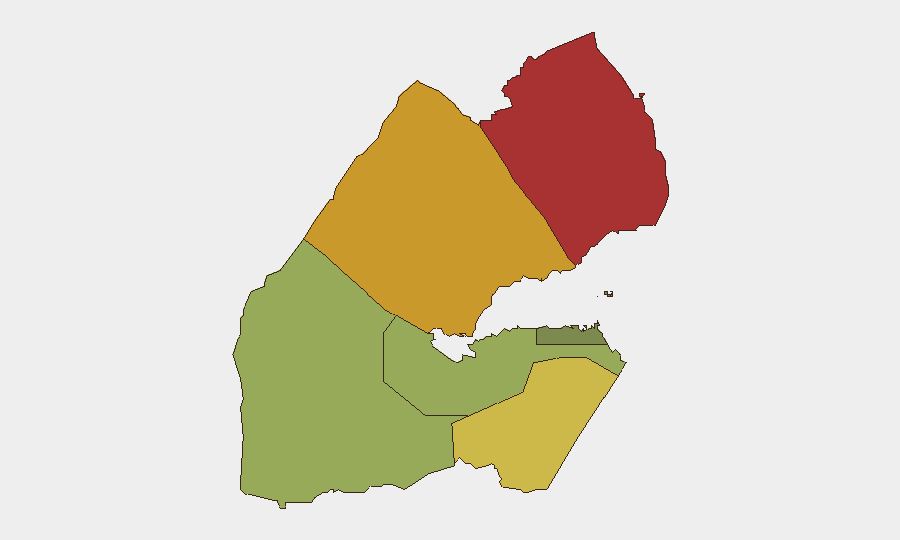
Situation Summary
Djibouti's security environment remains stable in the immediate term, with no credible reports of civil unrest, armed incidents, or infrastructure disruption in the last 24–48 hours. The country's composite threat score of 7 (rank #123 globally) reflects broad regional exposure to Red Sea shipping volatility and Horn of Africa tensions rather than acute domestic instability. Recent Independence Day observances (late June) demonstrated visible military presence and routine ceremonial activity, consistent with normal state security posture.
Key Developments
No confirmable security incidents have been reported in Djibouti during July 3–4, 2026. Open-source reporting, social media monitoring, and news feeds indicate an absence of new civil unrest, terror activity, crime spikes, or infrastructure failures. The most recent geo-political signal in the dataset—a reduction in China–Djibouti relations (July 4)—does not currently correlate with on-ground security events or port/economic disruption. Previous event signals concerning Djibouti military interaction with merchant vessels (July 3) remain unconfirmed in corroborated reporting and require further intelligence fusion. Routine military activity and port operations continue without reported impediment. No new travel restrictions, embassy alerts, or evacuation orders have been issued.
Highest-Risk Areas
Obock (risk 78) and Tadjourah (risk 72) dominate the sub-national ranking, driven by proximity to the Red Sea corridor and exposure to regional maritime instability, people-trafficking networks, and cross-border smuggling. Ali Sabieh (risk 65) reflects border tension exposure and tribal dynamics along the Somalia/Ethiopia frontier. In contrast, Djibouti City (risk 35)—the capital, port hub, and seat of foreign military bases—carries the lowest risk score, indicating concentrated state security presence and institutional stability. The northern and eastern peripheries remain the primary concern for corporate asset managers, particularly those dependent on maritime logistics or operating near borders.
How GeoBit Would Assist
Security teams should employ AOI Monitoring & Early Warning on Obock port facilities and Tadjourah coastal zones to detect shipping disruptions or unauthorized vessel activity ahead of public reporting. Maritime & Aviation Tracking paired with Economic & Trade analysis will provide real-time visibility into port congestion, route diversions, and supply-chain friction stemming from Red Sea volatility. Intel Sweep (multi-language OSINT fusion, X/Twitter, Telegram monitoring) and Network & Actor Analysis will surface emerging diplomatic friction (e.g., China–Djibouti relations) or cross-border militia activity before escalation, enabling duty-of-care teams to adjust staffing and asset positioning.
7-Day Outlook
No acute security deterioration is expected in the next seven days. However, evolving Red Sea regional dynamics—including shipping route adjustments and potential maritime interdiction activity—will continue to pose indirect operational risk to Djibouti's port-dependent economy and foreign commercial presence. Routine border and maritime patrol activity will likely persist; monitoring for unusual military movement or diplomatic messaging remains prudent.
Highest-Risk Areas — Ranked
| # | State / Region | Risk |
|---|---|---|
| 1 | Obock | 78 |
| 2 | Tadjourah | 72 |
| 3 | Ali Sabieh | 65 |
| 4 | Arta | 48 |
| 5 | Dikhil | 42 |
| 6 | Djibouti | 35 |
Sources
Previous Daily Briefs
A new Djibouti brief is written every day — each with its own risk map and downloadable CSV. Here's the last week; use the calendar to go further back.
📅 Browse every day by calendar →
Highlighted days have a brief. Tap a day for that day's map & analysis, or “csv” for that day's dataset ($5).
Atlas — our AI intelligence desk — emails them this snapshot personally. Nothing else, no list.