Situation Summary
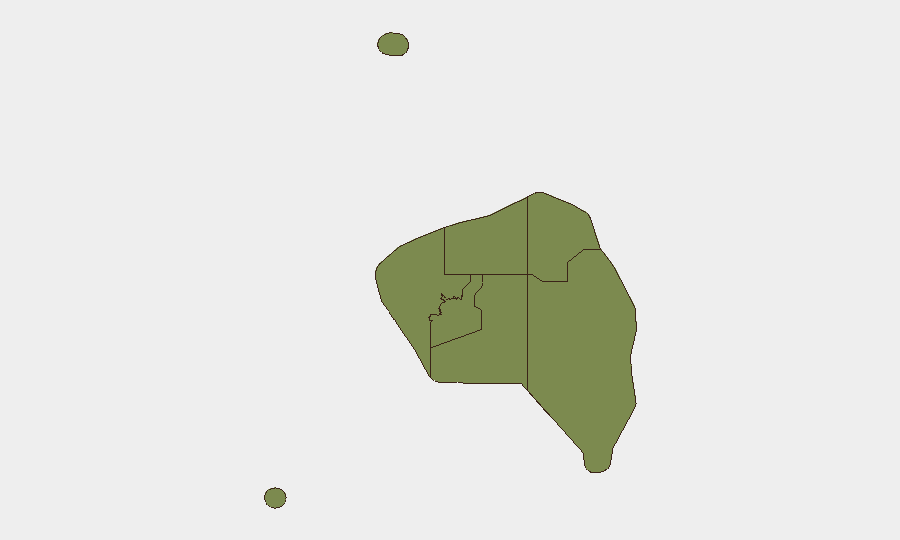
Fiji maintains a composite threat score of 5 (global rank #155), with no corroborated acute security incidents, civil unrest, or infrastructure disruption reported in the last 24–48 hours. Recent open-source signals point to police mobilization, arrests/detentions, and a government investigation on 23 June, but details remain limited and unverified. Western region dominates the sub-national risk profile (31.9), substantially above Central (20.4) and Eastern (15.7), reflecting localized security drivers rather than national systemic instability.
Key Developments
- Parliament, Suva (25 June) — Arrest/detention event reported; limited public detail available and no corroboration of wider institutional disruption.
- Government–Regional Relations (25 June) — Public statements issued by Fiji directed at Australia and New Zealand; content and substance not yet determined from available open-source channels.
- Police Operations, North West region (23 June) — Police mobilization and arrests/detentions reported; no confirmation of scale, cause, or duration.
- Suva (23 June) — Arrest/detention involving state and monarchy referenced; corroborating evidence absent from open-source reporting.
- National Government (23 June) — Investigation initiated; parties and scope remain unspecified in available public sources.
- Fuel Supply Safeguarding (22–23 June) — Authorities issued precautionary statements regarding fuel supply measures; no actual shortage or infrastructure disruption confirmed.
*No acute security, unrest, or service disruption has been independently verified for 24–26 June.*
Highest-Risk Areas
Western region (31.9) is the primary driver of Fiji's measured threat profile, concentrating nearly 60 % of the country's composite risk. Central region (20.4) contributes secondary risk, while Eastern (15.7) remains moderately elevated. Northern region and Rotuma each register minimal risk (1.9). The disparity suggests Western region experiences higher-frequency low-to-moderate incidents (crime, civil unrest, or governance tensions) rather than catastrophic events. Northern stability likely reflects lighter population density and lower inter-communal or resource competition.
How GeoBit Would Assist
Corporate security teams with personnel or assets in Fiji would deploy Intel Sweep and multi-language OSINT fusion to monitor parliamentary, police, and regional government communications for escalation signals. AOI Monitoring & Early Warning on Western and Central regions would provide persistent, threshold-triggered alerts for civil unrest, labor action, or political tension before they affect operations. Conflict & Regime-Stability assessment and Network & Actor Analysis would map key political and security actors and their positions, enabling proactive duty-of-care posture adjustment.
7-Day Outlook
No acute deterioration is anticipated over the next week absent fresh corroborating evidence of the 23 June incidents. Parliamentary and government-level activity should be monitored for public statements or policy shifts related to the reported investigation. Risk remains localized to Western and Central regions; national infrastructure and international travel corridors are not currently assessed as materially constrained.
Highest-Risk Areas — Ranked
| # | State / Region | Risk |
|---|---|---|
| 1 | Western | 31.9 |
| 2 | Central | 20.4 |
| 3 | Eastern | 15.7 |
| 4 | Northern | 1.9 |
| 5 | Rotuma | 1.9 |
Sources
Previous Daily Briefs
A new Fiji brief is written every day — each with its own risk map and downloadable CSV. Here's the last week; use the calendar to go further back.
📅 Browse every day by calendar →
Highlighted days have a brief. Tap a day for that day's map & analysis, or “csv” for that day's dataset ($5).