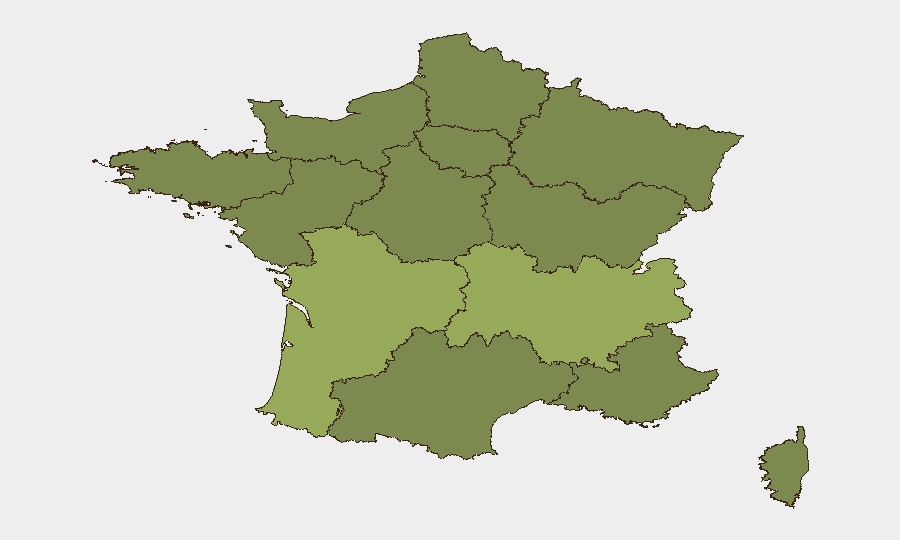
Situation Summary
France remains in the moderate-risk category globally (#42 composite threat score, 38/100) amid heightened diplomatic activity and planned large-scale security events. The country is currently hosting the G7 summit in Évian-les-Bains (Haute-Savoie), which has triggered elevated security postures across transport hubs, government facilities, and major urban centers. While baseline criminality and protest activity remain within historical norms, the convergence of high-profile diplomatic gatherings, cross-border protest movements, and diplomatic tensions creates a dynamic risk environment requiring active monitoring.
Key Developments
- G7 Summit Security Posture, Évian-les-Bains, 16 June: France has deployed substantial security resources around the summit venue, including police and military presence at border crossings, airports, and transport corridors. Standard protocols for CBRN screening, access control, and perimeter security are in effect. No credible operational incidents within French territory have been confirmed in the past 24 hours.
- Cross-Border Protest Activity, Geneva (Switzerland), 15–16 June: Anti-G7 demonstrations in Geneva have included vehicle fires and clashes with Swiss law enforcement. While these events occur on Swiss soil, they signal elevated protest momentum in the Franco-Swiss border region and may affect cross-border transit and sentiment in adjacent French regions (notably Haute-Savoie, Auvergne-Rhône-Alpes).
- Diplomatic Tensions – Iran Relations, 15 June: France announced a reduction in diplomatic relations with Iran. While primarily a diplomatic signal, such moves can increase vigilance for potential asymmetric responses or increased consular/business-district security concerns in major cities.
- Aviation Industry Statement, 15 June: A French airline publicly disapproved of German government actions. No operational disruptions reported, but aviation-sector labor or regulatory friction may merit brief monitoring at major hubs (CDG, Orly, Nice).
- UK–France Public Statements, 15 June: Cross-channel diplomatic messaging activity detected. Routine diplomatic discourse; no escalation indicators present.
Highest-Risk Areas
Nouvelle-Aquitaine (risk score 56.7) emerges as the single highest-risk region, substantially outpacing all others and warranting prioritized monitoring. Auvergne-Rhône-Alpes (40.8) and Île-de-France (39.6) follow, with Île-de-France driven by concentration of government, banking, tourism, and transport infrastructure in and around Paris. The elevated Auvergne-Rhône-Alpes score reflects proximity to the active G7 summit in Haute-Savoie, cross-border dynamics, and industrial centers. Remaining regions cluster between 26.7 and 28.2, indicating relatively uniform baseline risk; Nouvelle-Aquitaine's outlier status warrants specific inquiry into underlying drivers (industrial disputes, criminal networks, or protest hotspots) to refine asset-protection priorities.
How GeoBit Would Assist
Security teams should deploy AOI Monitoring & Early Warning on Nouvelle-Aquitaine, Île-de-France, and border zones (Haute-Savoie) to detect protest mobilization, infrastructure disruption, or protest-related violence before operational impact. Multi-language OSINT (X/Twitter, Telegram, local media) + entity extraction will identify emerging protest calls, labor actions, or security concerns in real time. Routing & Network Analysis can map alternative transport and supply-chain routes to bypass high-risk corridors during peak diplomatic events or civil unrest windows.
7-Day Outlook
The G7 summit will remain the primary driver of heightened security posture through mid-to-late June, with elevated police visibility and transport restrictions in Haute-Savoie and spillover effects on neighboring regions. Protest activity adjacent to France (Geneva) may generate secondary pressure on French border regions but is unlikely to trigger major domestic escalation. Baseline monitoring should continue for labor actions, cross-border criminal activity, and diplomatic tensions affecting consular/business operations.
Highest-Risk Areas — Ranked
| # | State / Region | Risk |
|---|---|---|
| 1 | Nouvelle-Aquitaine | 56.7 |
| 2 | Auvergne-Rhône-Alpes | 40.8 |
| 3 | Ile-de-France | 39.6 |
| 4 | Provence-Alpes-Côte d'Azur | 28.2 |
| 5 | Centre-Val de Loire | 26.9 |
| 6 | Grand Est | 26.9 |
| 7 | Pays de la Loire | 26.9 |
| 8 | Brittany | 26.7 |
| 9 | Normandy | 26.7 |
| 10 | Hauts-de-France | 26.7 |
| 11 | Occitania | 26.7 |
| 12 | Bourgogne – Franche-Comté | 26.7 |
Sources
Previous Daily Briefs
A new France brief is written every day — each with its own risk map and downloadable CSV. Here's the last week; use the calendar to go further back.
📅 Browse every day by calendar →
Highlighted days have a brief. Tap a day for that day's map & analysis, or “csv” for that day's dataset ($5).