Situation Summary
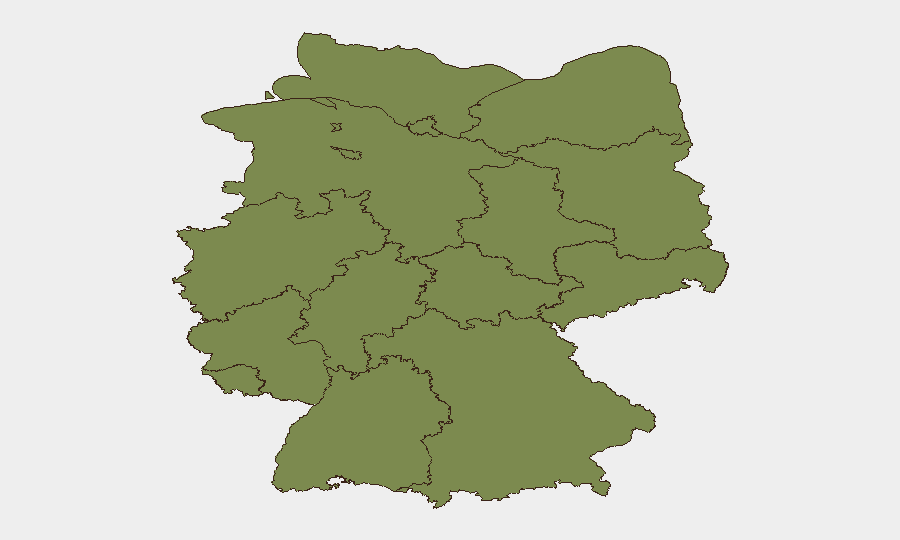
Germany's composite threat score remains moderate globally (#133, score 6.0) but masks a highly concentrated regional risk profile. Recent event signals indicate elevated diplomatic tension, military-adjacent activity, and domestic unrest spanning June 26–29. Thuringia's composite risk (31.5) significantly outpaces all other states—roughly three times Berlin's score—suggesting the risk landscape is driven by distinct sub-national dynamics rather than uniform national instability.
Key Developments
- 2026-06-29 · Conventional Military Force event · Germany (latest signal, location not specified; timeline suggests ongoing activity).
- 2026-06-28 · Threaten event · Germany (unspecified location; indicates explicit threat activity on domestic territory or against German interests).
- 2026-06-28 · Conventional Military Force (×2) · London vs German interest/assets (signals military posture or activity directed at or from German actors abroad).
- 2026-06-28 · Conventional Military Force · Germany vs Paraguay (unusual cross-continental military signaling or diplomatic/military engagement; warrants clarification of nature and intent).
- 2026-06-27 · Public Statement (Media vs Germany) · Indicates media criticism or reporting on German policy/action; context unclear from signal alone.
- 2026-06-26 · Small Arms Combat · Germany vs Poland (border or cross-border incident; civilian or military engagement unspecified).
- 2026-06-27 · Arrest/Detain (Police vs Germany) · Suggests law enforcement action against German nationals or interests; nature unclear.
*Note: Specific incident details (casualties, locations within Germany, motivations, outcomes) are not available in current event signals. Operational teams require follow-up intelligence sweep to assess impact on personnel, travel, and asset security.*
Highest-Risk Areas
Thuringia's extreme outlier risk (31.5) is the dominant driver of Germany's sub-national threat picture; no other state exceeds 11. Berlin (10.7) and Saxony (9.5) constitute a secondary tier but remain substantially lower. Bavaria (8.2), despite size and economic importance, shows measurable but moderate risk. The concentration in eastern and central regions (Thuringia, Saxony, Brandenburg) suggests either localized unrest, extremist activity, or infrastructure/governance instability in those areas. Western industrial zones (North Rhine-Westphalia, Baden-Württemberg) and major commercial hubs (Hamburg, Hesse) show minimal composite risk, indicating risk is not correlated with population or economic density.
How GeoBit Would Assist
Security teams should activate Intel Sweep and AOI Monitoring & Early Warning focused on Thuringia, Berlin, and Saxony to capture incident-level detail on the military, diplomatic, and unrest signals detected June 26–29. Multi-language OSINT (German social media, X, regional news) combined with entity and sentiment analysis will clarify the nature and target of the June 28 threat and the small-arms event in the German-Polish zone. Network & Actor Analysis can map the organizational actors behind these signals, and GIS & Spatial Analysis can pinpoint high-risk corridors and facilities within high-risk states for duty-of-care route planning and asset exposure assessment.
7-Day Outlook
Event signals suggest elevated diplomatic and security-related activity through late June. Unless current signals escalate to mass casualty, infrastructure, or border-breach events, Germany's rank and overall threat score are unlikely to shift materially. Continued monitoring of Thuringia and the German-Polish border zone is prudent; eastern regional stability should be reassessed by July 2.
Highest-Risk Areas — Ranked
| # | State / Region | Risk |
|---|---|---|
| 1 | Thuringia | 31.5 |
| 2 | Berlin | 10.7 |
| 3 | Saxony | 9.5 |
| 4 | Bavaria | 8.2 |
| 5 | Lower Saxony | 4.8 |
| 6 | Brandenburg | 4.3 |
| 7 | Saarland | 3.7 |
| 8 | Hesse | 3.7 |
| 9 | Schleswig-Holstein | 3.4 |
| 10 | Hamburg | 2.9 |
| 11 | North Rhine-Westphalia | 1.9 |
| 12 | Baden-Württemberg | 1.8 |
Sources
Previous Daily Briefs
A new Germany brief is written every day — each with its own risk map and downloadable CSV. Here's the last week; use the calendar to go further back.
📅 Browse every day by calendar →
Highlighted days have a brief. Tap a day for that day's map & analysis, or “csv” for that day's dataset ($5).