Situation Summary
Greece remains a low-threat jurisdiction globally (rank #122, composite score 7) with no verified security incidents, civil unrest, infrastructure disruption, or travel-risk escalations recorded in the last 24–48 hours. The security environment is stable across the country, with routine regulatory and investigative activity ongoing but no acute incidents. The primary current threat is a confirmed ransomware incident affecting the healthcare sector, which poses operational and data-exfiltration risk to critical infrastructure rather than physical security risk to personnel or facilities.
Key Developments
- Greece-wide (cyber/healthcare) — 2026-06-25: Ransomware group Qilin publicly claimed responsibility for a cyberattack on ISOPLUS, a Greek pharmaceutical company, and threatened data exfiltration if ransom demands are not met. This is the most concrete recent security incident affecting Greece and reflects heightened cyber-risk to health-sector infrastructure.
- Athens — 2026-06-26: Government, Presidential, and Ministry public statements were issued; a Senate disapproval was filed; and a neighborhood demonstration/rally occurred. No discrete incident details or escalation were reported; statements appear routine or policy-related.
- Athens (detention) — 2026-06-26: An arrest or detention event was recorded at an Athens prison facility. No further details on cause, severity, or connection to broader security trends are available from current open-source monitoring.
- Attica region — ongoing baseline: Concentrated vulnerability monitoring confirms Athens and Piraeus historically account for the majority of Greece's tracked threat events, though no new discrete incidents logged in the last 24–48 hours.
- Gastouni, Western Greece — 2026-06-25: Authorities opened a criminal case after a dog was fatally injured by a car. The 60-year-old driver was granted 48 hours to submit written explanations; this is low-severity and reflects routine law-enforcement activity.
- Healthcare and regulatory sectors — 2026-06-24 to 2026-06-25: Hospital investigation and regulator investigation signals were recorded. Details are limited; these appear to be ongoing administrative or compliance reviews rather than acute safety events.
Highest-Risk Areas
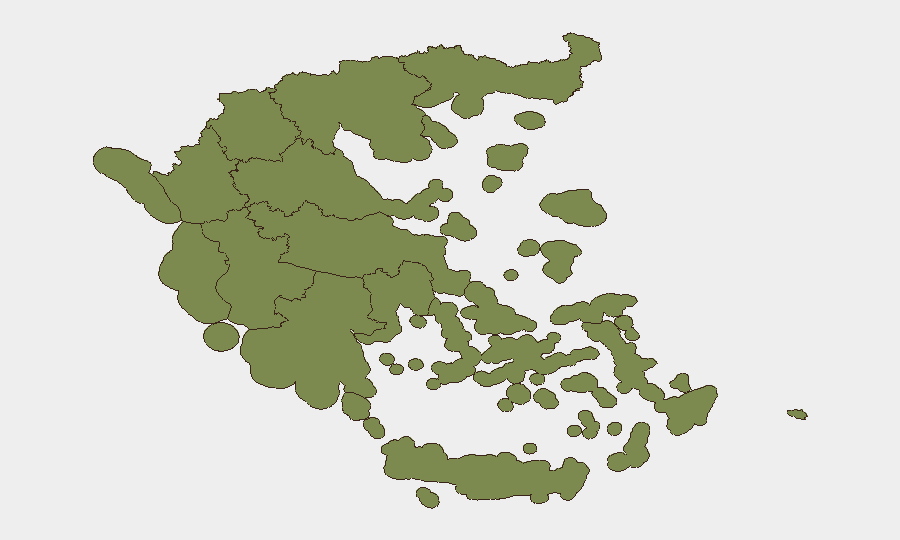
Central Greece (risk 31.5) and Attica (risk 26.2) significantly outpace all other regions and account for the majority of tracked threat events nationally. Attica—dominated by Athens and Piraeus—is the commercial and administrative hub where crime, civil-unrest, and cyber incidents are most frequently documented. Central Greece's elevated score reflects ongoing investigative and regulatory activity, farmer demonstrations, and cross-border EU-related activity, though none has escalated into acute security events in the reporting window. All other regions score 1.5, indicating negligible comparative risk and suggesting that Greece's threat footprint is highly concentrated in the greater Athens metropolitan area and central regions.
How GeoBit Would Assist
Security teams monitoring Greece should employ AOI Monitoring & Early Warning to maintain persistent watch on Attica (especially Athens/Piraeus) and Central Greece, where the majority of incidents occur, with automated alerting for civil unrest, cyber events, or infrastructure disruption. Intel Sweep and OSINT fusion (X/Twitter, Telegram, multi-language search, sentiment analysis) enable real-time detection of emerging protests, regulatory actions, or sector-specific threats—particularly in healthcare and critical infrastructure. Cyber and cyber-sector search capabilities support active threat hunting on ransomware campaigns (e.g., Qilin) targeting Greek pharma and health operators, allowing rapid exposure assessment and containment planning.
7-Day Outlook
No major escalation is anticipated in the near term; Greece's security environment remains stable with low incident density. The Qilin ransomware incident against ISOPLUS will likely dominate corporate and healthcare-sector risk discussions; organizations should expect continued ransom demands and potential data-release threats over the coming week. Routine regulatory and investigative activity will continue, particularly in Attica and Central Greece, but absent new triggering events, public order is expected to remain calm.
Highest-Risk Areas — Ranked
| # | State / Region | Risk |
|---|---|---|
| 1 | Central Greece | 31.5 |
| 2 | Attica | 26.2 |
| 3 | Western Macedonia | 1.5 |
| 4 | Central Macedonia | 1.5 |
| 5 | Eastern Macedonia and Thrace | 1.5 |
| 6 | Western Greece | 1.5 |
| 7 | Peloponnese Region | 1.5 |
| 8 | Thessaly | 1.5 |
| 9 | Autonomous Monastic State of the Holy Mountain | 1.5 |
| 10 | Northern Aegean | 1.5 |
| 11 | South Aegean | 1.5 |
| 12 | Crete | 1.5 |
Sources
Previous Daily Briefs
A new Greece brief is written every day — each with its own risk map and downloadable CSV. Here's the last week; use the calendar to go further back.
📅 Browse every day by calendar →
Highlighted days have a brief. Tap a day for that day's map & analysis, or “csv” for that day's dataset ($5).