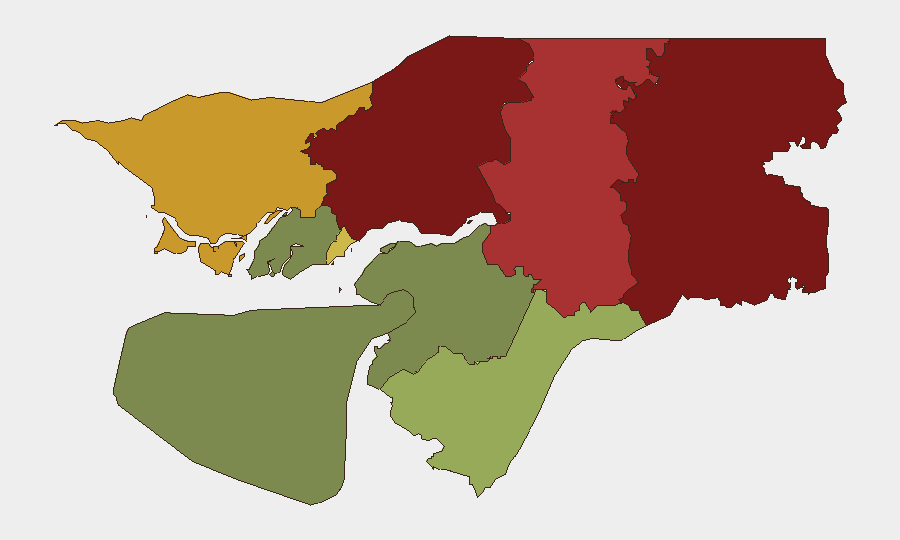
Situation Summary
Guinea-Bissau faces acute political instability following a military-led authority's detention of opposition leader Domingos Simões Pereira, triggering regional diplomatic friction and ECOWAS intervention calls as of 21 July. The security environment remains fragmented across sub-national regions, with northern and central areas (Gabu, Oio, Bafatá) presenting substantially elevated risk profiles; no verified domestic security incidents or civil unrest have been reported within the last 24 hours. Concurrent maritime concerns involving Guinea-Bissau-flagged vessels operating in high-risk international waters (Black Sea) underscore broader exposure, though this reflects registry risk rather than territorial threat. Political detention and regional tension define the current trajectory.
Key Developments
- Bissau — 21 Jul 2026: ECOWAS formally called on Guinea-Bissau's military authorities to release detained political figures, including opposition leader Domingos Simões Pereira, signaling international pressure on the regime and risk of escalated diplomatic isolation.
- Bissau — 21 Jul 2026: Guinea-Bissau froze diplomatic ties with Cape Verde after Praia publicly urged Bissau to release Simões Pereira, marking a direct regional friction point and reducing cross-border stability cooperation.
- Bissau — 21 Jul 2026: Simões Pereira returned to house arrest or prison custody, consolidating the political detention posture and sustaining opposition-mobilization risk.
- Lisbon, Portugal — 21 Jul 2026: Bissau-Guinean diaspora demonstrators gathered at CPLP (Community of Portuguese Language Countries) headquarters, demanding international intervention and sanctions—indication of sustained pressure from external stakeholders.
- Black Sea, off Odesa — 19 Jul 2026: A cargo vessel under Guinea-Bissau flag registry sustained damage from Russian missile strikes with reported fatalities; a maritime-registry-of-concern event rather than a domestic Guinea-Bissau security incident.
- National security — 19–23 Jul 2026: No verified civil unrest, mass protests, infrastructure damage, or armed-group activity reported within Guinea-Bissau's territorial borders during this period.
Highest-Risk Areas
Gabu Region (risk 92) and Oio Region (risk 85) drive the country's composite threat score and warrant priority monitoring; both are northern areas with historical cross-border trafficking, weak state presence, and proximity to Senegal's disputed zones. Bafatá Region (78) and Cacheu Region (72) follow, extending elevated risk across the central-northern corridor. The capital region (Bissau Autonomous Sector, 68) remains moderately elevated due to political-instability concentration and detention-related mobilization risk. Southern and eastern regions (Tombali, Quinara, Biombo, Bolama) present substantially lower acute threat, though localized crime and resource-access disputes persist. Northern risk concentration reflects persistent governance gaps, informal-economy dominance, and regional spillover from Senegal.
How GeoBit Would Assist
Security teams should employ AOI Monitoring & Early Warning with persistent watch on Gabu, Oio, and Bafatá regions to detect cross-border movement, armed-group activity, or trafficking surges before escalation. Intel Sweep and multi-language OSINT (X/Twitter, Telegram, Portuguese-language media) will track political detentions, opposition mobilization, and regime-stability shifts in real time. Network & Actor Analysis and entity extraction capabilities can map detention networks, diaspora pressure points, and regional diplomatic ruptures (e.g., Guinea-Bissau–Cape Verde freeze) to anticipate secondary instability or sanctions regimes.
7-Day Outlook
Political detention is likely to sustain regional diplomatic friction and opposition mobilization through the coming week; no imminent armed-conflict or mass-unrest indicators are present. Risk of secondary sanctions, ECOWAS formal action, or further regional isolation (e.g., suspension of Guinea-Bissau from ECOWAS bodies) may emerge if detainees are not released. Northern cross-border activity and trafficking should be monitored as political distraction may temporarily reduce state enforcement capacity.
Highest-Risk Areas — Ranked
| # | State / Region | Risk |
|---|---|---|
| 1 | Gabu Region | 92 |
| 2 | Oio Region | 85 |
| 3 | Bafatá Region | 78 |
| 4 | Cacheu Region | 72 |
| 5 | Bissau Autonomous Sector | 68 |
| 6 | Tombali Region | 45 |
| 7 | Quinara Region | 38 |
| 8 | Biombo Region | 32 |
| 9 | Bolama Region | 15 |
Sources
Previous Daily Briefs
A new Guinea-Bissau brief is written every day — each with its own risk map and downloadable CSV. Here's the last week; use the calendar to go further back.
📅 Browse every day by calendar →
Highlighted days have a brief. Tap a day for that day's map & analysis, or “csv” for that day's dataset ($5).
Atlas — our AI intelligence desk — emails them this snapshot personally. Nothing else, no list.