Situation Summary
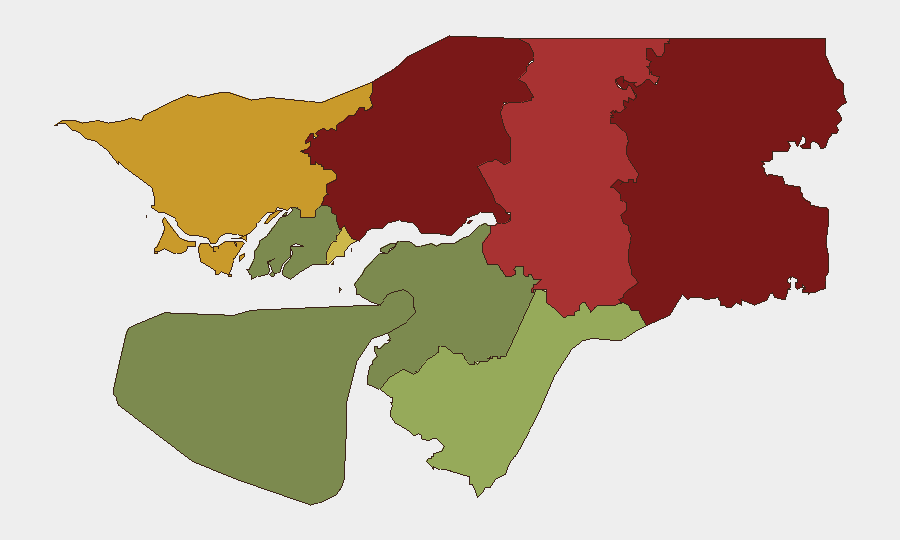
Guinea-Bissau remains at global rank #109 for composite threat, with no confirmed security incidents documented in the past seven days. The country's risk profile is regionally concentrated, with northern border areas (Gabu, Oio, Bafatá) significantly outranking the capital and southern regions. Two governance developments warrant monitoring—a constitutional referendum concluded 14 September with results pending, and an arrest warrant issued against the Football Federation president on alleged financial offences—though neither has yet generated documented civil unrest or operational security impacts.
Key Developments
- Constitutional referendum held 14 September 2026: Guinea-Bissau held a vote on a proposed new constitution designed to increase presidential powers. Results remain pending as of brief publication. No documented protests, violence, or public-order incidents related to the vote are currently cross-verified in available reporting.
- Football Federation president faces arrest warrant (8 September 2026): Carlos Alberto Mendes Teixeira, president of the Guinea-Bissau Football Federation, is subject to an active arrest warrant in connection with an ongoing investigation into alleged financial offences. No confirmed security incidents, raids, or civil disruption linked to the warrant have been documented.
Highest-Risk Areas
Gabu Region (risk score 92) and Oio Region (risk score 85) dominate the sub-national threat profile, followed by Bafatá (78) and Cacheu (72)—all in the north and northeast, bordering Guinea and Senegal. These areas historically experience higher cross-border trafficking, irregular migration pressures, and intermittent bandit activity, though no acute incidents were recorded this past week. By contrast, the Bissau Autonomous Sector (68) and southern regions (Tombali, Quinara, Biombo, Bolama) present substantially lower composite risk. The concentration of hazard in border zones reflects Guinea-Bissau's position as a transit corridor and the diffuse nature of transnational organized-crime and smuggling networks rather than acute conflict or state collapse.
How GeoBit Would Assist
Security teams with personnel or assets in Guinea-Bissau should employ Intel Sweep and multi-language OSINT fusion to monitor elite and opposition rhetoric around the constitutional referendum result, enabling early detection of political fragmentation or protest mobilization before incidents escalate. AOI Monitoring and Early Warning with persistent watch on Gabu, Oio, and Bafatá regions will provide alerting on border crossings, illicit-movement patterns, or criminal activity that may affect supply chains or staff mobility. Network and Actor Analysis focused on financial-crimes investigation linkages and football-sector governance actors will clarify whether the FA president warrant produces secondary institutional disruption or clientelist political fallout.
7-Day Outlook
The immediate risk trajectory hinges on constitutional referendum results and any elite or street-level reaction once announced, likely within 48–72 hours of this brief. Northern border zones will continue to require standard vigilance for transnational crime, trafficking, and irregular-migration incidents, consistent with their higher baseline risk. No indicators of imminent major unrest, infrastructure failure, or travel-network disruption are currently evident; however, political tension around presidential-power consolidation and the ongoing financial-crime investigation merit close surveillance through mid-October.
Highest-Risk Areas — Ranked
| # | State / Region | Risk |
|---|---|---|
| 1 | Gabu Region | 92 |
| 2 | Oio Region | 85 |
| 3 | Bafatá Region | 78 |
| 4 | Cacheu Region | 72 |
| 5 | Bissau Autonomous Sector | 68 |
| 6 | Tombali Region | 45 |
| 7 | Quinara Region | 38 |
| 8 | Biombo Region | 32 |
| 9 | Bolama Region | 15 |
Sources
Previous Weekly Briefs
A new Guinea-Bissau brief is written every Monday, covering the week — each with its own risk map and downloadable CSV. Use the calendar to go further back.
- September 7, 2026
- September 1, 2026
- August 30, 2026
- August 28, 2026
- August 26, 2026
- August 24, 2026
- August 22, 2026
📅 Browse past briefs by calendar →
Highlighted days have a brief. Tap a day for that day's map & analysis, or “csv” for that day's dataset ($5).
Atlas — our AI intelligence desk — emails them this snapshot personally. Nothing else, no list.