Situation Summary
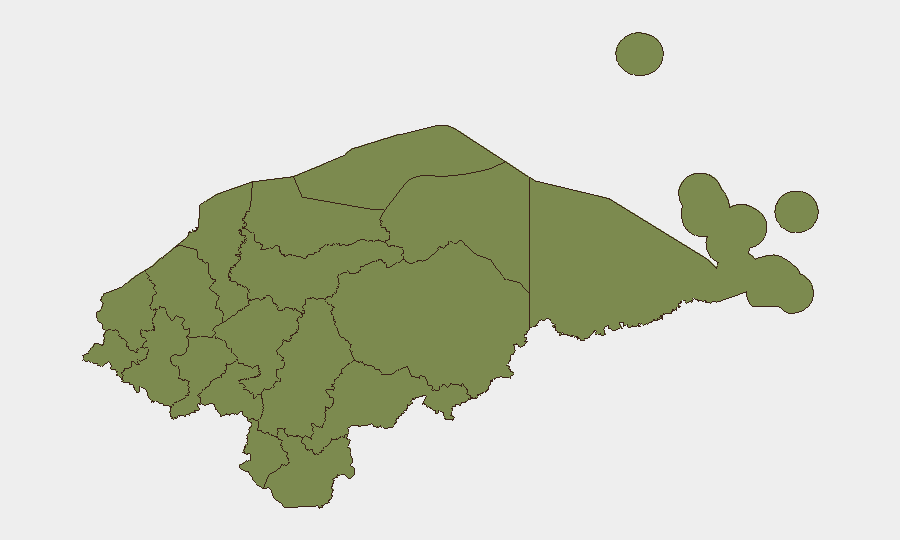
Honduras remains a mid-tier regional security concern (rank #61 globally, composite threat score 17) with 197 tracked events in GeoBit's dataset. The country faces endemic organized crime, gang activity, and localized violence concentrated in specific departments; national-level instability is not currently acute. The security environment is fragmented geographically rather than nationwide, with risk heavily concentrated in Olancho department and moderately elevated in Cortés and Francisco Morazán.
Key Developments
No verifiable security incidents with specific locations and timestamps have been identified in Honduras within the last 24–48 hours via open-source channels. GeoBit's live web research (last 24 hours) returned no discrete event signals meeting cross-verification criteria for current reporting. Corporate security and duty-of-care teams should note that the absence of flagged incidents does not indicate absence of risk—it reflects current information availability. Teams with personnel or assets in high-risk departments (see below) should maintain standard situational awareness protocols and local intelligence networks.
Highest-Risk Areas
Olancho department dominates the national risk landscape, with a composite score of 31.8—approximately twelve times higher than any other jurisdiction in Honduras. This eastern department, historically a transit corridor for narcotics trafficking and a stronghold of organized crime groups, accounts for the majority of GeoBit's tracked threat events. Cortés and Francisco Morazán (both score 2.6) represent secondary concern zones, driven by gang activity, extortion networks, and urban crime in and around San Pedro Sula and Tegucigalpa respectively. All other departments register minimal individual risk scores (1.8 or lower), indicating that organizational and criminal threat concentration is highly localized.
How GeoBit Would Assist
Security teams operating in Honduras should prioritize AOI Monitoring & Early Warning on Olancho and secondary watch on Cortés/Francisco Morazán to detect trafficking activity, gang clashes, or infrastructure disruption in real time. Intel Sweep and OSINT fusion (including X/Twitter, Telegram, and local Spanish-language sources) provide 24/7 event detection and corroboration when discrete incidents occur. Routing & Network Analysis enables alternative journey planning for personnel transit, especially through or near Olancho, reducing exposure to high-threat corridors.
7-Day Outlook
No acute escalation indicators are present in current reporting; the threat environment is expected to remain stable at baseline over the next seven days. Localized gang and trafficking violence in Olancho and secondary risk zones will likely persist at typical operational levels, though seasonal variations and regional cartel dynamics may produce short-notice disruptions. Teams should treat the current window as a consolidation period and use it to refresh local threat briefs and contingency protocols.
Highest-Risk Areas — Ranked
| # | State / Region | Risk |
|---|---|---|
| 1 | Olancho | 31.8 |
| 2 | Cortés | 2.6 |
| 3 | Francisco Morazán | 2.6 |
| 4 | El Paraíso | 1.8 |
| 5 | Copán | 1.8 |
| 6 | Ocotepeque | 1.8 |
| 7 | Yoro | 1.8 |
| 8 | Santa Bárbara | 1.8 |
| 9 | Lempira | 1.8 |
| 10 | Intibucá | 1.8 |
| 11 | Comayagua | 1.8 |
| 12 | La Paz | 1.8 |
Sources
Previous Daily Briefs
A new Honduras brief is written every day — each with its own risk map and downloadable CSV. Here's the last week; use the calendar to go further back.
📅 Browse every day by calendar →
Highlighted days have a brief. Tap a day for that day's map & analysis, or “csv” for that day's dataset ($5).