Situation Summary
Japan maintains a composite threat score of 6 globally (rank #123), reflecting a complex but manageable security environment. Over the past 48 hours, event signals indicate a mixed picture: public statements dominate the volume, but discrete incidents involving military engagement, corporate investigation, and institutional disapproval suggest elevated friction points in defense, technology, and governance. The trajectory remains stable but fragmented—no single national crisis, but elevated activity in specific sectors and prefectures warrants continued monitoring.
Key Developments
- 2026-07-19 · Military Engagement, Hokkaido/Northern Waters – Small arms combat reported between military personnel and Chinese forces near or at a military base; details on casualties, location specificity, and diplomatic response remain limited pending clarification.
- 2026-07-19 · Judicial/Conventional Military Incident – Involvement of a judge in a conventional military force incident; context unclear from available signals, but suggests potential legal or command-structure complexity.
- 2026-07-18 · Corporate Investigation (NVIDIA vs Hitachi) – Formal investigation initiated; sector is semiconductors/critical technology; implications for supply chain and export controls remain to be determined.
- 2026-07-18 · Institutional Disapproval (SONY) – Official disapproval action taken; sector concentration in major corporation suggests governance or compliance friction.
- 2026-07-19 · Inspector General Disapproval – Oversight body issued formal disapproval; likely tied to executive or institutional conduct; specifics pending.
- 2026-07-18 · Multi-Stakeholder Public Statements – Coordinated or sequential public statements from school, companies, doctor, and broader Japan entities; pattern suggests narrative-building or crisis communication around a shared or competing issue.
*Note: Cyber incidents in Nihon Kotsu (July 11–13) and Nichirei (July 13) fall outside the 48-hour window but represent sector-wide logistics and supply-chain vulnerability.*
Highest-Risk Areas
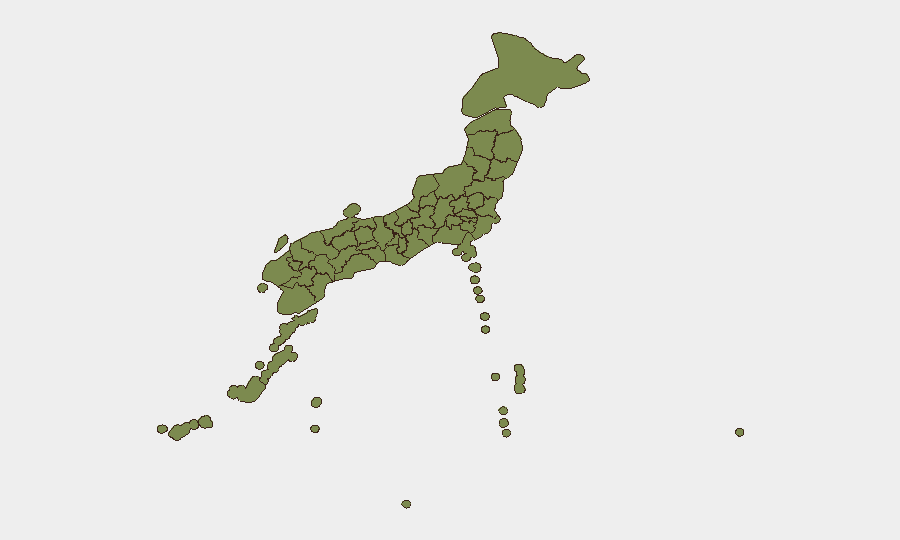
Nagano Prefecture dominates the risk ranking (33.7), nearly 1.4× Tokyo's score, indicating concentrated threat activity in a non-metropolitan region—likely tied to border proximity, infrastructure exposure, or organized activity. Tokyo (23.7) remains the second-largest risk hub, reflecting capital-city concentration of political, corporate, and security flashpoints. Osaka Prefecture (14.3) and Hokkaido (8.3) follow; Hokkaido's elevation aligns with today's military engagement signal, suggesting border and defense vulnerabilities warrant elevated vigilance. Aichi, Shizuoka, and Niigata show moderate risk, consistent with their logistics, manufacturing, and port roles; Fukushima remains flagged (4.0), reflecting ongoing nuclear/environmental sensitivity.
How GeoBit Would Assist
Security teams operating in Japan should deploy Intel Sweep and multi-language OSINT fusion to disambiguate the military engagement (Hokkaido), NVIDIA/Hitachi investigation, and corporate disapprovals in real time, isolating actionable detail from public narrative noise. AOI Monitoring & Early Warning on Nagano, Tokyo, and Hokkaido prefectures—combined with Conflict & Military battle mapping and Network & Actor Analysis—would enable persistent detection of emerging friction in defense, supply chain, and governance sectors before incidents cascade. Risk & Threat Assessment linked to specific asset locations (offices, facilities, personnel) in high-risk prefectures ensures duty-of-care teams can prioritize protective measures and contingency routing.
7-Day Outlook
Military and corporate tensions appear to be sharpening rather than resolving; the Hokkaido incident and NVIDIA/Hitachi investigation suggest geopolitical and technology-sector stress will remain elevated. Institutional disapprovals and public statements indicate governance friction is present; escalation to formal enforcement or reputational damage is possible. Personnel and asset safety in Nagano and Hokkaido prefectures should remain under active review through mid-week.
Highest-Risk Areas — Ranked
| # | State / Region | Risk |
|---|---|---|
| 1 | Nagano Prefecture | 33.7 |
| 2 | Tokyo | 23.7 |
| 3 | Osaka Prefecture | 14.3 |
| 4 | Hokkaido Prefecture | 8.3 |
| 5 | Akita Prefecture | 6.6 |
| 6 | Aichi Prefecture | 5.9 |
| 7 | Shizuoka Prefecture | 5.6 |
| 8 | Niigata Prefecture | 4.4 |
| 9 | Kagoshima Prefecture | 4 |
| 10 | Fukuoka Prefecture | 4 |
| 11 | Hyogo Prefecture | 4 |
| 12 | Fukushima Prefecture | 4 |
Sources
Previous Daily Briefs
A new Japan brief is written every day — each with its own risk map and downloadable CSV. Here's the last week; use the calendar to go further back.
📅 Browse every day by calendar →
Highlighted days have a brief. Tap a day for that day's map & analysis, or “csv” for that day's dataset ($5).
Atlas — our AI intelligence desk — emails them this snapshot personally. Nothing else, no list.