Situation Summary
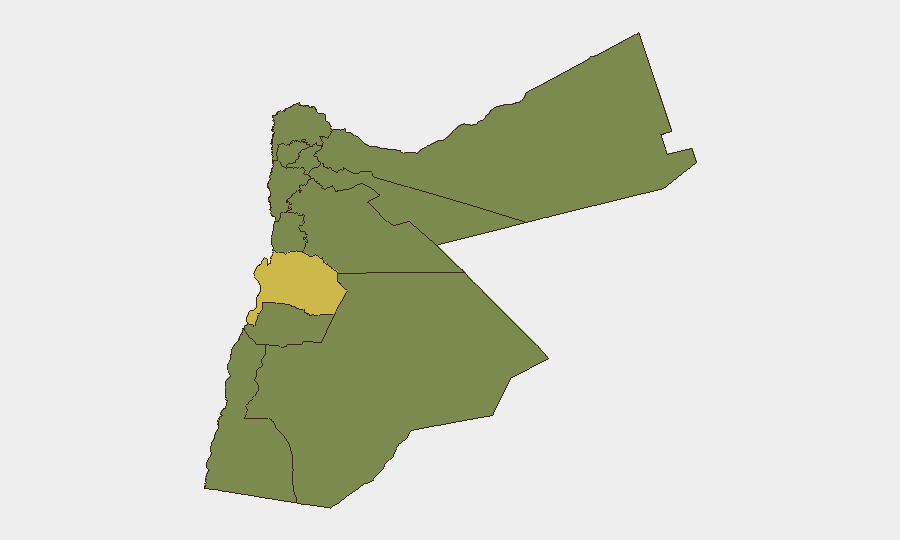
Jordan remains a relative stabilizer in a volatile region, ranked #41 globally with a composite threat score of 50, driven primarily by exposure to military strikes rather than domestic instability. The past 24–48 hours show no verified in-country security incidents; instead, Jordan's official posture centers on diplomatic condemnation of Iran's recent attacks on neighboring states (Bahrain, Kuwait), affirming its commitment to regional sovereignty and international law. Karak governorate stands significantly elevated above all other sub-national areas, warranting heightened monitoring. The broader trajectory is one of diplomatic positioning amid regional escalation, rather than acute domestic crisis.
Key Developments
- Amman (date not specified, posted 2026-06-29) — Jordan officially condemned Iran's missile and drone attacks on Bahrain and Kuwait as violations of sovereignty and international law, signaling alignment with Gulf security concerns and distance from Iranian escalation.
- Multiple public statements by Jordanian officials (2026-06-27 to 2026-06-28) — Government, parliamentary deputies, and other figures issued public remarks; specific content not available in source data, but pattern suggests active domestic political discourse.
- Arrest of police officer (2026-06-27) — A police officer was arrested; no further detail provided on location, charges, or circumstances.
- No verified incidents in Amman, border crossings, or transportation hubs in the last 48 hours — Airports, ports, and major transport corridors remain operational.
- Regional military activity remains indirect — No cross-border incursions or direct military engagement reported in or from Jordanian territory; threat derives from proximity to regional conflicts (Syria, Iraq, Iranian-Israeli tensions) rather than active domestic warfare.
Highest-Risk Areas
Karak governorate (risk score 65) is the clear outlier, scoring nearly double that of all other governorates, which cluster at 35. The driver and specific vulnerabilities underlying Karak's elevation are not detailed in available event signals, but the differential warrants immediate investigation by security teams with personnel or assets there. All other governorates—including the capital, Amman (risk 35)—show uniform moderate risk. This uniformity across diverse geographies (urban, remote, border-adjacent) suggests the risk model is weighted toward national-level or regional exposure factors rather than granular sub-national triggers.
How GeoBit Would Assist
Security teams would deploy AOI (Area-of-Interest) Monitoring & Early Warning on Karak and key transport nodes (Amman airport, Zarqa port, border crossings) to detect shifts in military activity, protest activity, or official alerts before public reporting. Intel Sweep and X/Twitter OSINT would track Jordanian official statements, opposition figures, and local media sentiment in real time to distinguish routine political discourse from escalation signals. Routing & Network Analysis would identify alternative supply chains and personnel movement paths should primary routes face disruption from regional military strikes or domestic unrest.
7-Day Outlook
Jordan is likely to maintain its current posture: diplomatically engaged in regional security discussions, domestically stable, but exposed to indirect military risk from neighboring conflicts and Iranian-Israeli tensions. No catalyst for acute domestic instability is visible in the 7-day window. Duty-of-care teams should focus on contingency planning for regional escalation (strikes, border closures) rather than on in-country unrest.
Highest-Risk Areas — Ranked
| # | State / Region | Risk |
|---|---|---|
| 1 | Karak | 65 |
| 2 | Irbid | 35 |
| 3 | Ajlun | 35 |
| 4 | Balqa | 35 |
| 5 | Jarash | 35 |
| 6 | Mafraq | 35 |
| 7 | Madaba | 35 |
| 8 | Amman | 35 |
| 9 | Zarqa | 35 |
| 10 | Tafilah | 35 |
| 11 | Aqaba | 35 |
| 12 | Maan | 35 |
Sources
Previous Daily Briefs
A new Jordan brief is written every day — each with its own risk map and downloadable CSV. Here's the last week; use the calendar to go further back.
📅 Browse every day by calendar →
Highlighted days have a brief. Tap a day for that day's map & analysis, or “csv” for that day's dataset ($5).