Situation Summary
Kazakhstan faces elevated cross-border security sensitivity and indirect energy-infrastructure risk stemming from regional escalation, rather than domestic instability. The nation is managing diplomatic pressure to distance itself from attacks on Russian territory, while simultaneously exposed to spillover effects from Ukrainian strikes on Russian energy assets and U.S.–Iran escalation near Gulf trade corridors. Overall threat score remains moderate (rank #156 globally), but subnational concentration in Astana and western energy regions warrants focused monitoring.
Key Developments
- Astana – 9 July 2026: Kazakhstan's Foreign Ministry issued a formal denial that Kazakh territory, airspace, or infrastructure was used for drone attacks on Russian facilities near Omsk. Statement explicitly warned against "unconfirmed information" and reaffirmed non-use of Kazakh assets against third states—a direct response to Russian commentary implicating Kazakhstan.
- Kazakhstan–Russia border areas – 8–9 July 2026: Kazakh border agents reported interception of over 60 smuggling attempts within 48 hours, characterized in open reporting as a "pragmatic signal to Moscow" amid heightened cross-border sensitivity and control measures.
- Karachaganak field, West Kazakhstan Region – 8–9 July 2026: Kazakhstan reduced oil production at the strategic Karachaganak field by approximately 9,000 tons per day following a Ukrainian drone strike on a Russian natural gas processing facility that handles Kazakh hydrocarbons, indicating indirect supply-chain and energy-security risk.
- Omsk oil refinery proximity – 9 July 2026: A major Ukrainian drone strike targeted the Omsk refinery in Siberia near the Kazakhstan–Russia border, marking one of Ukraine's deepest strikes into Russian territory and raising regional airspace and spillover-risk considerations for Kazakhstan.
- Gulf trade corridor – 8–9 July 2026: Kazakhstan advanced a long-planned southern trade project toward contract stage while U.S.–Iran strike escalation intensified around the Persian Gulf, creating elevated strategic and infrastructure risk for planned Kazakh transport and energy corridors in the region.
- National-level diplomatic posture – 9 July 2026: Kazakhstan's Foreign Ministry statement emphasized protection of national infrastructure and airspace from third-party use, signaling a risk-management priority to prevent reputational or operational exposure that could invite external pressure or scrutiny.
Highest-Risk Areas
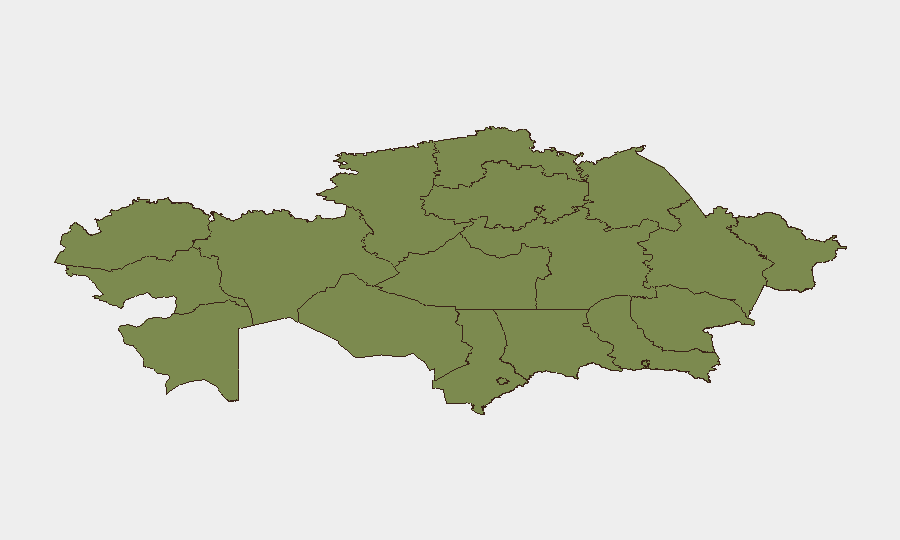
Astana (risk 31.5) dominates the sub-national ranking, reflecting its role as the political and diplomatic center where cross-border tensions, official denials, and strategic communication carry greatest institutional weight. Mangystau and Atyrau regions (19 and 16.5 respectively) face elevated risk due to proximity to Russian borders, energy infrastructure concentration, and exposure to smuggling and sanctions-evasion pressure. Ulytau Region (11.5) adds secondary risk from remote geography and energy assets. The remaining regions score significantly lower (1.5–6.5), indicating risk is highly concentrated in the capital and western hydrocarbon belt.
How GeoBit Would Assist
Security teams should deploy Area-of-Interest (AOI) Monitoring & Early Warning on Astana, Mangystau, and Atyrau to detect changes in border activity, energy facility operations, or official communications. OSINT Fusion & Corroboration (X/Twitter, Telegram, local media, official statements) will track cross-border narrative escalation and distinguish routine smuggling from deliberate signaling. Economic & Trade analysis combined with Routing & Network Analysis can map alternative energy export routes and identify bottlenecks created by regional escalation or sanctions pressure.
7-Day Outlook
Kazakhstan's immediate trajectory hinges on whether Russian commentary linking Kazakh territory to Ukrainian strikes recedes or intensifies. If diplomatic denials succeed and cross-border tensions stabilize, risk is likely to remain elevated but manageable. Conversely, if accusations persist or U.S.–Iran escalation spreads to Gulf chokepoints, Kazakh energy exports and trade corridor projects face material disruption. Routine border controls and interception activity are expected to remain above baseline for the near term.
Highest-Risk Areas — Ranked
| # | State / Region | Risk |
|---|---|---|
| 1 | Astana | 31.5 |
| 2 | Mangystau Region | 19 |
| 3 | Atyrau Region | 16.5 |
| 4 | Ulytau Region | 11.5 |
| 5 | Kostanay Region | 6.5 |
| 6 | Almaty | 6.5 |
| 7 | Turkistan Region | 1.5 |
| 8 | Almaty Region | 1.5 |
| 9 | East Kazakhstan Region | 1.5 |
| 10 | Abay Region | 1.5 |
| 11 | Jetisu Region | 1.5 |
| 12 | West Kazakhstan Region | 1.5 |
Sources
Previous Daily Briefs
A new Kazakhstan brief is written every day — each with its own risk map and downloadable CSV. Here's the last week; use the calendar to go further back.
📅 Browse every day by calendar →
Highlighted days have a brief. Tap a day for that day's map & analysis, or “csv” for that day's dataset ($5).
Atlas — our AI intelligence desk — emails them this snapshot personally. Nothing else, no list.