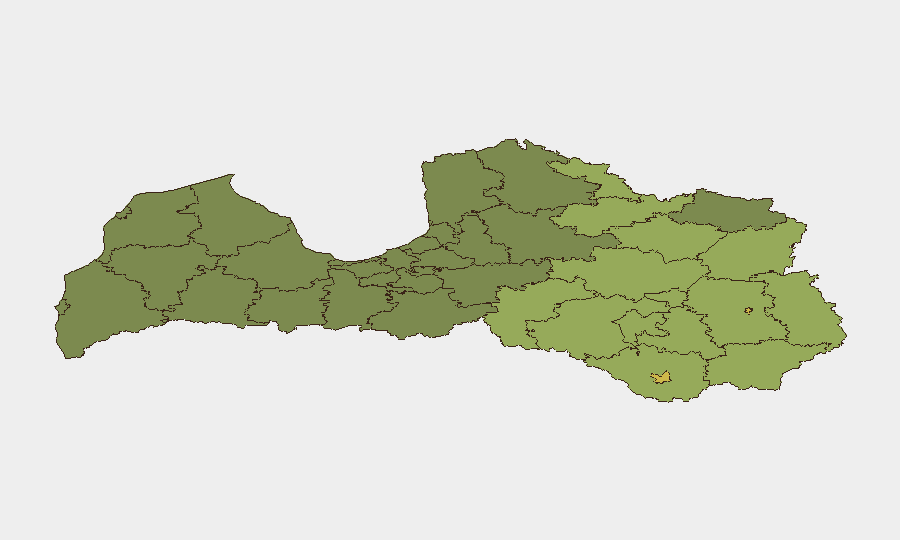
Situation Summary
Latvia remains at low acute risk with no confirmed armed conflict, large-scale civil unrest, major crime spikes, or critical infrastructure failure in the past 24–48 hours. The country's composite threat score of 5 (global rank #118) reflects baseline exposure to hybrid threats, energy-sector vulnerabilities, and border-proximity risks rather than active kinetic incidents. Security posture remains elevated around critical infrastructure and the Belarus border, but the operational picture is stable.
Key Developments
No new security-significant incidents have been reliably confirmed in Latvia during July 26–27, 2026. Open-source monitoring, regional security briefs, and Latvian-focused feeds report no armed clashes, civil unrest, major criminal events, or infrastructure failure in the last 24–48 hours. Ongoing hybrid-threat vigilance and elevated border monitoring remain in place, but discrete incident-level developments within the specified reporting window are not available from open sources.
*Note: Earlier July events (July 21–23) including border warning incidents and intensified hybrid-threat rhetoric fall outside the 24–48-hour window and are therefore archived context rather than current developments.*
Highest-Risk Areas
Eastern Latvia—specifically Rēzekne (risk 68), Daugavpils (risk 65), and Rēzeknes novads (risk 58)—drives the country's sub-national threat profile. These regions share proximity to the Belarus border, exposure to cross-border smuggling and hybrid operations, legacy Soviet-era infrastructure vulnerabilities, and lower population density that complicates official oversight. Daugavpils and surrounding municipalities also carry historical and demographic sensitivities; the broader eastern corridor (Ludzas, Balvu, Preiļu novads, all scoring 50–55) represents a contiguous high-risk belt aligned with border exposure and energy-infrastructure density. Western and central regions show markedly lower risk.
How GeoBit Would Assist
A security team operating in or serving Latvia should employ AOI (area-of-interest) monitoring and early warning on the eastern border corridor and critical energy nodes to detect hybrid-threat activity, cross-border movement, or infrastructure probes in real time. OSINT fusion (Intel Sweep, multi-language feeds, Telegram/X monitoring, and sentiment analysis) provides continuous scanning of regime rhetoric, activist organization, and regional threat actors without flag delay. GIS & spatial analysis paired with satellite imagery enables persistent monitoring of border perimeter activity and critical asset geography, reducing reaction time to emerging risks.
7-Day Outlook
Latvia's risk trajectory remains flat and contained, with no indicators of imminent escalation in armed conflict, unrest, or major crime. Hybrid-threat vigilance and border monitoring will continue as standing posture. The next 7 days are unlikely to produce acute security events unless regional developments—such as Belarus-side posturing or energy-sector incidents—alter the baseline threat environment.
GeoBit Threat Rank: #118 globally | Composite Score: 5
Data Confidence: Low (no new incident-level detail in last 48h)
Assessment Date: 2026-07-27
Highest-Risk Areas — Ranked
| # | State / Region | Risk |
|---|---|---|
| 1 | Rēzekne | 68 |
| 2 | Daugavpils | 65 |
| 3 | Rēzeknes novads | 58 |
| 4 | Ludzas novads | 55 |
| 5 | Balvu novads | 52 |
| 6 | Preiļu novads | 50 |
| 7 | Krāslavas novads | 48 |
| 8 | Jēkabpils novads | 47 |
| 9 | Augšdaugavas novads | 46 |
| 10 | Aizkraukles novads | 45 |
| 11 | Varakļānu novads | 44 |
| 12 | Līvānu novads | 43 |
Previous Daily Briefs
A new Latvia brief is written every day — each with its own risk map and downloadable CSV. Here's the last week; use the calendar to go further back.
📅 Browse every day by calendar →
Highlighted days have a brief. Tap a day for that day's map & analysis, or “csv” for that day's dataset ($5).
Atlas — our AI intelligence desk — emails them this snapshot personally. Nothing else, no list.